213/365: National Raspberry Cream Pie Day

I just might blow raspberries in your direction if you try to skip out on today’s food holiday. August 1 is National Raspberry Cream Pie Day!

Yay. More pie.

But at least we haven’t celebrated anything with raspberries yet. These berries are related to the rose family, and originated in East Asia. They date back to prehistoric times – evidence has been found that Paleolithic cavemen enjoyed the fruit. As it grew in popularity, it came to be associated with fertility. In Greek mythology, legend has it that the berries were once white, but when Zeus’ nursemaid, Ida, pricked her finger on a thorn, the berries were stained red with her blood, and have remained that color ever since. European settlers brought red raspberries to America, where they were crossbred with our native black raspberries. George Washington was so fond of them, he cultivated raspberries at Mount Vernon. They grow throughout the U.S., with my home state of Washington being the nation’s top producer, churning out around 70 million tons per year. Oregon is second. It doesn’t surprise me, as the Pacific Northwest is well known for all sorts of wonderful berries.

I had never heard of raspberry cream pie before. It’s not exactly a common dish, but thanks to the Internet, recipes are easy to find. We decided to try this recipe from The Pioneer Woman because it features a crust made from Oreo cookies. Hello! Only, we didn’t want a whole pie, so we scaled it back by 2/3 and whipped up a mini pie instead. The result? Oh. My. GOODNESS. The Pioneer Woman knows her pies! Really, really good.

National Raspberry Cream Pie Day

Categories: Desserts, Fruit | Tags: , , , , | 6 Comments

212/365: National Jump For Jelly Beans Day*

It’s a real leap to say today’s food holiday won’t put a spring in  your step. The last day of July is National Jump For Jelly Beans Day!

I took this challenge literally.

I took this challenge literally.

It’s also National Raspberry Cake Day (which sounds interesting, but tomorrow we’re celebrating raspberry pie). Now, we’ve already done the jellybean thing), so this is yet another food that is celebrated multiple times. I suppose purists would argue that last time around we weren’t incorporating aerobic exercise in our celebration so this one is different, but c’mon…if it were up to me, we’d be celebrating something else that gets no official glory. Like ketchup, as I’ve mentioned many times. Or stuffed cabbage rolls. Or corn on the cob.

So I’m turning to you, dear readers, and asking you this: if you could create your own food holiday, to which dish would you pay homage?

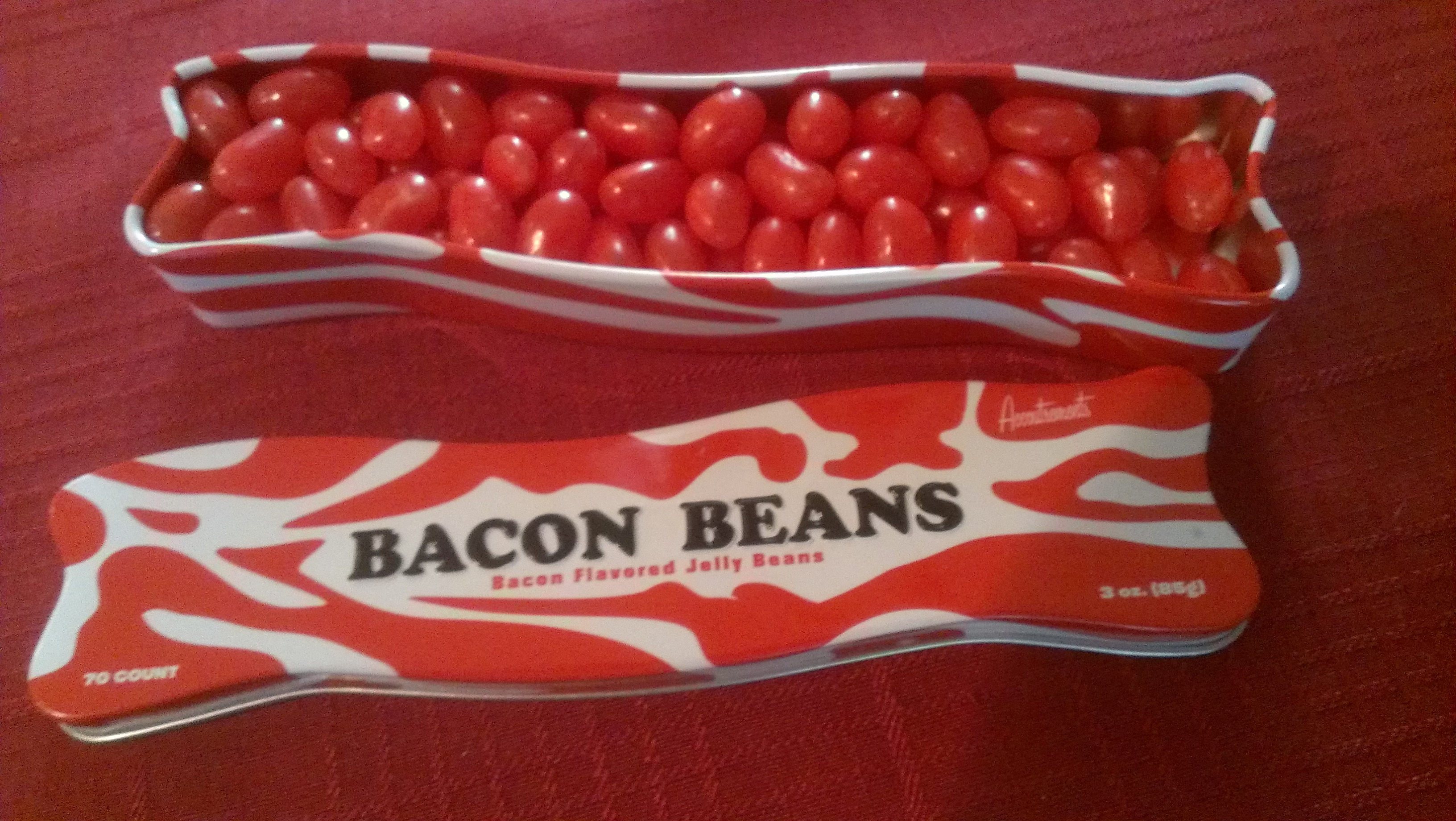
To celebrate, we ate jelly beans. And we jumped. Doesn’t get more basic than that, does it? But not just any old jelly beans. Bacon flavored jelly beans, ’cause that’s how we roll.

They were awful. 

Fortunately, we had backups available. We’d gotten a sour fruit mix of Jelly Bellies, and those were our saving grace. Tart, chewy, and delicious. There’s a reason Jelly Belly is the top-selling jelly bean in America!

In case you were wondering, bacon flavored jelly beans are NO BUENO.

In case you were wondering, bacon flavored jelly beans are NO BUENO.


Categories: Candy | Tags: , , , | 6 Comments

211/365: National Cheesecake Day

Only a real muenster would think today’s food holiday wasn’t the cream of the crop. July 30 is National Cheesecake Day!

I’ve already talked about the history of cheesecake on cherry cheesecake day. Today, we’re not limited to any one particular fruit – or to any fruit at all. Cheesecake can be made with a variety of toppings – fruit, sauce, nuts – or no toppings at all. That’s the beautiful thing about this dish: it tastes great with anything. Or with nothing! In America, some of the different cheesecake varieties include:

  • New York style cheesecake. Dense, usually made with heavy cream or sour cream.
  • Pennsylvania Dutch style cheesecake. Relies on tangy cheese with larger curds and less moisture content.
  • Philadelphia style cheesecake. Lighter texture but richer flavor than New York cheesecake. Take that, Big Apple!
  • Cheesecake kludys. Pittsburgh’s answer to Philadelphia: this regional favorite is semi-sweet and usually served with fruit. Downside: you’re probably in Pittsburgh if you’re eating it.
  • Chicago style cheesecake. Deep dish. Err…scratch that. Firm on the outside, soft and creamy in the middle.

There are even more interesting international varieties. Smoked salmon cheesecake is popular in Scotland, while German style cheesecake uses quark. The Italians use a ricotta-like cheese, while the Greeks make theirs with a goat cheese known as mizithra. No matter in which region or country you’re eating cheesecake, I’ll bet you’re licking your lips as you enjoy every last creamy, decadent bite.

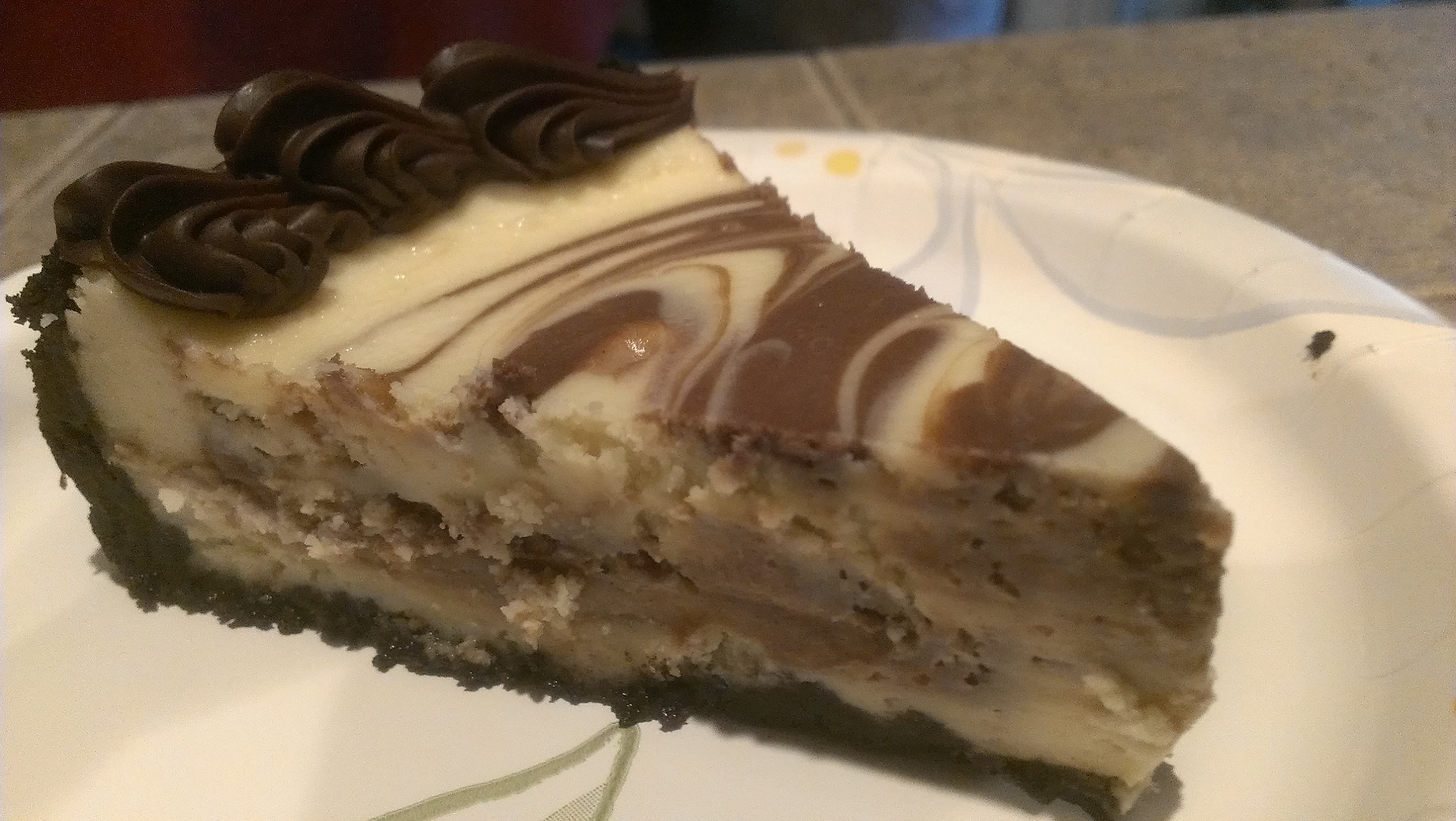
To celebrate, Tara picked us up a slice of “Portland-style” chocolate swirl cheesecake. Apparently this includes hipsters, bicycle spokes, and beards. Actually, I couldn’t find any information on what constitutes a “Portland-style” cheesecake. But I also stopped caring after I took a bite. Mmm!

National Cheesecake Day

Categories: Desserts | 7 Comments

210/365: National Cheese Sacrifice Purchase Day/National Lasagna Day*

I don’t mean to be a pest, but this is one of the strangest food holidays of the year. July 29 is National Cheese Sacrifice Purchase Day. Umm…okay…

Even the name is a mouthful. What the heck does it mean?! Well, after a bit of research, it turns out that you are supposed to buy cheese today and “sacrifice” it by using it as bait on a mousetrap to rid your home of the pesky little rodents. There’s only one problem with that: we don’t have mice in the house. I could give credit to the cat for a vermin-free dwelling, but in all likelihood it’s probably got more to do with Tara’s extreme cleanliness. Fortunately, other people who have decided to celebrate this holiday have gotten creative with the rules, and I think they’ve got the right idea. (As an aside, even when I did have a mouse problem in my old house, cheese never worked – but peanut butter snared the suckers every time. Which means that National Peanut Butter Sacrifice Day can’t be too far off, right?). National Cheese Sacrifice Purchase Day

Suggestions for celebrating this holiday include sacrificing some of your money to buy an expensive type of cheese you wouldn’t normally purchase, or sacrifice your taste buds by trying a new cheese you’ve previously never had. You could sacrifice a piece of cheese to the fondue pot, or melt it down and make nachos. Or you could sacrifice cheese by not eating it at all…but the holiday specifically mentions purchasing it, so do cheese lovers sacrifice their fondness for the product today by not buying it?

This is one confusing holiday!

Fortunately, it’s also National Lasagna Day. This helped to solve our dilemma, and allowed us to knock out two food holidays in one day.

Lasagna is one of my all-time favorites. Growing up, my mom always let my brother and I choose whatever we wanted for dinner on our birthdays. Scott usually opted for pizza, while I went with lasagna. (Incidentally, my kids both like spaghetti on their birthdays. None of us are even remotely Italian. Go figure).

Our sacrificial cheese.

Our sacrificial cheese.

Actually, even though lasagna is closely associated with Italy, its true origin can be traced back to ancient Greece. The Greeks were fond of laganon, a flat sheet of dough cut into strips. They also used a cooking pot known as a lasanum. When the Roman Empire conquered Greece, they “borrowed” (okay, stole) both ideas and turned them into lasagna, layering pasta, sauce, cheese, and savory ingredients into a casserole, and baking. European immigrants introduced the dish to the U.S., and the rest is multi-tiered history. If we didn’t have lasagna, we wouldn’t have Garfield, and the world would be a much darker place.

Tara has a great recipe for lasagna that isn’t baked, but rather, cooked in the crockpot. She takes uncooked noodles, layers them with sauce, meat, and cheese, and lets them cook all day. This turns out delicious every time! In fact, I once told her I liked the crockpot lasagna better than the regular version, and I don’t think she was too pleased to hear that after slaving over a “regular” pan. What can I say? It’s delicious!

So, we “sacrificed” shredded cheese to the crockpot gods, and ended up enjoying a hearty, delicious lasagna. Two for the price of one!

National Lasagna Day

Categories: Dairy, Pasta | Tags: , , , , | 4 Comments

209/365: National Milk Chocolate Day

If you’re cuckoo for cocoa, then today’s your day. July 28 is National Milk Chocolate Day!

Chocolate is one of those things we’ve celebrated many times already this year, and I’ve talked about its history more than once. I’m too lazy to link to those various posts, but a quick Google search under “chocolate eat my words” (or a similar combination) brings up links to multiple chocolate-flavored posts we’ve already published. Be careful, though: a similar search brings up a 9-step process on How To Eat Chocolate Seductively (#3: Unwrap the chocolate bar or box with a gleam in your eye and a sense of purpose. #5: Place your tongue on the chocolate first. Oh, the hilarity).

There are different varieties of chocolate, of course, and milk chocolate – while not as hip or trendy as dark chocolate these days – still holds a special place in many people’s hearts. It’s a sweet chocolate that contains milk powder or condensed milk, and is undeniably creamy and wonderful. In 1867, Swiss candlemaker Daniel Peter, who had recently started working in his father-in-law’s chocolate business,  experimented with adding milk to chocolate in order to create a creamier product. Milk contains water, which makes chocolate separate and disintegrate, so Daniel tinkered with his recipe for eight years before bringing it to his friend and neighbor, Henri Nestlé, whose company had perfected the manufacturing of condensed milk for its line of baby food products. By adding Henri’s sweetened condensed milk to Daniel’s chocolate, they successfully created a milk chocolate that stayed together and tasted delicious. You no doubt recognize the Nestlé name, and are well aware of its dominance in the world of milk chocolate. You can thank Daniel Peter for that.

To celebrate, we broke out a leftover Hershey’s chocolate bar from our camping trip last weekend. Nothing says milk chocolate like Hershey’s!

National Milk Chocolate Day

Categories: Candy, Desserts | Tags: , , , , , | 2 Comments

208/365: National Crème Brûlée Day*

Nobody will make fun of you today if you burn the cream. In fact, that’s exactly what you’re supposed to do with today’s food holiday. July 27 is National Crème Brûlée Day!

If you’d rather put on a kilt and speak in a brogue, it’s also National Scotch Day. Just be sure you’re drinking whisky made in Scotland, otherwise, it’s not considered Scotch. Tara is not a fan of whisky, so Crème Brûlée it is! Besides, it’s her birthday, and she should have something sweet and yummy. After all, I got to indulge in prime rib on my birthday.

No fewer than three countries claim to have invented Crème Brûlée: England, Spain, and France all take credit for this delectable dish. In reality, custards had been popular since the Middle Ages, and it’s unknown for certain who first caramelized the sugar on top, the defining characteristic of Crème Brûlée. The name is undeniably French, first appearing in a cookbook published in 1691, but a later version of the cookbook in 1731 changed the name to crème anglaise and it didn’t become popular in that country until the 19th century. The Spanish claim to have invented crema catalana, a predecessor to Crème Brûlée, in the 18th century, though their version is not baked, but served cold with a hot topping. “Bloody Hell, you wankers,” say the British. “We invented burnt cream.” A student at Trinity College in Cambridge supposedly came up with a creamy unsweetened custard that had a caramelized topping sometime in the 17th century, and called the invention Trinity Cream, but many historians say this dish wasn’t sweet enough, and the topping was too thick, to qualify as Crème Brûlée.

While the exact truth remains elusive, we can at least agree on the modern day technique. Crème Brûlée is usually served in individual ramekins; after the custard is baked, the top is caramelized using a kitchen blowtorch (or, alternately, a broiler). I love Crème Brûlée, and have long considered it a decadent and special dessert, so I was looking forward to today’s challenge. There’s a doughnut shop in Portland that specializes in Crème Brûlée doughnuts, so we made a special trip down there to pick some up. Here’s a little tip: never go to a doughnut shop in the middle of the afternoon. They had maybe three doughnuts left, tops. We had no backup plan, but my Yelp app came to the rescue and we ended up at a bakery on the other side of the river that sold actual Crème Brûlée. So we brought some home and celebrated Tara’s birthday in style!

National Creme Brulee Day

Categories: Desserts | Tags: , , , , , | 6 Comments

207/365: National Coffee Milkshake Day

Today we’re going to shake things up a bit. And no, that’s not the caffeine talking. July 26 is National Coffee Milkshake Day!

National Coffee Milkshake DayThe deeper into our food challenge we get, the fewer new topics there are to write about. Today is no exception. I’ve already  discussed the history of the milkshake. Take one of those, add coffee, and you’ve got a coffee milkshake. Right? Pretty much! Some variations, particularly in New England, call for coffee syrup. Others call for chocolate syrup. At its most basic, a coffee milkshake consists of vanilla ice cream and coffee, blended together. Hey, speaking of, that’s something I can talk about: the history of the blender! This kitchen appliance was the creation of Stephen J. Poplawski, who owned Stevens Electric Company. In 1922, he patented his drink mixer, which had been invented to help mix together malted milkshakes and other frozen treats. In the 1930s, L. Hamilton, Chester Beach, and Fred Osius began selling Poplawski’s blender through their business, the Hamilton Beach Company. Former musician Fred Waring came up with his own version of the blender (he spelled it blendor) in 1937, and his Waring Products company went on to popularize the smoothie in the 1940s. In 1946 Fred Oster, who owned the Oster Barber Equipment Compnay, bought Stevens Electric Company and designed a new version of the blender, called the Osterizer. Blenders have remained a popular kitchen implement thanks to the need for cocktails, Frappucinos, smoothies, and other frozen drinks.

There you go! That was something interesting and different.

When I think of coffee milkshakes, my mind automatically goes to Arby’s, whose signature beverage is a coffee and chocolate milkshake called the Jamocha Shake. So that’s where we went physically. To Arby’s, where we shared a Jamocha Shake. It perfectly hit the spot.

Categories: Dairy, Desserts | Tags: , , , , , , | 5 Comments

206/365: National Hot Fudge Sundae Day

It feels like “a month of Sundaes” lately with all our ice cream holidays. We’ve also celebrated fudge three times now. So, it’s kind of fitting that July 25 is National Hot Fudge Sundae Day!

We’ve already talked about the history of the sundae. While there is some debate over who invented that particular ice cream dish, there is no dispute over today’s flavor. Los Angeles candy maker Clarence Clifton Brown opened an eatery named C.C. Brown’s in 1906, where he would serve ice cream with a little flask of molten chocolate customers could pour over the top. According to legend, Brown was constantly tweaking the recipe, changing the formula every day for 20 years until he had the perfect flavor and consistency. In 1929 he moved the business to Hollywood, right down the street from Grauman’s Chinese Theater, and it became a celebrity hotspot. With turn-of-the-century retro decor and homemade ingredients, the hot fudge sundaes become popular with stars like  Mary Pickford, Bob Hope, and Joan Crawford. Marlon Brando was so enamored of the sundaes that he would go inside, place an order, and take his sundae back to the limo to eat in order to avoid the prying eyes of tourists, while his family stayed inside the restaurant and ate theirs. The business closed down in 1996 but the name lives on – as does the hot fudge sauce, which can be purchased through the Lawry’s website.

To celebrate, my mom made us hot fudge sundaes. We had a mini family reunion of sorts, with my brother up for a visit from California (first time in 3 years), along with my aunt, uncle, grandmother, and parents. I’d much rather talk about my mom’s wonderful stuffed cabbage rolls, but alas, there is no National Stuffed Cabbage Day. What a shame, too. They are good. As were the sundaes. It’s hard to go wrong with vanilla ice cream, hot fudge, whipped cream, and – of course – a maraschino cherry on top. She apologized for the lack of nuts, but honestly, who needed them? We were already around family. 🙂

National Hot Fudge Sundae

Categories: Dairy, Desserts | Tags: , , , , , , | 3 Comments

205/365: National Tequila Day

Hopefully you won’t try to worm your way out of celebrating today’s holiday. In fact, you should embrace the spirit! July 24 is National Tequila Day.

Chances are, if you think of tequila, margaritas come to mind. Or a catchy song by The Champs. You know the one…it’s got real challenging lyrics.

Tequila is made from the blue agave plant, primarily found in and around the Mexican state of Jalisco. Aztecs used to make a fermented beverage from the agave plant called pulque, when they weren’t busy building pyramids and sacrificing humans. Spanish conquistadors arrived in 1521 and, when their brandy ran out, turned to the blue agave plant themselves, creating North America’s first distilled beverage. Originally called mezcal wine, it went through several name changes – mezcal brandy, agave wine, and Juan – before finally being called tequila after the nearby town of the same name, which means “the place of harvesting plants.” The first licensed manufacturer was a gentleman by the name of José Antonio Cuervo, who was granted a parcel of land from the King of Spain in 1758. Tequila didn’t really take off until after 1821, when Mexico gained independence. During the Mexican Revolution, tequila became a symbol of national pride and patriotism. During Prohibition it was smuggled across the border into the U.S., helping to solidify its popularity here; during WWII, European liquor was hard to come by, and tequila’s popularity rose to ever higher levels. Mexico passed regulations in 1944 stipulating that in order to be called tequila, blue agave must be distilled in the state of Jalisco.

As for the worm in the bottle? It’s nothing more than a marketing ploy dreamed up by Americans in the 1940s in an effort to boost sales; they created a myth the worm in the bottom of a tequila bottle contained magical and aphrodisiac properties, and gringos everywhere should consume it as a rite of passage. True tequila never actually contained a worm, though it is sometimes found in bottles of mezcal, which differs from tequila in that it may be distilled from plants other than blue agave. Technically it’s not even a worm, but the larvae of a moth that feeds on the maguey plant used to distill some varieties of mezcal. Bet you feel like a real sucker now if you’ve ever eaten a “worm” from a tequila bottle!

Obviously, tequila is strongly associated with the margarita; even though we recently celebrated this holiday, it gave us a good excuse to whip up another batch of margaritas, which are one of my favorite alcoholic beverages. You’ll notice the fine quality imported tequila we used to honor today’s holiday. Jose Cuervo, eat your heart out.

National Tequila Day

Categories: Alcohol | Tags: , , , , , , | 8 Comments

204/365: National Hot Dog Day*

If you want to be a wiener instead of a loser, you’ll grab a bun and help celebrate today’s food holiday with us. July 23 is National Hot Dog Day!

It’s also National Vanilla Ice Cream Day, but again, there have been close to a dozen ice cream holidays already, but this is the only hot dog day. Fair is fair, you know?

Few things are as quintessentially American as hot dogs. Maybe baseball, apple pie, and Chevrolet, but those are the biggies. Technically though, hot dogs aren’t an American invention. They are derived from sausages, which date back to at least the 9th century B.C., where they are mentioned in Homer’s Odyssey (“As when a man besides a great fire has filled a sausage with fat and blood and turns it this way and that and is very eager to get it quickly roasted. . .”). A modern version of the hot dog was created in Frankfurt, Germany in 1484, hence the name “frankfurters.” These pork sausages were popular during festive occasions such as imperial coronations. Austrians argue that they invented the hot dog, and point to the name “wiener” (derived from the capital, Vienna, whose German name is Wien) as proof.

Frankfurters were called “dachshund sausages” when they were introduced to America in the mid-19th century. German immigrants began selling them from push-carts in New York City’s Bowery district in the 1860s, along with milk rolls and sauerkraut. In 1871, a German baker named Charles Feltman opened a hot dog stand on Coney Island, and sold 3,684 dachshund sausages that first year. Yet another German, Antonoine Feuchtwanger, sold sausages on the streets of St. Louis in 1880. Dismayed because his customers kept walking off with the white gloves he let them use so they wouldn’t burn their hands on the hot sausages, he complained to his wife, who suggested he sell them in a split bun to eliminate the need for gloves. He turned to his brother, a baker, for assistance, and the hot dog bun was invented. Hot dogs really took off during 1893 during the Chicago World’s Fair. That same year, the German owner of the St. Louis Browns baseball team, Chris Von de Ahe, began serving hot dogs during ballgames, and this quickly became a tradition. The modern term first appeared in the 1890s at Yale University, where enterprising students could buy “hot dogs” – a sarcastic name meant to poke fun at the meat from which these sausages are made – from their dorm rooms. Hot dogs don’t really contain dog meat, of course; their ingredient list includes meat trimmings and fat (usually pork and beef); flavorings like salt, garlic, and paprika; and preservatives. Nobody will ever claim they’re healthy…but they sure are tasty!

Hot dogs three ways.

Hot dogs three ways.

To celebrate, we decided to sample hot dogs three different ways: boiled, grilled, and fried. Neither of us had ever tried a fried hot dog before. They all had their charms, but I personally liked the grilled best, while Tara preferred the fried. Don’t even get us started on mustard v. ketchup…

Categories: Meat | Tags: , , , , , , , | 2 Comments

Create a free website or blog at WordPress.com.