Desserts

157/365: National Applesauce Cake Day

Today we’ve got a golden delicious treat for you: June 6 is National Applesauce Cake Day!

Cake has been around for eons, and applesauce dates back to the Middle Ages. But the two never co-mingled until fairly recently: during World War I, when a shady sugar shortage shocked the country. Cooks were urged to display patriotism by substituting applesauce for the sugar that cake recipes called for. The concept wasn’t entirely unheard of; Medieval European fruitcakes sometimes called for fresh or dried apples. Applesauce adds sweet flavor to a cake and makes it impressively moist. The cakes grew in popularity through the 1920s and 30s, before falling off the radar for a while. They were rediscovered in the health-conscious 90s, and seen as a healthier, low-cholesterol and low-fat alternative to a traditional cake. They are typically spiced with cinnamon and nutmeg, and make a perfect autumn treat.

But it’s June.

Nevertheless, we soldiered on (pun intended) and completed our challenge. We kept it simple with a yellow Duncan Hines cake mix and chocolate frosting. When you substitute applesauce for oil, you keep a 1:1 ratio, so it was easy enough to switch that out. Oh, and the cool thing is, last fall Tara and I went out to Hood River for bushels of fresh apples, and I made homemade applesauce. That’s what I used in the recipe, so in that sense, the cake is sort of “from scratch” too. And I have to admit, it turned out tasting pretty good! Just a hint of cinnamon-y spice.

Applesauce Cake

Categories: Desserts, Pastry | Tags: , , , , | Leave a comment

156/365: National Gingerbread Day

Run, run, as fast as you can. To the pantry. Because June 5 is National Gingerbread Day!

An Armenian monk named Gregory Makar introduced gingerbread to Europe in 992, teaching French priests how to cook it up until his death in 999 (the poor bastard couldn’t live just one more year to see the calendar flip to 4 digits!). Cooking methods – and the final product – varied: in some places it was a soft cake, in others a crisp, flat cookie. It could be light or dark, sweet or spicy, and was usually cut into shapes depicting people, animals, stars, and Madonna’s cone-shaped bra from her 1990 Blond Ambition tour. During the 13th century Germans brought it to Sweden, where nuns baked it to help ease indigestion. In Medieval England it was also believed to have medicinal properties (though it didn’t do jack shit for javelin wounds). Gingerbread became a fairground delicacy, where it was cut into shapes to denote different seasons: buttons and flowers in the springtime, birds and animals in the autumn. One village in England had a tradition in which young, unmarried women were required to eat gingerbread “husbands” at the fair if they wished to get married. In the 19th century, the Grimm brothers found an old German fairy tale called Hansel and Gretel, about two children lost in the woods who discover a gingerbread house. The publication of this story helped popularize gingerbread houses, particularly in Germany and the United States. Nowadays they are mostly associated with Christmas.

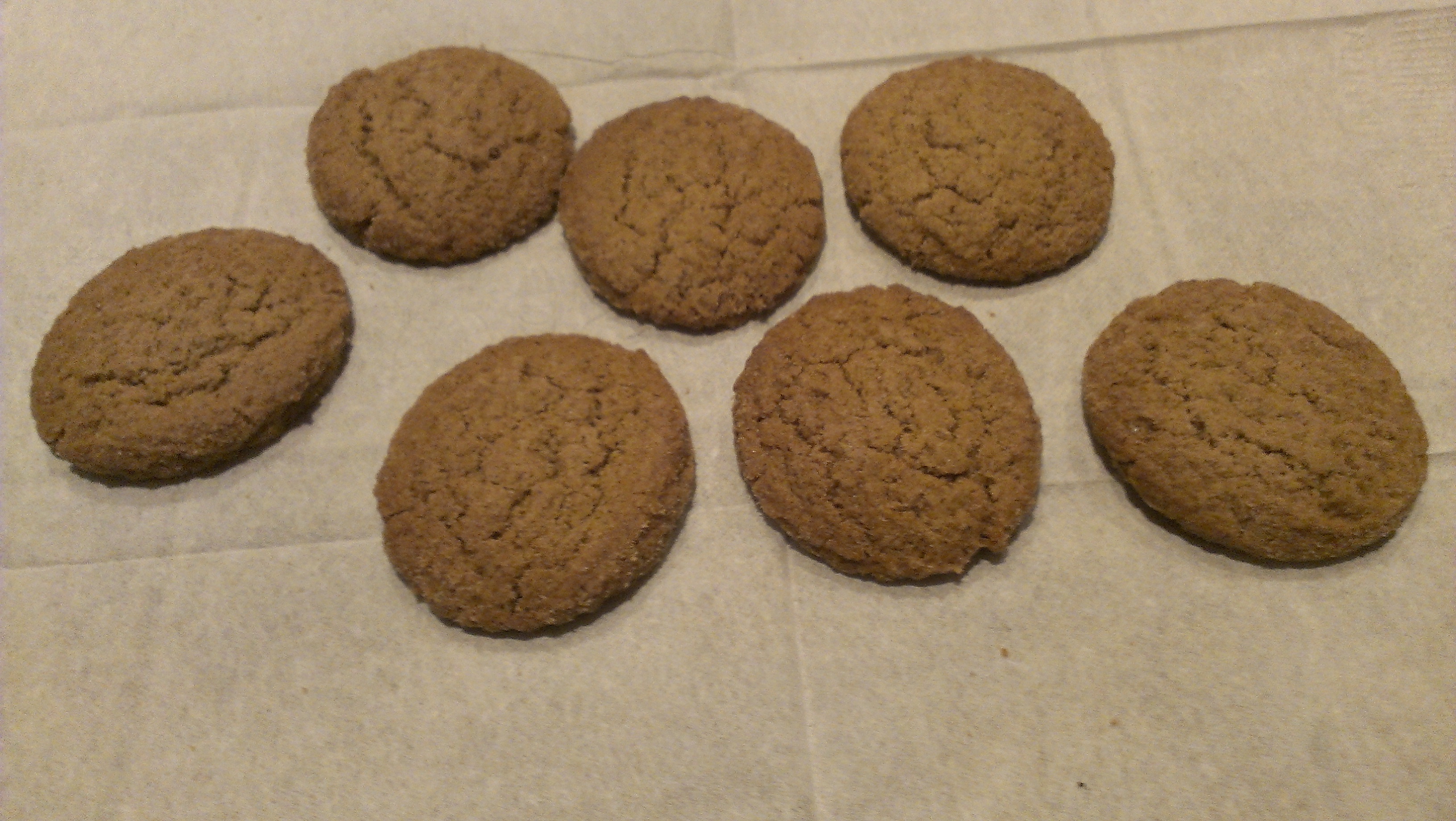
To celebrate the holiday, we went the “crispy cookie” route rather than the “moist cake” way, given that tomorrow is a cake holiday. They were gingery and spicy and seemed a little out of place in June…but, they weren’t bad!

Gingerbread Cookies

Categories: Desserts | Tags: , , , , | 4 Comments

153/365: National Rocky Road Ice Cream Day

You may encounter a rocky road ahead, but trust us – that’s a good thing, at least on June 2. It’s National Rocky Road Ice Cream Day!

Rocky road ice cream traditionally contains chocolate ice cream, marshmallows, and nuts. It was created in 1929 by William Dreyer of Oakland, California. A year earlier, Dreyer had formed an ice cream company with Joseph Edy. One day William, apparently bored out of his mind,  borrowed his wife’s sewing scissors and cut up marshmallows and walnuts, adding them to chocolate ice cream to create a new flavor. There’s no record of his wife’s reaction to his use of her scissors in such a manner, but the flavor was a hit. After the Stock Market Crash in October of that year, Dreyer named the ice cream rocky road “to give folks something to smile about in the midst of the Great Depression.” And smile people did, when they weren’t busy jumping out of high rise buildings and stuff. Eventually, the walnuts were replaced by almonds. Interestingly, in Australia people add jam to their rocky road ice cream, and in the U.K., cherries and raisins are incorporated within.

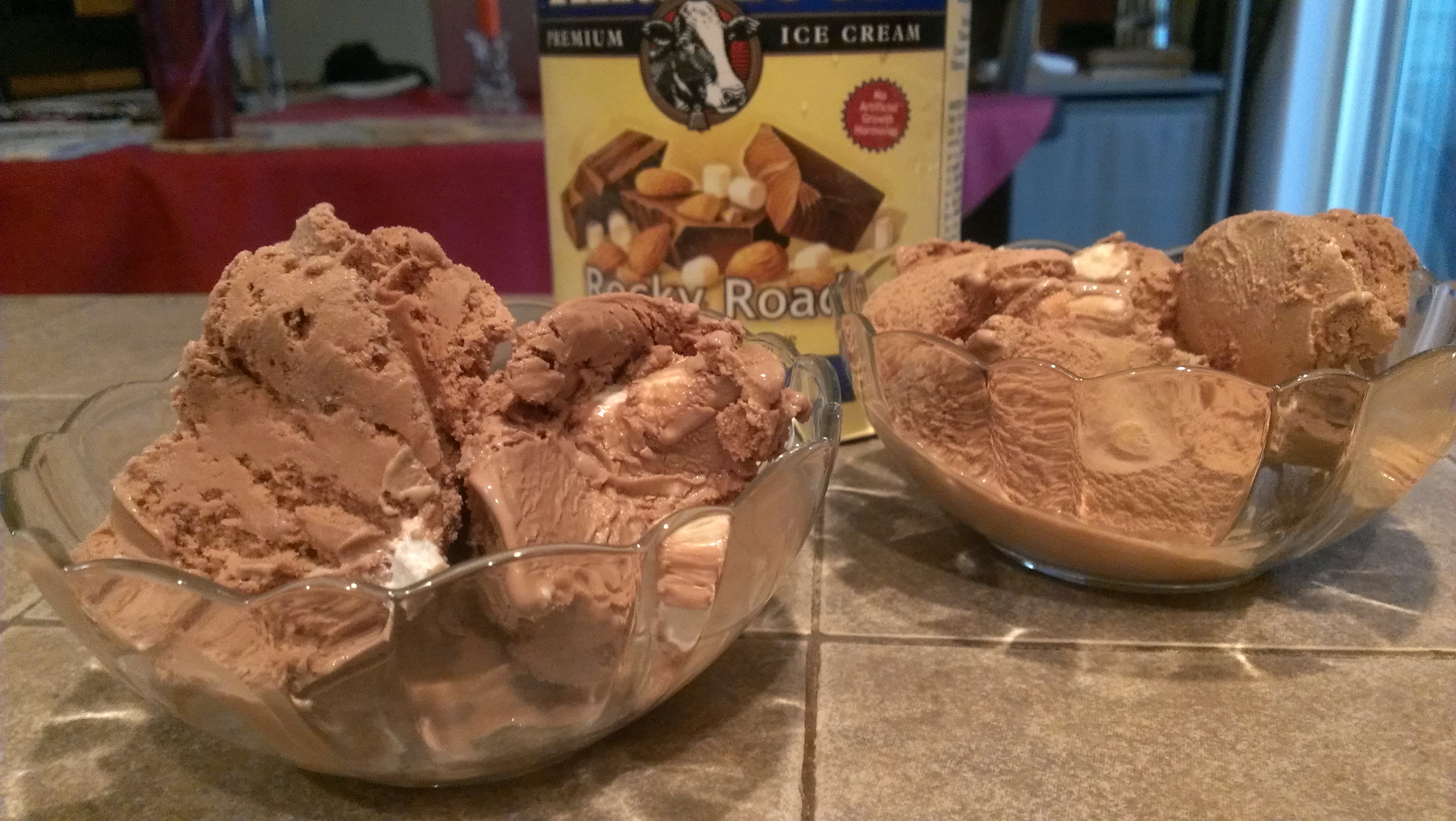
We kind of, sort of, celebrated rocky road ice cream earlier this year when we used it as a base for Heavenly Hash. But this time, we were able to enjoy a simple bowl of unadulterated rocky road. It’s one of my favorite ice cream flavors, so I had no problem eating a couple of scoops today!

Rocky Road Ice Cream

Categories: Dairy, Desserts | Tags: , , , , | Leave a comment

152/365: National Hazelnut Cake Day

Welcome to June, or The Month Of The Dessert. 20 of the food holidays are desserts only, leaving us no choice for substitutions. Actually, it’s going to be that way for the entire summer. Roughly half of the food holidays over the next three months center around desserts. This is going to be the toughest stretch of our challenge, I think. But…we’ve come this far, so we must soldier on. June 1 kicks things off with National Hazelnut Cake Day.

Hazelnuts, also known as filberts, are most widely produced in Turkey – 75% of the world’s production originates there. In the United States, 99% of hazelnuts are grown right here in Oregon and Washington. That makes us the Istanbul of the West, I suppose. The prevalence of hazelnuts pretty much everywhere was one of the things that stood out to me when I moved to the Pacific Northwest in 1994. Hazelnuts, which come from the hazel tree, have been around for thousands of years; an archaeological dig in Scotland in 1995 unearthed a pit full of hazelnut shells that were carbon-dated and found to be 9000 years old! They grew in popularity during the 1940s, when wartime rationing made cocoa scarce. Italian pastry maker Pietro Ferrero introduced what became known as Nutella, a hazelnut-chocolate spread that stretched the limited supply of chocolate by taking advantage of the plentiful hazelnuts in the Piedmont region of Italy. Nutella was imported to the U.S. in 1983 (seems like it’s been around longer than that!) and found a new legion of American fans.

With so many cakes looming on the horizon, we’ve decided to cut down portion sizes whenever possible. Our ingenious solution? Cupcakes! They are officially defined as “a small cake” so we aren’t breaking any rules. (An alternate definition is “an attractive woman” which I find both hilarious and outdated). It was simple enough to find a recipe for hazelnut cupcakes. This one uses both Nutella and Frangelico, so it’s an automatic win-win already. I spent a good portion of the afternoon whipping these up; we’ve got plans this evening and had to make sure we got our challenge in before we left – we probably won’t be back until after midnight!

The verdict? Pretty damn good! First time I’ve made cupcakes from scratch, too.

Chocolate Hazelnut Cake

Categories: Desserts, Pastry | Tags: , , , , | 2 Comments

151/365: National Macaroon Day

Today’s food of honor may not have universally agreed upon ingredients, but the general consensus is that it’s delicious no matter how it’s made. May 31 is National Macaroon Day!

What a fun word to say, by the way. Macaroon. Macaroon. You’d have to be a real buffoon if you didn’t like saying the word macaroon. A macaroon is a light baked confection, either a small cake or soft cookie. In America, macaroons are traditionally made with coconut, but in many countries they are prepared with almonds. Occasionally, other nuts such as pecans, cashews, or hazelnuts are used. Indeed, the first macaroons were created by monks in an Italian monastery during the 9th century, and were essentially almond meringue cookies. The word comes from maccarone, Italian for “paste” – yummy! – and, yes, it’s the same word used to describe macaroni. Macaroons were introduced to France in 1533 by the pastry chefs for Catherine de Medici, the wife of King Henri II. During the French Revolution, a pair of Benedictine nuns, Sisters Marguerite and  Marie-Elisabeth, who were seeking asylum in the town of Nancy paid for their lodging by baking and selling macaroons. They subsequently became known as the “Macaroon Sisters.” As the cookie spread through Europe, people began adding coconut, and in many recipes it completely replaced almonds.

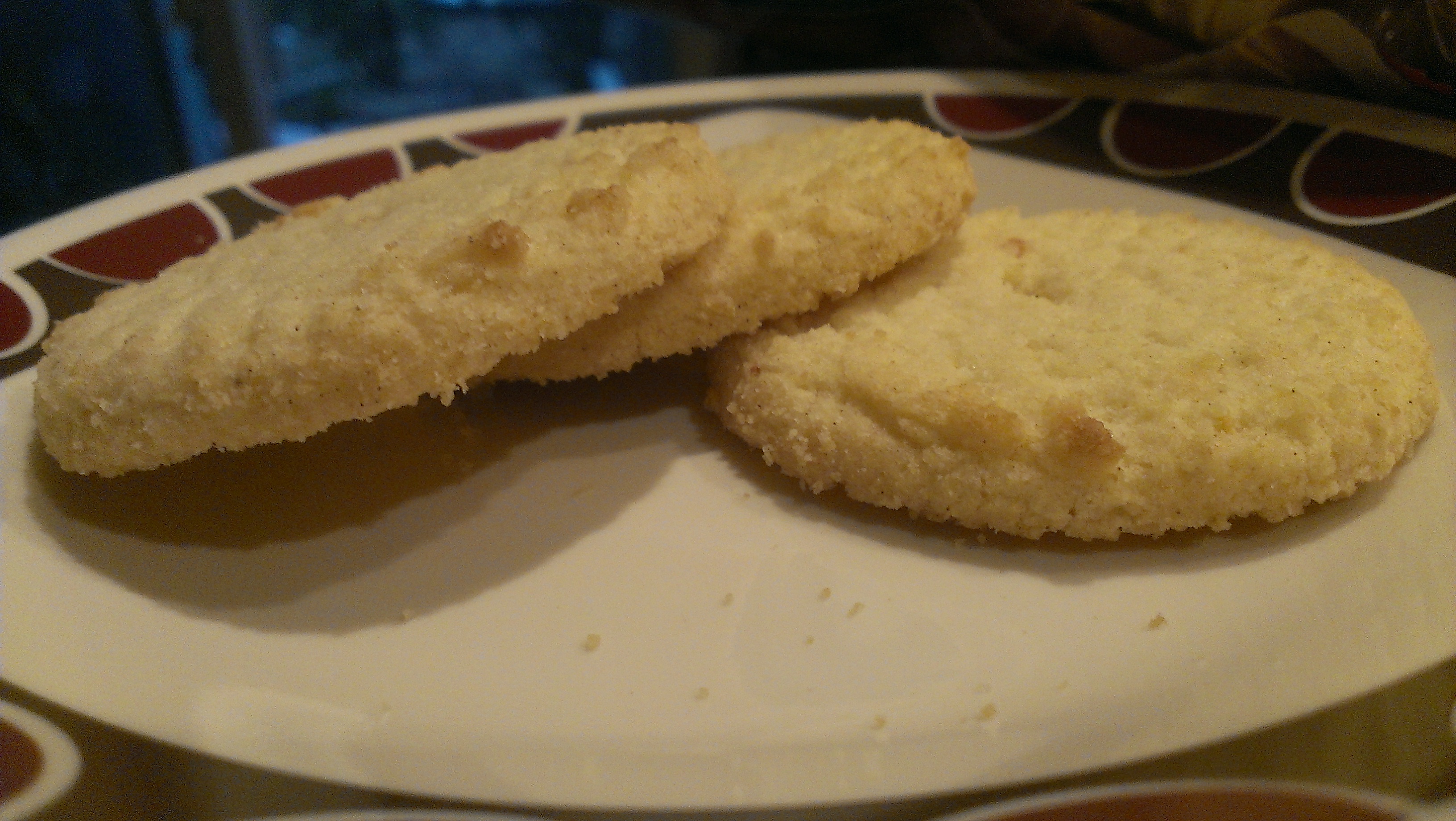
Surprisingly, Tara had never had a macaroon before. I happen to love them, but then again, I’m a big fan of coconut. The cookies were delicious!

Macaroons

Categories: Desserts | Tags: , , , , | Leave a comment

147/365: National Grape Popsicle Day

There’s no need to be a stick in the mud: today’s food holiday is a tasty, delicious treat for both young and old alike. May 27 is National Grape Popsicle Day!

Grape PopsiclePopsicles were invented by accident in 1905 when 11 year old Frank Epperson of San Francisco left a mixture of powdered soda, water, and a stirring stick on his porch overnight. It was bitterly cold that evening, and the whole thing froze. Little Frankie called his frozen treat Epsicles. It became a hit with the neighborhood children and, later, his own kids, who would frequently ask for “Pop’s ‘sicles.” The name stuck and was eventually trademarked, but it’s one of those products that has become so popular the name is used to denote generic versions, as well. Much like aspirin. Epperson began selling his Popsicles at an amusement park in Alameda, California in 1923, where they became wildly popular. They were originally available in seven flavors and marketed as “a frozen drink on a stick.” In 1925 Frank sold his rights to the Popsicle to the Joe Lowe Company of New York, because he was flat broke. Today, more than 2 billion Popsicles are sold every year, with the most popular flavors being cherry, orange, and grape.

We picked up a variety of Popsicles at the local grocery store. The box contained two grape – perfect! And they tasted great, even though they were sugar free.

Categories: Desserts | Tags: , , , | 7 Comments

146/365: National Cherry Dessert Day*

If you’re thinking that life is the pits, cheer up: May 26 is National Cherry Dessert Day!

It’s also National Blueberry Cheesecake Day, which is nice and specific. Cherry dessert, on the other hand? That could refer to anything. Cherry pie, cherry cobbler, chocolate-covered cherries…all of which we have already celebrated. A little more direction here would have been nice, especially since Tara and I are spending the night in a  hotel room on the Oregon coast for a little much-needed R&R. (That’s rest and relaxation, not ravioli and rutabaga. Not everything has to do with food).

Cherry dessert. Cherries are native to Europe, western Asia, and northern Africa. The ancient Greeks and Romans were especially fond of cherries, as are little old ladies when three of them line up in a row on their penny slot machines. Early settlers brought cherries to America in the 17th century, where they flourished around the Great Lakes. The Pacific Northwest became another prime cherry growing area when Henderson Lewelling planted an orchard in western Oregon in 1847. The most famous sweet cherry variety, the Bing, got its start at Lewelling’s orchard, and was named after one of his Chinese laborers (not the search engine, contrary to popular belief). The Rainier cherry, another popular sweet variety (and my personal favorite), is a cross between a Bing and a Van. Today, 650 million pounds of cherries are produced in the U.S. Most of them are grown in two regions: Michigan (75% of the sour cherry crop) and the Pacific Northwest (60% of the sweet cherry crop). California, Utah, Wisconsin, Pennsylvania, and New York also grow cherries.

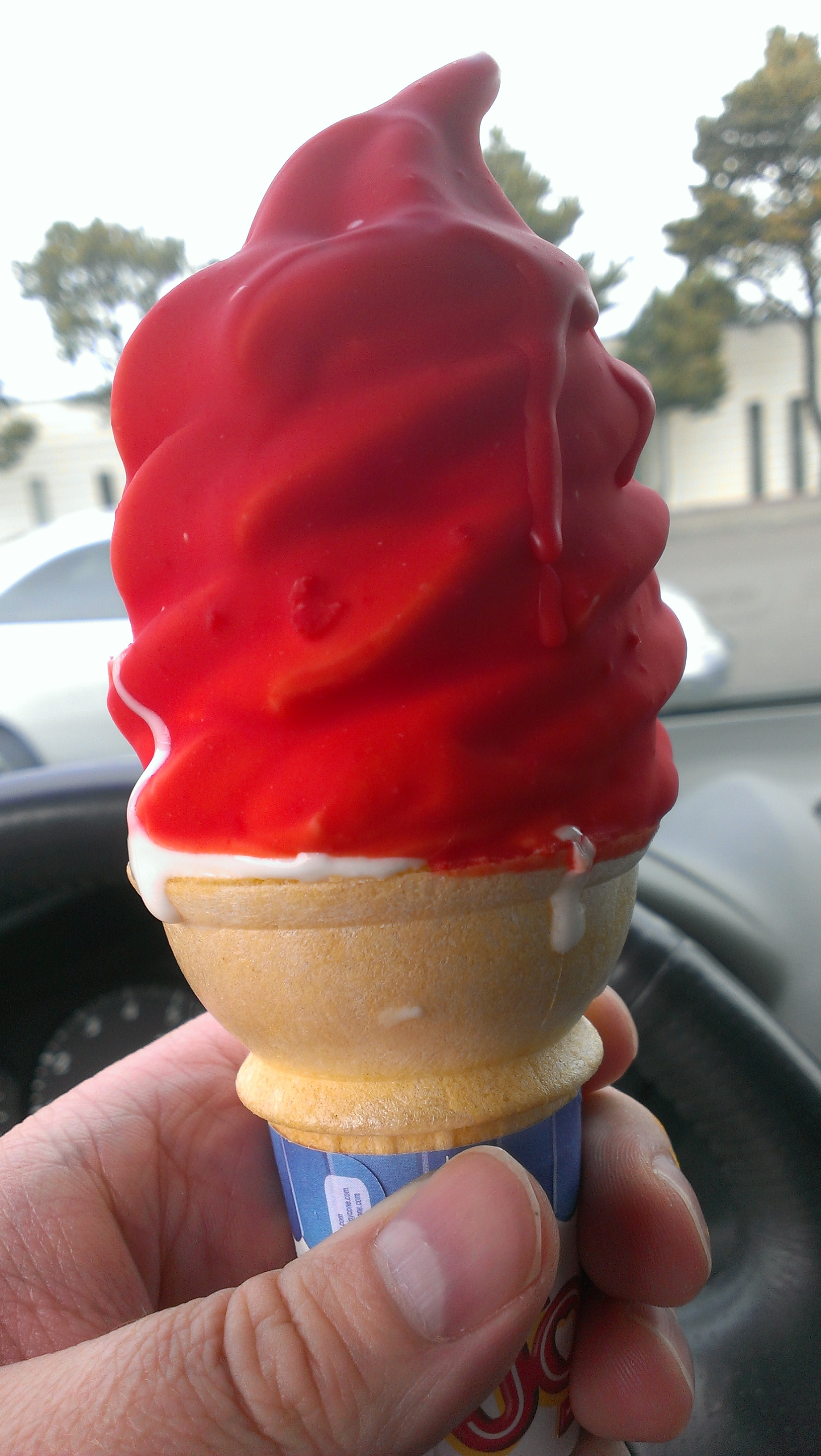
For the holiday, we stopped at an Arctic Circle in Newport, Oregon. Tara grew up with Arctic Circle fast-food restaurants, but there are only a handful in the whole state, none close by to where we live. It was my first time there, and I was impressed with the mushroom swiss burger and the fry sauce. Best of all, they had ice cream cones hand dipped in a hard cherry shell. Perfect! And because that might be stretching the definition of cherries, we also bought a pint of fresh cherries from a roadside stand on our way to the coast, and had some of those, as well. Either way, we covered all our cherry bases!

Categories: Desserts, Fruit | Tags: , , , , | 2 Comments

142/365: National Vanilla Pudding Day

Today we’re pudding out plenty of good vibes. May 22 is National Vanilla Pudding Day!

In the modern vernacular, pudding usually refers to a dessert. (Side note: I’ve never used the phrase “modern vernacular” in a sentence before. I feel all kinds of smart). But it wasn’t always so. Pudding is derived from the French word boudin, which means “small sausage.” So guys, if your girlfriend ever refers to you as a “boudin,” take offense. Anyhoo. If you’re wondering what sausages have to do with pudding, in Medieval Europe puddings were primarily meat-based. To this day, in Europe they can be sweet or savory, and not very pudding-like at all, as we discovered when we had plum pudding, which is more of a cake (and not a very tasty one, no offense to you Brits). It was the ancient Romans who used eggs as a binding agent in their dishes, creating a custard very similar to what we think of as pudding in the U.S. Around the 1840s, American pudding began to differ from traditional boiled English pudding when we started using custard powder – a type of cornstarch – as a thickener. This proved handy to covered wagon cooks, who rarely had fresh eggs available. Instant custard and pudding mixes were introduced in the 1930s, and quickly became a popular dessert item due to their ease of preparation and convenience. Not to mention the fact that they’re delicious!

I would have liked to have attempted to make a homemade vanilla pudding, but we were short on time today. I settled instead for a box of Jell-O pudding – but at least went with the type you have to cook (which Tara had never tried) instead of instant. I even had leftover homemade whipped cream from yesterday to top it with. The results were wonderful!

Vanilla Pudding

Categories: Desserts | Tags: , , , , | 2 Comments

139/365: National Devil’s Food Cake Day

Today is one hell of a delicious food holiday. May 19 is National Devil’s Food Cake Day!

Devil’s food cake is a moist and rich chocolate layer cake that was created in the late 19th century. Its name was a sarcastic response to angel food cake, which was the complete opposite: light (both in color and texture) and airy. Interestingly, devil’s food cake was originally more like a red velvet cake. It was actually dyed with red food coloring and topped with white frosting. It didn’t become the sinful chocolate dessert we associate it with until the 1970s. In fact, in many turn of the century cookbooks, the names are used interchangeably. The Waldorf Astoria Hotel claims to have invented devil’s food cake, but has been unable to back up this claim with any proof other than “we did, too!” They still serve a red velvet cake similar to the original devil’s food cake recipe.

Nowadays, what distinguishes devil’s food cake is its decadent chocolateness. (My computer says “chocolateness” is not a word. I’m using it anyway). Typical recipes call for cocoa and, sometimes, coffee. It is usually frosted in chocolate, as well.

We had a long drive home and a busy afternoon, so there were no fancy made-from-scratch cakes today. But that’s why they invented Duncan Hines, right?

Devil's Food Cake

Categories: Desserts | Tags: , , , , , | 3 Comments

137/365: National Cherry Cobbler Day

When you’re playing the slots, three cherries in a row is a lucky spin. Today’s food of honor requires more than just three cherries, but you’ll feel lucky you get to indulge in such a sweet treat. May 17 is National Cherry Cobbler Day!

We’ve already celebrated one cobbler-themed food holiday this year: April 13 was National Peach Cobbler Day. I already talked about the history of the cobbler then, and its many other fun-to-say-out-loud names (pandowdy, buckle, grunt, slump), so I won’t bother pushing the Deja Vu button again. How about a fun cherry fact instead? The United States grows 370 million pounds of cherries a year. Nearly half of the annual harvest – 175 million pounds, to be exact – is either frozen, canned, or packed into maraschino cherry jars.

Last time, we bought a pricey but very good cobbler from a local supermarket. I couldn’t find a suitable cherry cobbler this time around, but I didn’t search too strenuously, either. I figured I should just make one from scratch this time; I can bake a decent enough pie, and cobbler is like a poor man’s version of pie, anyway. Unfortunately I couldn’t find any fresh cherries – those are probably still a few weeks away yet – so I had to settle for frozen cherries instead. Despite this grievous misfortune, the cobbler still turned out pretty good.

I had to make it the night before, since Tara and I are headed up to Seattle again this weekend. But that just gave us an excuse to indulge in a little cobbler for breakfast. Nothin’ wrong with that! It turned out okay. A little sweet for my tastes, though.

Cherry Cobbler

Categories: Desserts | Tags: , , , | 2 Comments

Create a free website or blog at WordPress.com.