13/365: National Peach Melba Day

Today is National Peach Melba Day! When I saw this on the calendar I was a little worried. It sounds like one of those fancy, complicated desserts that entails a lot of time and effort. Fortunately, it’s pretty simple: a scoop of vanilla ice cream, topped with half a peach, and drizzled in raspberry puree. Now, that is do-able!

Peach Melba was created in 1892 by French chef Auguste Escoffier at the Savoy Hotel in London. Auguste apparently had the hots for a famous Australian opera singer, Dame Nellie Melba, who was a real diva. The type of gal whose rider stipulates she must have a bowl full of green M&Ms before every performance of Figaro. In an effort to impress her, the chef created a dessert in her honor. Most guys would’ve settled for a bunch of flowers or a schmaltzy card, but not this dude. His creation was served in an ice sculpture shaped like a swan, an ode to Wagner’s Lohengrin, the opera in which Nellie was performing. In one scene, the knight Lohengrin arrives in a boat pulled by swans. Escoffier’s swan carried ice cream topped with peaches and spun sugar, and was served at a dinner party in Nellie’s honor. This ploy might have gotten him to second base and beyond, but rumor has it Nellie shied away from eating anything cold for fear that it would damage her delicate vocal cords. Poor Auguste. This is what we call a FAIL. No word on whether she indulged in the treat named after her, but her career continued until 1930, so it’s safe to say her voice suffered no ill effects from eating ice cream served in ice.

Peach MelbaBy the way, five years later, Escoffier again attempted to impress Nellie by creating Melba toast for her. There happens to be a National Melba Toast Day coming up on March 23rd, so we’ll be revisiting this fascinating tale in a couple of months. Hang tight until then…you’ll just have to wait and see if Auguste ever did woo his lady!

Mr. Escoffier wisely realized it would be a real pain in the ass to carve an ice sculpture into the shape of a swan every time he served Peach Melba, so he changed it up a little and began serving it in a regular bowl, topped with a raspberry beret. The kind you find in a secondhand store. Err, sorry – Prince on the brain. He topped it with a raspberry puree! Good thing for us, too. My ice-carving skills leave much to be desired.

Since fresh peaches weren’t in season, we were forced to use canned. And of course raspberries are also more readily available in the summer months so we substituted frozen. None of this mattered, though. The dessert was easy to assemble, and tasted pretty good considering nothing was fresh!

Categories: Desserts | Tags: , , , , , , , | 6 Comments

12/365: National Curried Chicken Day

It’s nice when American food holidays pay homage to international cuisine. After celebrating tempura earlier in the week, today is National Curried Chicken Day! When many people hear the word “curry” they think spicy. And there are plenty of curry recipes that, like Dirty Harry, pack heat. But curry powder is a fairly tame blend of spices like turmeric, coriander, cumin, fenugreek, and red pepper. It’s got a warm, distinct scent and taste, and is what we used to make our curried chicken recipe today.

But today isn’t “curry” chicken day, it’s “curried” chicken day, and there is a difference. Curried chicken refers to the art of preparation – when you curry a chicken, you’re adding a mixture that includes curry to the chicken. Chicken curry, on the other hand, is made with a curry flavored sauce and typically cooked into a stew. Clear as mud, no?

Curried chicken is very popular in Southeast Asia, and most commonly associated with India. The word curry came from kari, an Indian/Sri Lankan term for meat and vegetables cooked with spices. Archaeologists have found mortars and pestles dating back to 2600 BC; these were used to ground spices such as mustard, fennel, cumin, and tamarind pods for flavoring meat. Members of the East India Trading Company (those guys again!) brought curry powder to Britain in the 17th century, where it was used to spice up leftovers. It proved a great way to liven up day-old bubbles and squeak! Curry has become such a staple in British cuisine that it’s a popular potato chip flavor and pizza topping. The 2013 Mini Cooper automobile features the Union Jack logo, dual racing stripes, and a curry-flavored steering wheel.

Today is a busy day for us. We’ve got an NFL playoff game to watch (go, Broncos!) and a birthday dinner for my dad this evening. Our best option for a curried chicken dish was lunch; I found a recipe for a curried chicken salad lettuce wrap featuring diced chicken, apples, red onion, garlic, mayo, sour cream, and curry powder. It was surprisingly delicious…so much so that we’re declaring this recipe a keeper! Tara isn’t even a fan of chicken salad in general, but loved this one. I think personally it’s been my favorite food challenge so far, and I love that we are expanding our food horizons with recipes we’d probably never even think of trying otherwise!

Curried Chicken Lettuce Wrap

Categories: Poultry | Tags: , , , , , | 3 Comments

11/365: National Hot Toddy Day*

January 11th is devoted to two food holidays. Or actually, two beverage holidays. It’s National Milk Day and National Hot Toddy Day. Milk may do a body good, but it’s boring and requires no special effort. I downed my morning pills with a glass of milk, and then ate a bowl of cereal for breakfast, while Tara took a few swigs to wash down her leftover brownie. Technically we could have considered this challenge complete and in the books by 6:45 AM, but the lure of the hot toddy was too strong to resist.

I can’t think of a more perfect time of year to celebrate a hot toddy. Winter is in full swing, and cold and flu season is upon us. In fact, the hot toddy was once prescribed by medical professionals as an ailment to treat the symptoms associated with colds and flu. The train of thought was that the vitamin C was useful for overall health, the honey to soothe the throat, and the alcohol to numb. Hey, it sure beats Nyquil! The exact origin of the hot toddy is unclear, but it is believed to have come from India, where a drink made from fermented palm sap (yum!) called the toddy was popular. Scottish members of the East India Trading Company returned to their native land and introduced a version of the drink to their country mates. Rumor has it sweet and citrusy ingredients were added to cut down on the harsh taste of Scottish whiskey. Odd, considering these are the same people whose national dish is made with sheep’s heart, liver, and lungs, and served in the animal’s stomach casing. But who am I to judge?

Although there are many variations, a traditional hot toddy is a mix of liquor (usually whiskey), boiling water, honey, lemon, and spices such as cloves, cinnamon, and nutmeg. In other words, potpourri in a mug! Midwestern folk add ginger ale, while Wisconsinites substitute brandy. People in southern California make theirs using the tears of their fired agents. Err…tequila. They use tequila! Traditionalists that we are, Tara and I stuck with a recipe honoring the original presentation. (Not the palm sap version, the whiskey version). Here it is:

Ingredients

1 teaspoon honey
2 fluid ounces boiling water
1 ½ fluid ounces whiskey
3 whole cloves
1 cinnamon stick
1 slice lemon
1 pinch ground nutmeg

Pour the honey, boiling water, and whiskey into a mug. Spice it with the cloves and cinnamon, and put in the slice of lemon. Let the mixture stand for 5 minutes so the flavors can mingle, then sprinkle with a pinch of nutmeg before serving.

The verdict?

IMAG0385 IMAG0384

Let’s just say, the Scottish should have added MORE ingredients to mask the whiskey.

And, I learned a valuable lesson on the economics of buying in bulk. We didn’t have cinnamon sticks or cloves, and when I went to the grocery store this evening to buy them, I almost choked over the prices. A jar of cinnamon sticks cost $5.89, ant the cloves were $4.99. I dutifully put them in my cart, and then stumbled across the organic foods section, where they were selling bulk spices. I grabbed a couple of bags, filled them with the amount necessary for the hot toddies, and ditched the jars. The cinnamon sticks cost me 30 cents and the cloves, 38 cents. I saved over $10 by purchasing in bulk. Whew! Who knew it was that cost effective?

Categories: Alcohol, Beverages | Tags: , , , , , , , | 6 Comments

10/365: National Bittersweet Chocolate Day

It’s National Bittersweet Chocolate Day, and upon learning this, my first question was: what in the heck is bittersweet chocolate? The answer, my friends, is blowing in the wind. And also on the internet. Chocolate is broken down into different categories based on the amount of fat it contains. Chocolate starts out as “chocolate liquor,” which is simply pure chocolate in liquid form. Sugar and a fat, such as cocoa butter, are added to this substance. To be classified as bittersweet, chocolate must contain a minimum of 35% chocolate liquor. The rest is cocoa butter, sugar, vanilla, and an emulsifier.

My second question was: what in the heck is an emulsifier? But then I figured the science was getting too intense, and I should just appreciate the chocolate for what it is. Which is, delicious! Who doesn’t like chocolate?!

Chocolate dates back to ancient times. The Mayans, when they weren’t assembling calendars meant to freak out otherwise highly advanced 21st-century people who falsely interpreted them as “the end of the world is coming!” warnings, were busy growing cacao trees in their backyards. They used the seeds to concoct a frothy and bitter beverage, an early precursor to Yoohoo. The Aztecs took over Mesoamerica, started adding spices like chile peppers and achiote to chocolate, and made sacrificial chocolate offerings to Xochiquetzal (pronounced Beverly), the goddess of fertility. Ever since, women have been craving the stuff during a certain time of the month. Coincidence? You be the judge. Europeans got their first taste of chocolate in the 16th century, and by 1839 had invented the modern-day chocolate bar. It only took them 200 years to figure out how to solidify it! Milk was added in 1875 by a Swiss candlemaker and his neighbor, Henri Nestle. Rodolphe Lindt figured out how to easily blend liquid chocolate, paving the way for Milton Hershey to mass produce affordable chocolate bars. 132 years later, Tay Zonday went viral with “Chocolate Rain.” 

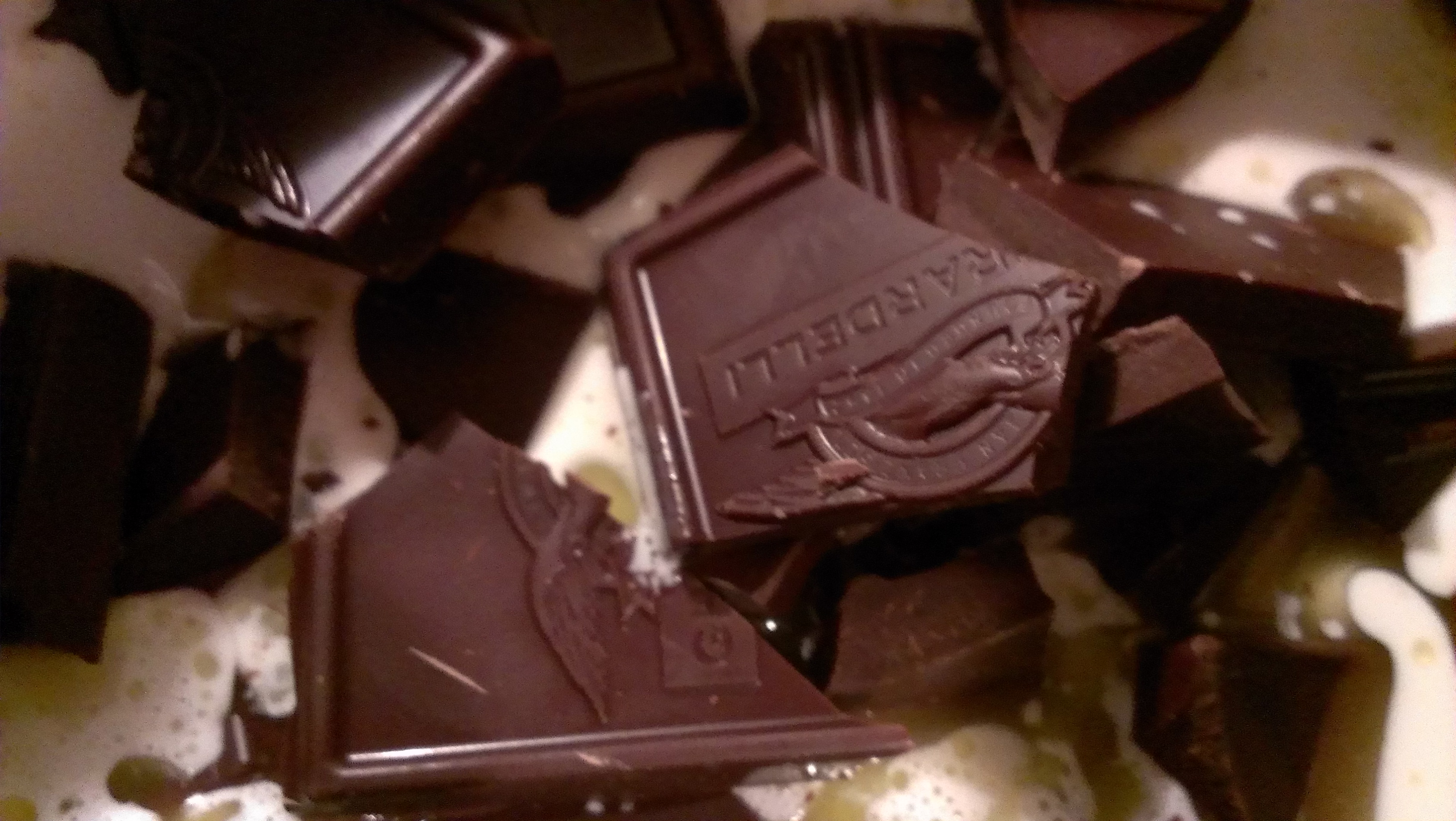
Yeah, that's Ghirardelli. We roll with the best around here!

Yeah, that’s Ghirardelli. We roll with the best around here!

I’ve always been partial to milk chocolate, which contains only 10% chocolate liquor. Tara’s a dark chocolate fan, and it doesn’t get much darker than bittersweet chocolate, which is most often used in baking – its bitterness cuts down on the sweetness inherent in sugary desserts. Tara has a recipe for brownies with a chocolate ganache (check it out here), so she took a couple of bittersweet chocolate bars, melted them down with some half-and-half and butter, and poured them over the brownies. “The chocolate is melted,” I said, once it had blended in with the ganache mixture. “That’s kind of bittersweet.”

Cracking food jokes is part of the fun. And the brownies were delicious with coffee.

Oh, and our coworkers are loving this project, because they’re ending up with all the leftovers! Well, the sweet leftovers. The beans, not so much.

By the way, we’ll be revisiting bittersweet chocolate towards the end of our challenge. November 7 is bittersweet chocolate with almonds day. Hard to believe there were two separate bittersweet chocolate lobbyist groups (check out another interesting article on how food holidays are created here) while nobody campaigned for white chocolate. What a crime.

Categories: Desserts | Tags: , , , , , , , , , | 12 Comments

9/365: National Apricot Day

Apricots are my favorite fruit, so when I learned today was National Apricot Day, I was excited! But then reality hit: it’s January 9. There’s snow in the forecast. Apricots couldn’t be more out of season if they tried. Which begs the question, why celebrate a delicious fruit in the dead of winter, when its peak growing season is five or six months out? Some of these holidays make perfect sense. National Champagne Day on December 31? You couldn’t ask for a more appropriate day to celebrate champagne. And National Whipped Cream Day coincides with the founder of Reddi Wip’s birthday. But apricots in January? Talk about a head scratcher…

One of our Facebook followers asked yesterday, Who is creating these days? Lord please dont tell us its hundreds of food lobbyists convincing politicians to vote for these food days. I think it might be interesting to know the history behind some of these days, follow the money as they say…

Great question, Adrian. I’d been wondering the same thing. I did a bit of research, and guess what? You were pretty much on the mark.

Here’s the scoop: the President has the authority to declare a commemorative day by proclamation. The job is not all foreign affairs and let’s-kill-bin-Laden blather! Constituents (including trade associations and P.R. firms) introduce petitions to honor certain foods, and the Senate has the power to issue resolutions proclaiming commemorative holidays. Governors, mayors, and state legislatures can do the same. Once the observance day has been authorized, the petitioner handles all promotion. Well, the petitioner, and also your friendly neighborhood food holidays blog. 🙂

An apricot and its cross section

So, if you’d like to see a day set aside to honor your favorite food, simply call your congressman!

Back to apricots. The fruit, a relative of the plum, dates back to ancient times. It is believed to have originated in Armenia, a country best known today for (nerd alert!) producing really good chess players. The Chinese, in their ongoing quest for world domination, insist the apricot is native to their country, and India says no, you are wrong, we cultivated apricots way back in 3000 BC. And by the way, are you happy with your current cell phone provider? Regardless of where apricot trees first blossomed, they were exported to continental climates around the globe, where they gained popularity. Alexander the Great brought them to Greece, Roman General Lucullus introduced them to Europe, and English settlers exported them to America.

Apricots contain more carotenoids – cancer-fighting antioxidants – than any other food. Not only are they good for your heart, they also lower cholesterol levels, and – best of all! – are considered an aphrodisiac in Europe. Shakespeare was well aware of this (the horny ol’ coot) and referenced it in a scene from A Midsummer Night’s Dream:

Be kind and courteous to this gentleman.
Hop in his walks and gambol in his eyes.
Feed him with apricoks and dewberries,
With purple grapes, green figs, and mulberries.
The honey bags steal from the humble-bees,
And for night tapers crop their waxen thighs
And light them at the fiery glowworms’ eyes
To have my love to bed and to arise.
That’s hot. Especially the part about “waxen thighs.” (And yes, he spelled it “apricoks.” I’m just going to let that obvious pun go).
Cookie dough with diced apricots. Screw baking, I could eat this as is!

Cookie dough with diced apricots. Screw baking, I could eat this as is!

Without the benefit of fresh fruit (since it’s JANUARY!! The apricot petitioner really screwed up with this one), we had to use dried apricots. Which is fine, they’re still pretty tasty – a nice combination of sweet and tart. Tara had a recipe for white chocolate chip and apricot cookies, so she baked up a batch last night and – no kidding – I took my first bite at 6:30 this morning. In the shower, no less. What can I say? I couldn’t wait. I love apricots that much.

What I don’t love is when people pronounce them “ap-ricots” rather than “ape-ricots,” but I’ll save that rant for another day and a different blog.
Tara's apricot and white chocolate chip cookies. Good stuff!

Tara’s apricot and white chocolate chip cookies. Good stuff!

Categories: Fruit | Tags: , , , , , , | 10 Comments

8/365: National English Toffee Day

It’s National English Toffee Day! After the hard work involved in making tempura last night, we were thankful that all we had to do to celebrate this holiday was unwrap a Heath Bar and take a bite.

Nobody really knows where toffee came from. Much like Carly Rae Jepsen, it just showed up one day without warning and stuck around. According to the Oxford English Dictionary, it is a variation of taffy, a chewy candy made by stretching a mixture of boiled sugar, butter, and artificial flavors and coloring. Toffee contains similar ingredients (molasses may be substituted for the sugar, and sometimes raisins or nuts are added) but is heated to the “hard crack” stage, which means either 295 to 310°F or 3-5 for possession with intent to distribute, depending on your definition. English toffee, a buttery version often made with almonds, is especially popular in the U.S. and is, in fact, the #1 snack choice of housewives who are addicted to Downton AbbeyDespite the name, it has little in common with the toffee that is popular in the U.K. Wot the bloody ‘ell?

English toffee can be either hard or soft – debate rages over which is the most authentic preparation. (“Rages” might be a bit of a stretch considering the English are notoriously polite folk. Except during soccer matches. The conversation probably went more like, “I say, ol’ chap, me mum always made ‘er toffee soft, but I can see the appeal in hard toffee, too. Cheerio!”).

Unfortunately, there’s not a lot you can do with English toffee. I suppose we could have tried making a batch from scratch, or using it to make cookies or brownies, but (SPOILER ALERT!) the next couple of days are going to involve cookies and brownies, so we didn’t want to overdo it.

Also, thank god for that gym membership.

In a burst of inspiration, I suggested we crumble up the Heath bars, coat a chicken breast with them, and saute that in a pan with a little butter and olive oil. This seemed like something a contestant on Chopped would do. One look from Tara put the kibosh on that creative (though admittedly out-there) idea. This is why I’m so happy to have a partner for this challenge: she’s the voice of reason.

English Toffee

Real quick before we close this out (and because just unwrapping and eating a Heath Bar is a cop out), I wanted to at least share something toffee related.

I’ve never been a toffee fan.  I remember my mom occasionally stashing one in the freezer to snack on while us kids were in school.  Several years ago a friend (Hi, Doreen!) borrowed one of my cookbooks looking to try out some new recipes.  A few days later she came in with a cake that had toffee pieces on top.  To this day, it’s one of my favorite cakes to make.  I considered making it for today’s holiday, but we’ll be noshing on baked goods the next two nights and I can only take so many goodies to the office.  Instead, here’s the recipe for you fine folks.  It’s super easy and definitely a crowd pleaser.

Thigh Cake (aka Better Than Sex Cake)
1 box chocolate cake mix
1 can sweetened condensed milk
8 oz jar caramel topping
8 oz tub whipped topping 
2 english toffee bars

Mix and bake cake according to directions in 9×13 pan. After baking, and while still warm, poke holes in cake with fork.  Pour canned milk and caramel topping over entire cake.  Let cool.  Spread whipped topping onto cake.  Top with toffee pieces (I freeze them overnight, place in a zip top bag, wrap in a hand towel, and break up the bars with a meat tenderizer).  Keep refrigerated.

Enjoy!

Categories: Desserts | Tags: , , , , , | 9 Comments

7/365: National Tempura Day

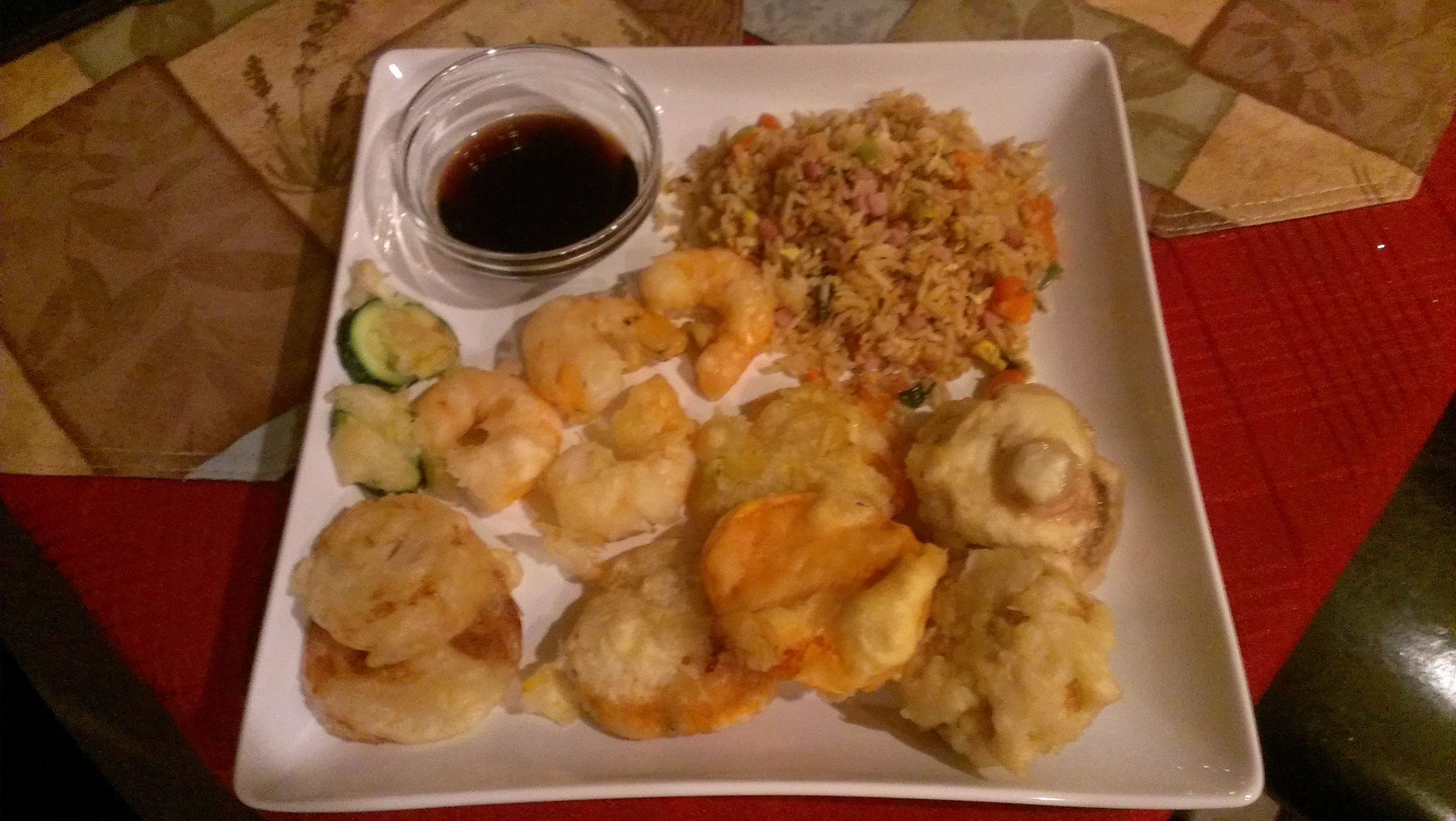
January 7th is National Tempura Day, which may seem like an odd choice for an American food holiday. But tempura actually refers to the Japanese method of frying vegetables and seafood, and is not an actual Japanese dish like sushi or udon. In fact, the foods we cooked tonight were all distinctly American (and the side dish, Chinese). But more on that later.

Tempura didn’t even originate in Japan. Jesuit missionaries from Portugal introduced it to the Japanese in the 16th century, while visiting Nagasaki. They also brought over panko and tonkatsu (though the Japanese are responsible for origami, haiku, and vending machines that dispense everything from live crabs to soiled panties). Tempura is derived from the Latin word tempore, which means “time period” and refers to Ember Days, holy days in which Catholics eschew meat in favor of fish and vegetables. Regardless of where it came from, the Japanese took to tempura like a fat kid to cake, dipping everything they could find in batter and deep frying it in hot oil.

We were both excited for this challenge because it allowed us an opportunity to cook an entree. Squirting a dollop of whipped cream from a can is easy, but where’s the fun in that? (Actually, it could have been very fun, if this were an R-rated blog. Sadly, it is not). Neither of us wants this challenge to be too simple. We’ve been looking forward to getting down and dirty with some of these ingredients! So to speak.

By the way, one week in and we are beginning to get a feel for things. We’ve learned some lessons already: preparation is key, and do not take the easy way out. While we’re still finding our rhythm, I think from this point on you’ll start seeing us stretch ourselves a little bit more.

Back to tempura. I’d actually been craving it for some time, and had mentioned making it for Tara a while ago. I’ve owned a deep fryer for years (though using it remains a novelty), and I know from experience that tempura isn’t a complicated dish to make. We picked up a bunch of veggies – onions, mushrooms, yam, and zucchini – and a few large prawns. Those, a box of tempura batter and a bottle of dipping sauce, and we were all set. Tara’s not a fan of white rice, so she suggested we make fried rice to go along with it. Cross-cultural culinary conflict aside, I was game. She said she’d “pick up the packet” from the store on her way home, and I just looked at her. Packet? What packet?? Fried rice is easy enough to make without any preservative-laden help. But I feel I should offer her the chance for a rebuttal here.

Here’s another one I’m never going to live down…  In my defense, I’ve never cooked fried rice and the one and only time it’s been cooked for me at home was just last year, and compliments of my dad.  He did use one of those seasoning packets, along with the requisite diced ham, onions, eggs, and peas.  It must’ve been all those preservatives Mark mentioned that made it taste so good.

On paper, tempura is easy to make. Pour the oil in the fryer, heat it to around 350 degrees, combine the tempura mix with ice water to form a batter (the colder the better – this prevents the batter from absorbing too much oil and leads to a crispier coating), dip, fry until golden brown, and voila! You’ve got yourself something hot, crispy, and authentically Portugese. The reality is a little different, however. You have batter dripping all over the counter and floor and sticking to your arms (where you don’t discover it until later, when it’s good and dry), and the house smells like fried oil for 48 hours afterwards. But at least it tasted good!

Especially when Tara has to clean up the mess.

Tempura

Categories: Seafood, Vegetables | Tags: , , , , , | 7 Comments

6/365: National Bean Day*

Today is National Bean Day! It is also National Shortbread Day. If you see an asterisk in the title, that means there are multiple food holidays on that date. We stated in the rules that when there are multiple holidays, we will choose at least one, but don’t have to incorporate them all. Some days are devoted to three and even four different foods. It’s just not feasible to cover every single one, but we’ll try our best. We’ll even let the readers choose sometimes!

What does January 6th have to do with beans? There’s no concrete evidence, but many believe today was chosen to commemorate geneticist Gregor Mendel, who experimented with bean plants to test his theories on inherited traits. Mendel died on January 6, 1884.

Beans have been cultivated for eons. They have been found buried with the dead in ancient Egypt, and were mentioned in Homer’s (the Greek poet, not the dimwitted yellow guy so fond of Duff Beer) The Iliad, published in the 8th century. It’s a little known fact that the famous poet penned the couplet “beans, beans, good for the heart/the more you eat, the more you fart.” His legacy lives on in schoolyards across the world to this day. Beans are even older than that: there is evidence they date as far back as 700 years B.C.! Which means it’s entirely possible that a caveman could have whipped up a nice stegosaurus and bean stew way back in the Jurassic era.

Oh, in case I haven’t mentioned it yet, my facts may be a little off here.

How many different types of beans are there? There’s fava beans, azuki beans, mung beans, chickpeas, peas, lentils, lima beans, pinto beans, kidney beans, soybeans, black beans, velvet beans, wax beans, green beans. I’d continue, but I’m beginning to sound like that dude in Forrest Gump.

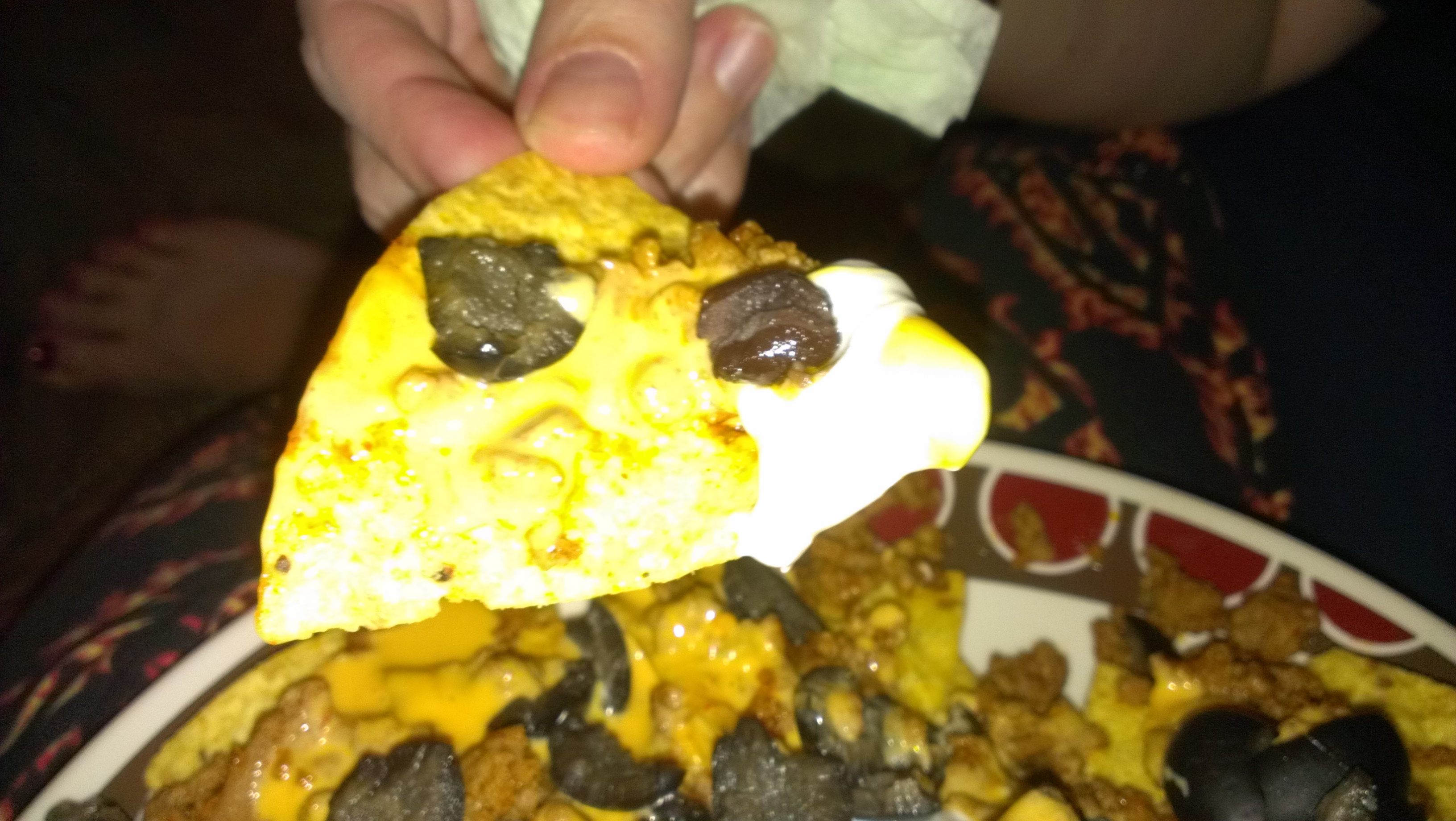
Tara's single bean, on the right. (That's an olive on the left). Hey - it counts!

Tara’s single bean, on the right. (That’s an olive on the left). Hey – it counts!

With so many choices available, we were stumped as to what to cook, so we left the decision up to our Facebook followers. The results were unanimous: black beans won in a landslide victory. Whew! I was thankful lima beans didn’t clinch the win. I’m not exactly fond of them. As for Tara, she isn’t fond of any type of bean, but in keeping with the spirit of the challenge – and following those same rules we came up with – she did have one bite. We ended up making nachos with ground turkey and black beans. Yummy stuff!

So, are beans good for your heart? The FDA says yes:  “Diets including beans may reduce your risk of heart disease and certain cancers.” Boo-yah!

And yes, they really do lead to flatulence. Hey, that’s why they invented Glade, right?

For dessert, we had shortbread cookies. I’ve always been fond of shortbread! It originated in Scotland and is descended from biscuit bread served in Medieval times. One can imagine King Arthur noshing on this stuff while deciding which country to invade next.

Beans, beans, good for the heart...and the nachos!

Beans, beans, good for the heart…and the nachos!

The Scots still take their shortbread seriously. Often, it is broken over the heads of new brides in hopes that this will lead to a prosperous union. I doubt it leads to much more than crumbs for a few lucky birds, but then again, we throw uncooked rice over here, so who’s to knock their tradition?

And look at that…we managed to cover both food holidays today. Go, us!

Tomorrow we break out the deep fryer and drown a whole bunch of vegetables in hot oil. What can I say? We’re a couple of sadists.

Rich, buttery shortbread cookies in the shape of stars.

Rich, buttery shortbread cookies in the shape of stars.

Categories: Desserts, Vegetables | Tags: , , , , , , , | 6 Comments

5/365: National Whipped Cream Day

Today is National Whipped Cream Day, and that’s fortunate since we are out of town visiting family. We don’t mind the tougher challenges, but it’s nice not having to worry about anything more difficult than how to use a can of whipped cream creatively while we’re on the road.

While many of these food holidays were apparently chosen at random, January 5 is no coincidence: it’s Reddi-Wip founder Aaron Lapin’s birthday. Mr. Lapin (“Bunny” to his friends) was the first person to put whipped cream in a can. He passed away in 1999, but his creation lives on.

Whipped cream existed long before Bunny was even a gleam in his parents’ eyes. Long, loooong before. Recipes have been discovered dating back to the 16th century, when whipped cream was known as “milk snow.” (How cute is that name? Can we bring it back?). By the 18th century the English began calling it “snow cream” (also cute). It is also known as Crème Chantilly, but that just makes me think of the old Big Bopper song. You know, Chantilly lace and a pretty face. Before my time, but I did see La Bamba and loved it. In 1946 the aerosol can was invented, and the sweet concoction (nothing more than cream that has been whipped – duh – and often sweetened and flavored with vanilla) took off when Mr. Lapin started selling Reddi-Wip out of the can. I think we can all agree that the man was a genius, no?

Imitation products exist (Cool Whip and other “whipped toppings”) but they do not contain dairy, and after the flak we received yesterday there was no way we were going to try to use a fake product this time around. I did get a Facebook message that said, I thought after yesterday’s do over you had learned your lesson about cans! Get or make the real stuff! My response? We have to draw the line somewhere! Otherwise people might accuse us of cheating because we didn’t milk our own cow to make the cream in the first place. A can of Reddi-Wip is perfectly acceptable.

Bunny thanks me.

After a busy day on the go, we didn’t get back to Tara’s mom’s house until 9 PM. You know what sounded really good at that point? A mug of hot cocoa. Topped with real whipped cream.

Aww...milk snow!

Aww…milk snow!

And THAT hit the spot!

Categories: Desserts | Tags: , , , , | 5 Comments

4/365: National Spaghetti Day

January 4 is National Spaghetti Day, and I couldn’t be happier. I mean, who doesn’t love spaghetti? It’s one of those foods that is universally adored by people of all ages, which explains the fact that 1.4 million pounds of spaghetti are sold in the U.S. alone every year.

That’s a lotta pasta.

Italian for little cords, thin rope or twine, spaghetti originated in Italy (duh) and harks back to the 12th century. It first appeared in the United States around the end of the 19th century, and exploded in popularity soon after. Traditionally, spaghetti was cooked al dente and served with a tomato sauce containing ingredients like cloves, bay leaves, and garlic. Oregano and basil came later. Meatballs and sausage, later still. Maple syrup has never caught on, though (sorry, Buddy the Elf).

Buddy would surely appreciate National Spaghetti Day! (Image courtesy of ew.com).

Buddy would surely appreciate National Spaghetti Day! (Image courtesy of ew.com).

Franco-American introduced a canned product called Spaghetti-Os in 1965, delighting children but signaling the end of western civilization as we knew it.

I was thrilled that today’s food challenge involved a main course, our first one this year. Unfortunately, we have plans to travel to Seattle this evening, so the opportunity to cook a batch of homemade spaghetti (one of my signature dishes, as a matter of fact) was lost. Timing plays such a key role in this challenge, but it’s something we’ve just got to contend with – working around our real-life schedules is part of the fun. Tara and I had planned on meeting at The Old Spaghetti Factory for lunch, but work demands got in the way, so I spent a good portion of this morning trying to figure out a backup plan to the backup plan. And then inspiration struck: I would have fun with it. My definition of “fun”? Taste testing a bunch of those canned spaghetti products I detest so much (see “end of western civilization” above). Maybe my finicky taste buds were just being too damn high-falutin’. There could be a hidden treasure preserved (that being the key word) in an aluminum can, unbeknownst to me since it had been a good twenty years or longer since I last indulged. There was only one way to find out!

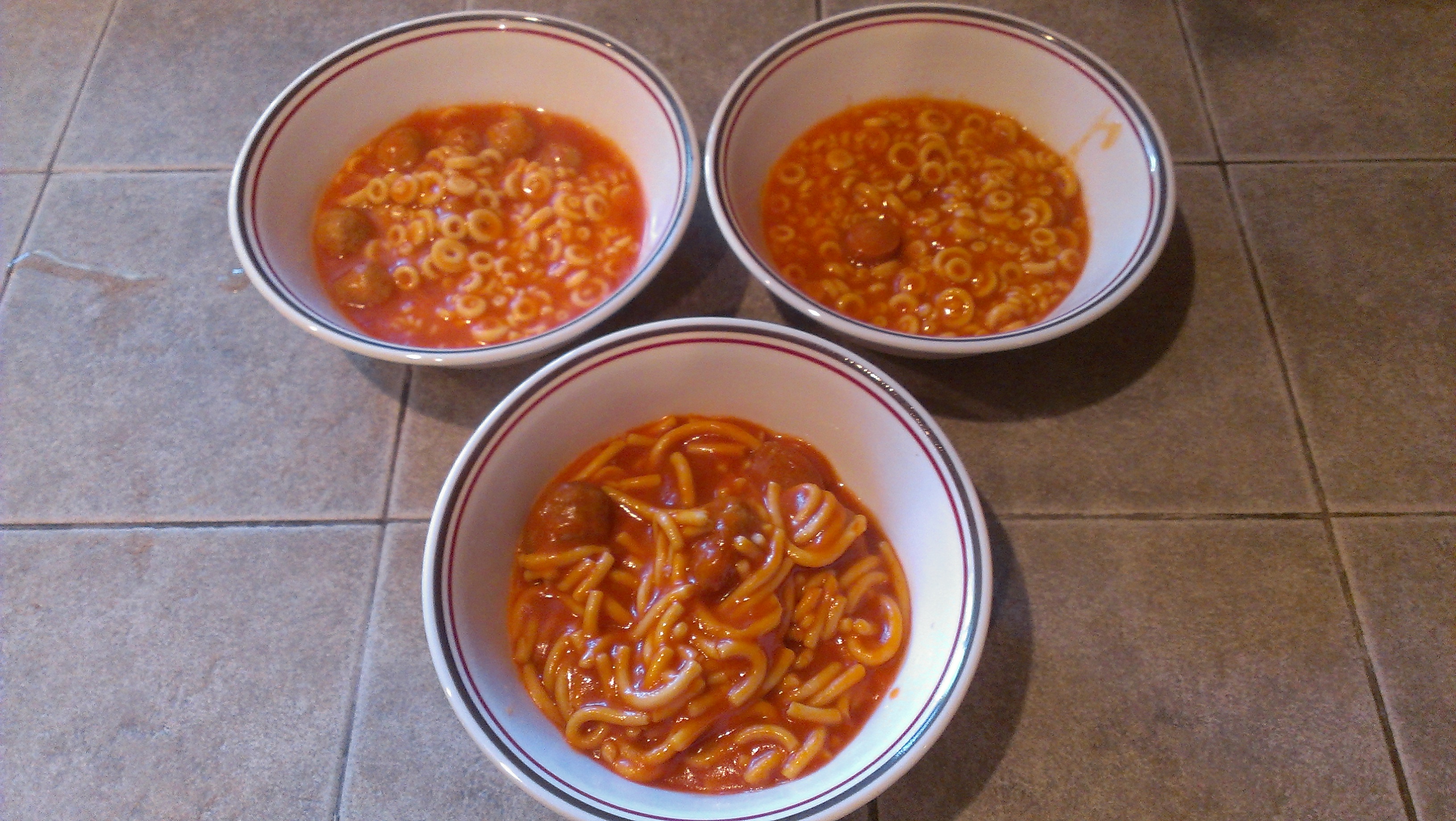
A quick stop at Safeway on my lunch yielded 3 varieties to heat-and-eat: Spaghetti Os with Meatballs, Spaghetti Os with Sliced Franks, and Chef Boyardee Spaghetti & Meatballs.

Introducing the contenders.

Introducing the contenders.

I got home, zapped ’em all in the microwave, and dug in. The verdict? They were all pretty awful. The Spaghetti Os with meatballs were the worst. Those little marble-sized meat nuggets had no flavor, while the sauce was cloying and chemical-y. The Sliced Franks were only slightly better – at least the hot dogs had more of a “bite” to them. The Chef Boyardee was the best overall, but in a field with these contenders, that ain’t saying much. The meatballs were actually decent (and twice the size of the Spaghetti Os), and the pasta was real spaghetti. The sauce was thicker, too – but still nothing to write home about. I liberally sprinkled some grated parmesan over each sample, and the sharp, pungent bite helped matters only slightly. I only managed a few bites of each before giving up, and felt a bit queasy after.

In this battle royale, Chef Boyardee reigned supreme. But that's not saying much.

In this battle royale, Chef Boyardee reigned supreme. But that’s not saying much.

This much can be said: lunch met my expectations. At least now I know I’m not missing out on anything good.

EDIT: Who am I kidding? This wasn’t real spaghetti. Plus I’m starving, and Tara didn’t partake. We’re going to the Spaghetti Factory for a quick dinner before hitting the road. The things we do for the sake of authenticity…

EDIT #2:

Well, if today’s Facebook post is any indication, there’s no way we’re getting away with using a Hostess pie for National Cherry Pie day.  Within moments of sharing today’s post, there was dissension among the troops.  Calls for a do-over, a threat to kick our butts, and accusations of offending the Italian American community rang loud and clear.

And little ol’ me was slaving away at work and didn’t even know I had been excluded from today’s challenge!  Actually, I’m entirely grateful for that because it only took a few texts to decide on hitting The Old Spaghetti Factory before we left for Seattle.

We’re the first ones to support local small businesses, and with the exception of last night’s dinner at Red Robin, we seldom visit chain restaurants.  Tonight I was pleasantly surprised with our dining choice and will definitely be back for more.  It’s late on a Friday night, I just drove three hours to Seattle, so I’ll keep this short.

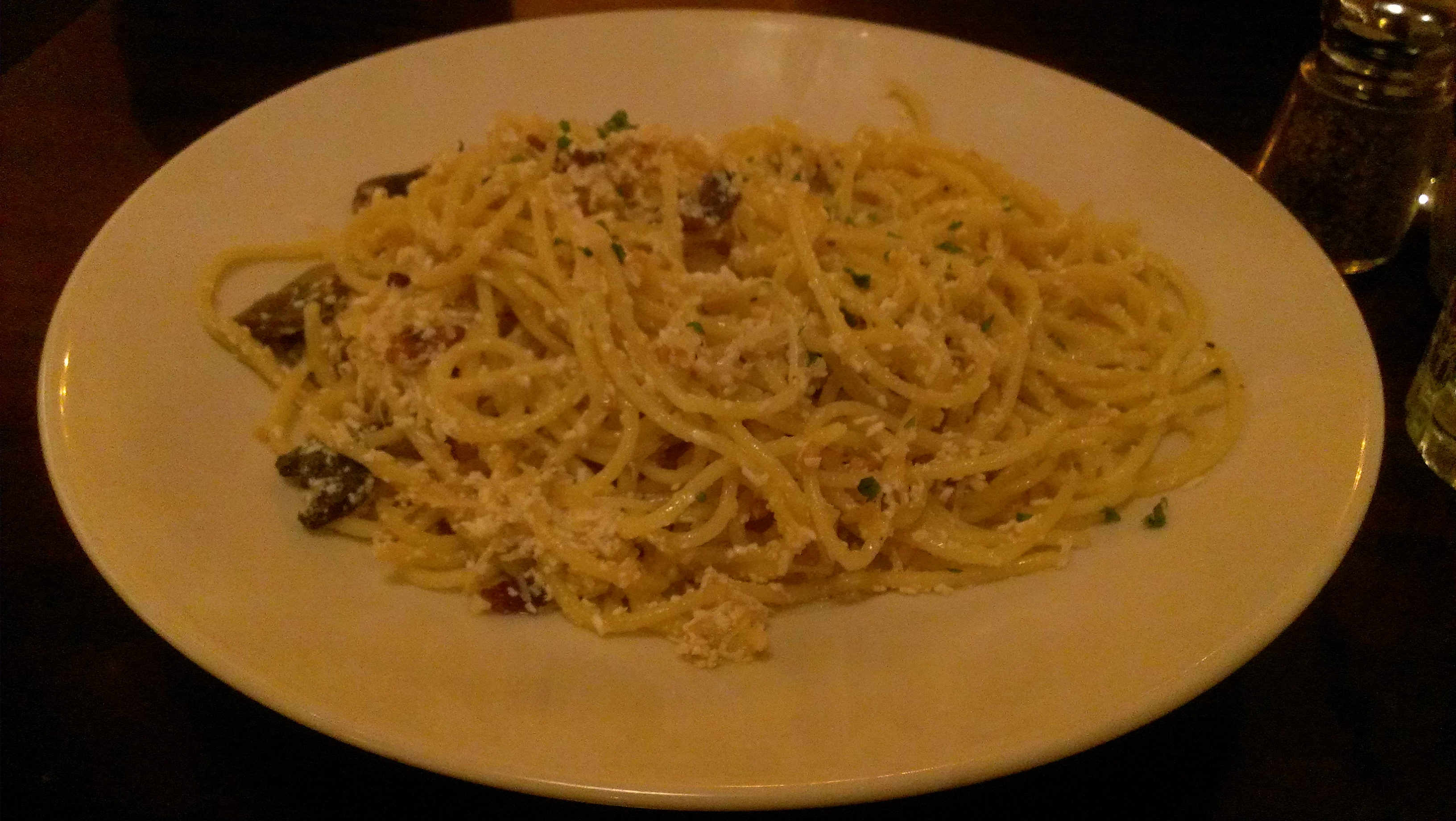
A friend of Mark’s suggested their Garlic Mizithra.  As soon as he saw there was bacon in it, he was all in.  We like to share our dishes, so I quickly scanned the menu for a different spaghetti dish, but didn’t get very far when I saw they had crab stuffed ravioli.  Y’all have no idea how much I LOVE crab stuffed ravioli.  I’d had a late lunch and wasn’t even hungry, but I still cleaned my plate.

Back to the spaghetti.  It was awesome.  Nutty browned butter, sharp and tangy cheese, earthy mushrooms.  And BACON.  I snuck in my requisite bite, but when I went back for more Mark had his arm protectively around the bowl and almost snarled at me!  Okay…not really.  The canned spaghetti left him starving and he had his bowl emptied in no time.  Success!

Stay the hell away from my mizithra, Tara!

Stay the hell away from my mizithra, Tara!

Categories: Pasta | Tags: , , , , , | 16 Comments

Create a free website or blog at WordPress.com.