73/365: National Potato Chip Day

If you’re feeling salty, your mood is sure to improve today. We celebrate one of the most popular snack foods in America: it’s National Potato Chip Day!

Tara's employer got in on the action today!

Tara’s employer got in on the action today!

Potato chips actually started out as a joke. One evening in August, 1853, a diner at a restaurant in Saratoga Springs, New York was unhappy with his meal. He complained that his potatoes were too thick, soggy, and bland, and kept sending them back to the chef, George Crum. After trying to appease the customer several times (and probably hawking a loogie in his food at some point), Crum had had enough. He decided to slice the potatoes as thinly as possible, fry them until they were crisp, and season them with extra salt. The trick backfired when the customer loved them, and suddenly the restaurant had a new hit item on their menu called Saratoga Chips. In 1910, Mike-sells Potato Chip Company in Dayton, Ohio became the first company to mass-market and sell potato chips. Back then, they were sold in barrels and tins or scooped out of bins. California entrepreneur Laura Scudder developed a wax bag to fill with potato chips at her factory, a revolutionary invention that kept them fresh and crispy longer. Flavored potato chips were developed in the 1950s by Joe “Spud” Murphy of the Tayto company, who came up with Cheese & Onion and Salt & Vinegar flavors. Flavored chips became an overnight sensation, and Murphy became filthy stinkin’ rich. Nowadays there are dozens of potato chip flavors, including Chicken & Waffles. Really, Lay’s?! But that’s not unusual compared with flavors found in other parts of the world, like Canada (Ballpark Hot Dog, Greek Feta & Olive); Japan (Scallop With Butter, Mayonnaise); and the United Kingdom (Prawn Cocktail, Lamb & Mint, Sausage & Ketchup, Stilton & Cranberry).

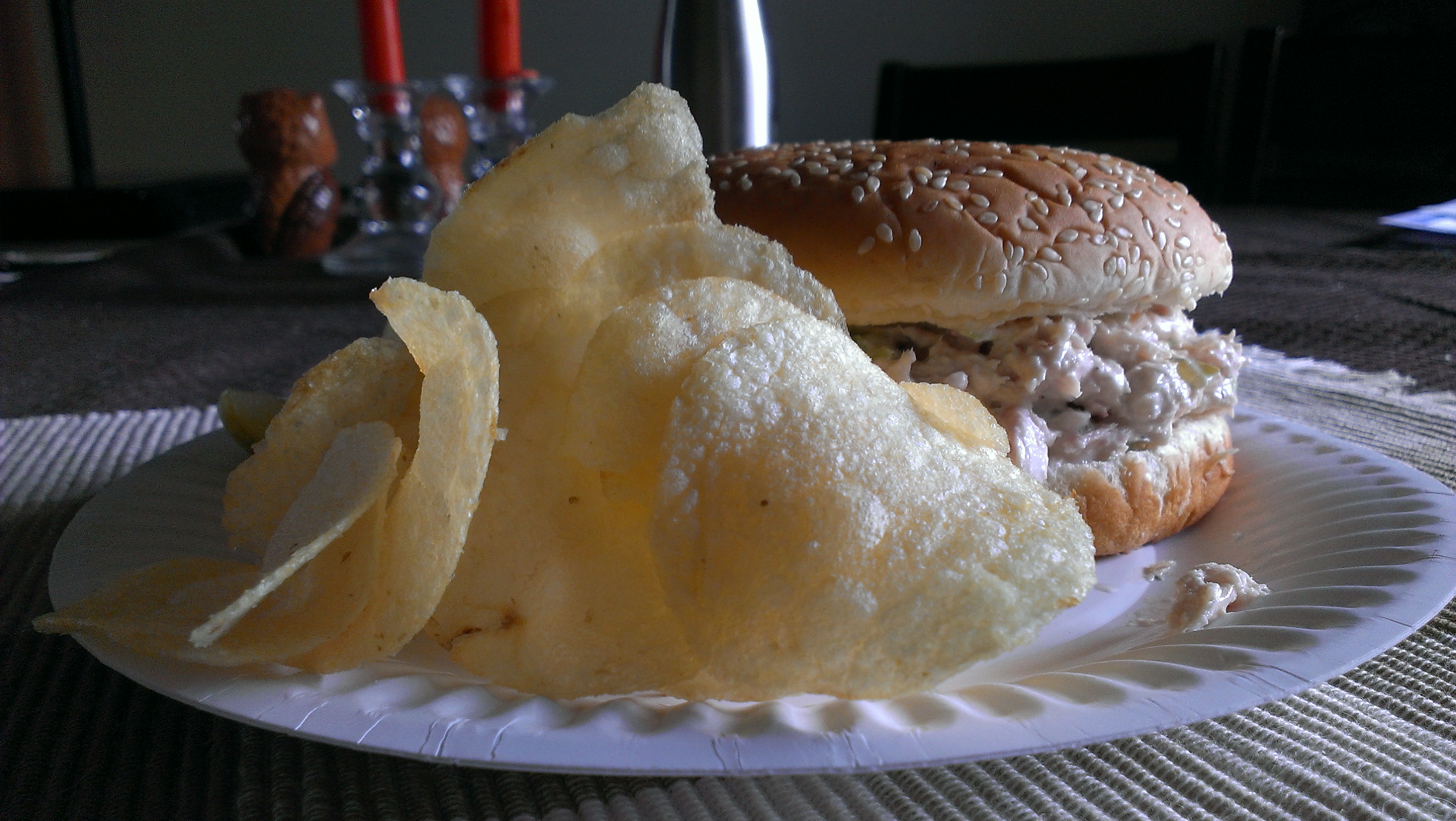
For our challenge, we stuck with regular ol’ original Lay’s. They may not be exotic, but they are dependably salty, crispy, and delicious!
IMAG0613

Categories: Snacks | Tags: , , , , , , , | 11 Comments

72/365: National Coconut Torte Day

If you’re a lawyer in the tropics, then today is right up your alley: it’s National Coconut Torte Day! (Torte…tort…a case in which damage, injury, or a wrongful act was done willingly or negligently…okay, this joke was a stretch). The truth is, I never really knew what a torte was before today’s challenge. I thought it was a pie-like pastry, but Tara informed me that’s a tart. Talk about confusing! As it turns out, a torte is a fancy name for a multilayered cake.

Multilayered cakes date back centuries. In fact, the oldest known cake in the world was a Linzer Torte, an Austrian confection with a lattice top and a funny accent. Originally made in the town of Linz, Austria, the cake can be traced back to 1653 thanks to a recipe discovered in an abbey in Vienna in 2005. In the 1850s an Austrian tourist brought the recipe to Milwaukee, a city best known for beer, cheese, and Laverne & Shirley. From there, its popularity spread across the U.S.

If you’ve been reading this blog the past few days, you’ll know that I have recently learned that I do, in fact, have some baking skills. I found a recipe for a coconut torte that seemed easy enough (though perhaps a little too easy, as it was basically a box of white cake mix and a frosting made of sour cream, Cool Whip, sugar, and coconut). I can’t say it was difficult to make, though I did have to knock on my neighbor’s door after dark and borrow the sugar. She’s so used to me doing that, when she opened the door and saw me standing on her doorstep the first words out of her mouth were, “Do you need eggs or sugar?” So I’m giving a special shout-out to Andrea, who saved our coconut torte!

We brought it over to my parents’ house to share after dinner. And guess what? It got rave reviews! The first cake I’ve ever baked in my life turned out to be a rousing success.

Coconut Torte

Categories: Desserts | Tags: , , , , , , , | 4 Comments

71/365: National Baked Scallops Day

Three days after celebrating crabmeat, we honor another delicious seafood: March 12 is Baked Scallops Day! Scallops have long been a personal fave of mine (much like crab), so this has been a fun past few days.

Scallops are characterized by a brightly colored, fan-shaped shell. The word comes from the French escalope, which means “shell.” It doesn’t get much more literal than that. Scallops symbolize female fertility; many paintings of the goddess Venus include a scallop shell to help identify her. The scallop shell also symbolizes the setting sun, and Greedy Ass Big Oil Conglomerates (it is the logo for Shell). But we’ll overlook that, since the meat is so damn tasty. Scallops are considered a delicacy around much of the world, prized for their mild, sweet flavor and nutritious properties. In the U.S., we generally eat the abductor muscle, the white and meaty part of the scallop. In other parts of the world, scallops are eaten whole (though presumably this does not include the shell). Scallops are broken down into two different categories: bay scallops and sea scallops. The main difference is in the size; sea scallops are considerably larger, making them a better choice for pan searing. Scallop season runs from November to March, but frozen scallops are available year-round.

I picked up some sea scallops from the seafood counter at Fred Meyer after work. They were $18.99 a pound, which is just a tad pricey, so I asked for 1/2 a pound. Chuckled when I ended up with a whopping 4 scallops. But there are four of us this week, since I’ve got my kids, so I simply baked the scallops as an appetizer, and we had fish (cod) for dinner. The recipe was pretty simple and, as you might guess, delicious!

Baked Scallops

Categories: Seafood | Tags: , , , , | 7 Comments

70/365: National Oatmeal Nut Waffle Day

Today is one of the stranger food holidays this year. Not the ingredients themselves so much as the combination of ingredients. Oatmeal, nuts, and waffles are all celebration-worthy (and each, in fact, has its own national food holiday). But whoever heard of oatmeal nut waffles? It’s an oddly random day to celebrate. But as I’ve said before, we don’t make the rules, we only follow them. So a hearty, happy National Oatmeal Nut Waffle Day to you and yours!

Waffles are essentially communion wafers on steroids. The two emerged at the same time, in the 9th century, and both were initially flavorless discs made with grain flour and water. Early waffle pans were made of iron and depicted images of Jesus and the crucifixion. It took 200 years for folks to realize that waffles might taste decent if they had a little flavor, so ingredients like orange blossom water and honey were added. The first known waffle recipe was published in the 14th century, and read: Beat some eggs in a bowl, season with salt and add wine. Toss in some flour, and mix. Then fill, little by little, two irons at a time with as much of the paste as a slice of cheese is large. Then close the iron and cook both sides. If the dough does not detach easily from the iron, coat it first with a piece of cloth that has been soaked in oil or grease. Hey…why isn’t today National Wine Waffle Day?! Harumph. Modern waffle irons first appeared in the 15th century, with the classic grid shape emerging soon after. Waffle recipes became more sophisticated, with the additions of sugar, butter, and eggs. Dry waffle mix was developed in the 1930s, and the Dorsa brothers from San Jose, California developed a frozen waffle they went on to name Eggo in 1953. Belgian waffles – larger and lighter thanks to the addition of yeast in the batter – were introduced at the 1962 Seattle World’s Fair, and quickly became popular. Americans liked the texture and the bigger squares and deeper pockets, perfect for holding melted butter, syrup, spare change, and lint.

In researching recipes for oatmeal nut waffles, I discovered something interesting: they are very healthy, made with whole wheat flour, and honey in place of sugar. Flush with my baking success yesterday, I whipped up a batch this morning while Tara was getting ready for work, using pecans for the nuts.The waffles were very dense and not at all sweet, but that’s why they invented syrup. Overall they had a good flavor. Tara and I talk about opening a restaurant someday, and these would be a good addition for the health nut/vegan crowd. I doubt I’d make them again, but they did turn out pretty good.

Oatmeal Nut Waffles

Categories: Breakfast, Nuts | Tags: , , , , , | 2 Comments

69/365: National Blueberry Popover Day

If you lived nearby, we’d invite you to pop on over to help us celebrate today’s food holiday: it’s National Blueberry Popover Day!

Popovers are light, hollow rolls similar to Yorkshire pudding, a staple of British cuisine since the 17th century. They are named because the batter “pops over” the top of the muffin tin while baking. Yorkshire pudding was created in order to use up the excess pan drippings from roasting meat; this was added to the batter, and the rolls were originally called “dripping pudding.” American popovers were originally cooked the same way: settlers in Portland, Oregon lined custard cups with a batter that contained meat drippings, garlic, and herbs. These were coined Portland Popover Pudding. Nowadays, popovers are made without pan drippings or herbs; butter is the preferred ingredient. American poet Ogden Nash once wrote,

Let’s call Yorkshire pudding
A fortunate blunder:
It’s a sort of popover
That turned and popped under.

Clever, that guy.

We had a three-hour drive home from Seattle today, and then had to make a trip to the grocery store. Despite our busy schedule, I still found time to make blueberry popovers from scratch. Yes, me…not Tara. This is huge, because I am not a baker. The chocolate souffle challenge was my first attempt at baking something for the blog, and you might recall I lost miserably to my fiance. I was determined to do these popovers on my own though, and the recipe was pretty straightforward. To my surprise and delight, they turned out very good. Light and airy, with just a touch of sweetness. A little bit of powdered sugar on top brought all the flavors together. I am excited, because this means I can bake!! 

Ingredients

  • 3 whole eggs
  • 1 cup milk
  • 1 teaspoon vanilla
  • 5 Tablespoons sugar
  • 1 cup all-purpose flour
  • 3 Tablespoons butter
  • 1/2 cup blueberries 

Preheat oven to 375 degrees. Divide the butter into the 6 cups of your popover pan. (If using a muffin tin, you will need to use all 12 cups. Just divide the butter up evenly.) Place the pan in the oven for 3-5 minutes while you are making the batter. In medium bowl, beat the eggs with the milk, vanilla, and sugar, then whisk in the flour. Pour the batter into the butter-filled cups, then evenly add a few blueberries to each cup. Return to the oven for 5 minutes, then reduce the temperature to 350 degrees and continue to bake for another 25 minutes. Popovers will be tall and gorgeous just out of the oven, but they shrink very quickly. It doesn’t affect the taste. Serve with a sprinkling of powdered sugar and maple syrup.

I can bake!! Blueberry popovers are light and airy, and delicious.

I can bake!! Blueberry popovers are light and airy, and delicious.

Categories: Pastry | Tags: , , , , , , | 4 Comments

68/365: National Crabmeat Day

There should be a special claws stating that every day is National Crabmeat Day, because the sweet and tender crustacean is a delicious delicacy that we are happy to celebrate today! But I’m just being shellfish. We are fortunate in the Pacific Northwest to have access to Dungeness crab year-round. It’s one of my favorite seafood treats.

Crabs are ocean-dwelling crustaceans dating back to the Jurassic period. Many species live in fresh water, and some even exist on land. It is unknown when humans first realized crab was good to eat. Probably some early homo sapien ran out of saber tooth tiger meat before company arrived, and turned to crab because he was in a pinch. Crabs make up 20% of all crustaceans consumed worldwide. There are a wide variety of preparation methods: popular dishes include bisque, curry, and crab cakes. They can be boiled, steamed, baked, or fried. Some species (such as soft shell crabs) are eaten whole, while other varieties are prized for the meat in their claws or legs (snow crab). In Asia, female crab roe is considered a delicacy. In many countries and cultures, crab is beloved, but the expense makes it a rare treat, so imitation crab meat is substituted. In America, it is typically served in sushi (California rolls) or in crab salad, and is often made with pollock, a mild white fish abundant in the Bering Sea off of Alaska. The fish is skinned and boned, and the meat is minced and artificially flavored. It may contain a small amount of real crabmeat, but all I can say is: what a waste. Nothing beats real crab!

Tara and I are visiting family in Seattle this weekend, which gave us the perfect excuse to head down to Pike Place Market, an enormous public market overlooking Elliott Bay. Open since 1907, Pike Place is famous for its selection of fresh seafood. What better place to go to celebrate crab?

Our philosophy for this challenge was, simpler was better. Dungeness crab is so sweet and succulent on its own, we decided to pick up a couple of crabmeat cocktails. Big chunks of crab and a deliciously tangy, perfectly spicy cocktail sauce – and nothing else. Not cheap at $9 a pop, but you know what? I am declaring this my favorite food challenge so far. It was absolutely delicious.

Food at its most simple and finest: big chunks of fresh Dungeness crab, cocktail sauce, and nothing else. Delicious!

Food at its most simple and finest: big chunks of fresh Dungeness crab, cocktail sauce, and nothing else. Delicious!

Categories: Seafood | Tags: , , , , , , | 2 Comments

67/365: National Peanut Cluster Day

Today we celebrate peanuts. And chocolate. Together in one sweet, salty little bundle. It’s National Peanut Cluster Day!

Peanut clusters have been around for about a hundred years or so. The Standard Candy Company of Nashville, Tennessee came out with the GooGoo Cluster, a round candy bar containing marshmallow, caramel, and peanuts, covered in chocolate. It is considered the first combination candy bar, made up of several different types of candy rather than an all-chocolate chocolate bar. Kind of like the mutt of the candy bar kennel, if we’re stretching for analogies here. During the Great Depression, the marketing slogan for GooGoo Clusters proclaimed them “a nourishing lunch for a nickel.” The FDA would have a field day with that today.

Here’s an interesting story on a company whose own peanut cluster recipe dates back to 1912 or 1913. They are bucking the manufactured-by-machine trend and bringing back their original recipe peanut clusters, making each one by hand. If you happen to be in Bryan, Ohio, stop by the Spangler Store & Museum and pick some up!

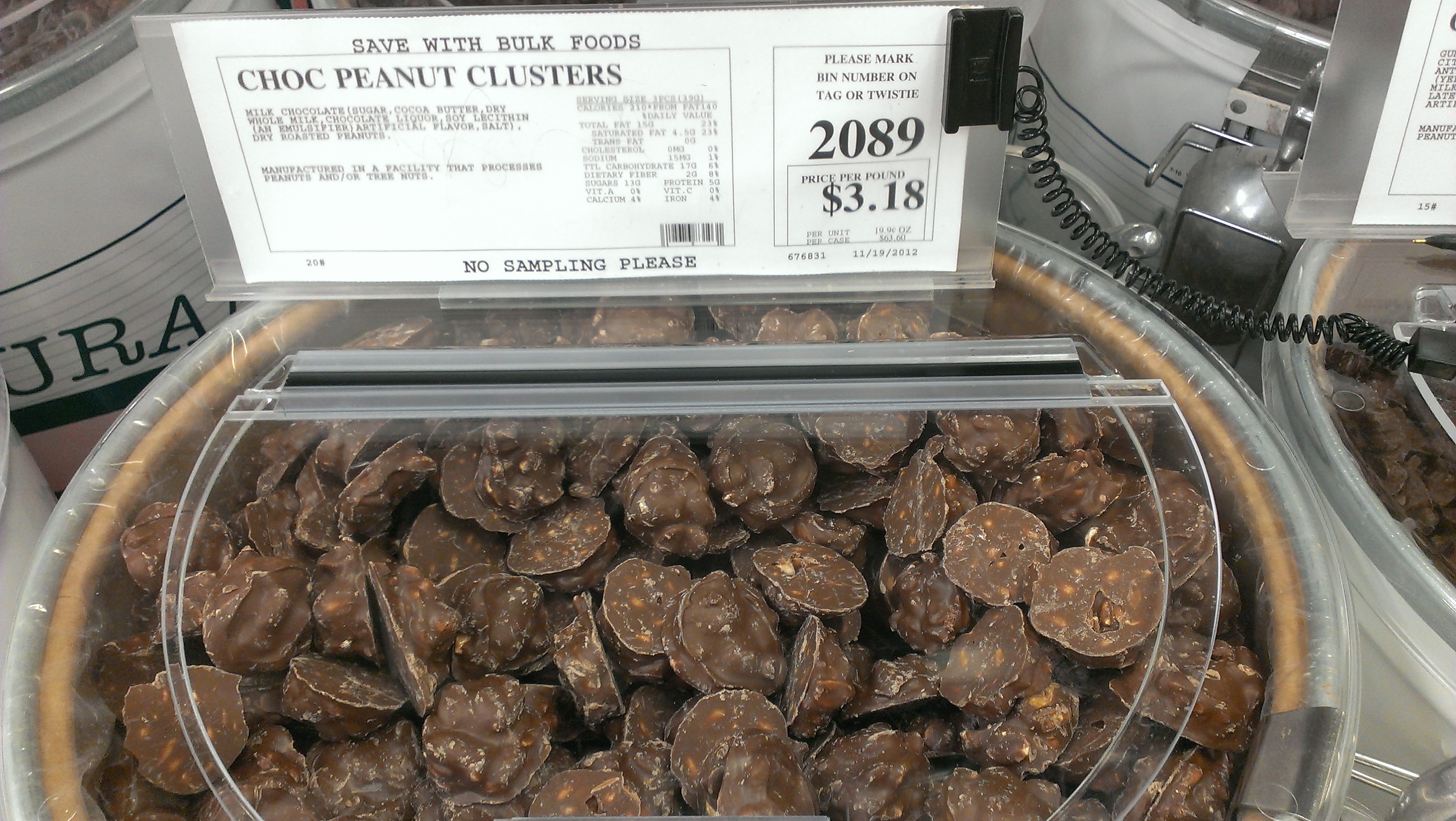
I bought peanut clusters from the bulk foods section at WinCo. I doubt they were handmade, but they still tasted pretty good! It’s hard to go wrong with that combination of sweet and salty. Just ask the folks who created chocolate covered bacon (which, unfortunately, is not a food holiday). Tara and I ate them in the car on the drive to Seattle, where we’re headed for the weekend.

Chocolate Peanut Clusters

Categories: Candy, Nuts | Tags: , , , , , , | Leave a comment

66/365: National Cereal Day*

We’re going to milk today’s holiday for all its worth: it’s National Cereal Day!

And also, Crown Roast of Pork day. It sounds like a royal pain to cook such an elaborate meal after a hard day at work, so we’re sticking with cereal – a great morning pick-me-up. Besides, who doesn’t love cereal? It’s the 3rd-most sold item in grocery stores, after soda and milk. I’m shocked that kumquats didn’t top the chart, but oh well.

German immigrant Ferdinand Schumacher began grinding oats in the back of his store in Akron, Ohio, in 1854. This first oatmeal was a substitute for breakfast pork. I don’t understand why anybody would want less pork, but I guess the sausage market was no longer sizzling. Schumacher’s oatmeal was a hit, despite the fact that oats were traditionally viewed as “horse food.” Schumacher adopted the Quaker as his logo, and went to war against rival oatmeal manufacturers, until they all joined forces in 1888 to form Quaker Oats. At the turn of the 20th century, they figured out how to make puffed rice by shooting the kernels from guns. I have no idea if it snapped or crackled, but it sure did pop!

Around the same time, the first breakfast cereal was invented by James Caleb Jackson. His creation, Granula, never caught on because the heavy bran nuggets needed to soak overnight before they were tender enough to eat. Ready to eat breakfast cereals came about because vegetarians wanted something non-meaty in the morning. Again: less pork? Really?? Members of the Seventh Day Adventist Church latched onto the vegetarian movement, and one of their headquarters – in Battle Creek, Michigan – soon became synonymous with cereal. John and William Kellogg, sons of a devout church member, owned a sanitarium there, and prescribed for their patients a regimen of fresh air, exercise, and a vegetarian diet. They experimented with a boiled wheat product that was rolled thin and flaked, and in 1895 patented Cornflakes cereal. Charles Post, a former sanitarium patient, created a rival product – Grape Nuts – in 1898, and the cereal war was on! To this day, Kellogg’s and Post remain rivals in the breakfast foods marketplace.

Growing up, I was never into sweet cereals like many of my friends. I preferred Rice Krispies and Special K. To celebrate today’s holiday, I had a bowl of Honeycombs, about as sweet a cereal as I’ll ever eat. Tara, unlike me, was a fan of sugary cereals like Cap’n Crunch and Golden Grahams growing up, and today she went for Cocoa Pebbles.

Cereal

Categories: Breakfast | 3 Comments

65/365: National Frozen Food Day

Today is a nICE day to celebrate food. Specifically, food that comes from the freezer. March 6 is National Frozen Food Day!

Frozen food has been around as long as the last Ice Age, when Neanderthals subsisted on a diet made up largely of Popsicles. In 1912, Clarence Birdseye went on a fur-trapping expedition in the frigid Arctic region of Canada. While there, he noticed that fresh-caught fish froze instantly in the bitter cold, and discovered when it was cooked weeks later, it still tasted delicious. “That’s pretty bitchin’, eh,” he said, quickly latching onto the native vernacular. When he returned to the U.S., he figured out a way to flash-freeze food, and started General Seafood Corporation, which began selling frozen foods to the general public on March 6, 1930 – exactly 83 years ago today. You might say Birdseye had a really good view (ha-ha), as he went on to develop freezer grocery display cases and cellophane wrappers for frozen food, and used insulated rail cars to ship his products across country. Altogether, he held over 100 patents, and was inducted into the National Inventor’s Hall of Fame.

Freezing is an excellent way of preserving foods, and thanks to its convenience and economic value, the frozen food industry is a multinational, multi-million dollar industry.

I'm sorry, but the White House decor is hideous!

I’m sorry, but the White House decor is hideous!

We can actually thank Ronald Reagan for National Frozen Food Day. The Great Orator had a soft spot for salisbury steak, and in 1984 passed a proclamation declaring that March 6 would forevermore honor frozen foods. This is one of the few food holidays that can be linked directly to the Oval Office. “I call upon the American people to observe such a day with appropriate ceremonies and activities,” said The Prez, and who are we to argue with a former leader of the free world? For today’s food challenge, Tara and I heated up frozen TV dinners for lunch.

Frozen Food

Categories: Too Weird to Categorize | Tags: , , , | 9 Comments

64/365: National Cheese Doodle Day*

Orange you glad we chose to celebrate cheese doodles today, rather than Absinthe? (Actually, I have to confess to a curiosity about the “Green Fairy.” Absinthe was banned in many areas of the world up until recently. I almost bought a bottle, but I despise black licorice (it supposedly tastes like anise or fennel) and so we decided, instead, to honor National Cheese Doodle Day).

Which, in itself, almost proved a challenge. There are cheese doodles and there are Cheez Doodles, a brand of cheese doodles. Confused yet? Cheez Doodles, the brand, are manufactured by Wise and available on the East Coast, but tough to find out West. Believe me, I tried. One of my trusted research sites said, “Common brands in the United States include Cheetos, Cheez Doodles, and Chee-Wees. They are called by something else in other parts of the world.” Since it’s cheeSE doodle day and not cheeZ doodle day, we were able to get away with eating Cheetos, which are fortunately easy to find out here.

I’m not sure if the fact that there are dueling brands of cheese doodles means “imitation is the sincerest form of flattery” or is a testatment to the collapse of western civilization as we know it. Nothing in Nature is that orange – not even oranges! Neon color aside, cheese doodles are pretty damn irresistible. They are made from puffed corn (and heaps o’ orange dye) and have been around since the 1930s. Two people claim to have invented cheese doodles. One is Edward Wilson, whose Flakall Corporation in Wisconsin manufactured animal feed but one day decided to deep-fry, salt, and add cheese to a batch of the puffed corn made by their machines. He applied for a patent in 1939 and named his creation Korn Kurls. The Elmer Candy Corporation of New Orleans claims to have invented the same product in 1936. Sales manager Morel Elmer held a contest to name the new snack, and the winning entry was CheeWees (still manufactured today by Elmer’s Fine Foods). In the battle between Cheetos and Cheez Doodles, Cheetos debuted first (in 1948) and were invented by the same guy who pioneered Fritos, Charles Elmer Doolin. Cheez Doodles followed a few years later, developed by Morrie Yohai of the Bronx.

It wasn’t real tough to honor cheese doodles. Tara and I both had a handful with lunch. Good stuff, and our fingers were a luminescent shade of day-glo orange for hours afterwards! Or would have been, if we hadn’t licked them clean afterwards. Let’s face it, that’s the best part about eating cheese doodles, right?

Cheese Doodles

Categories: Snacks | Tags: , , , , , , , | 6 Comments

Blog at WordPress.com.