103/365: National Peach Cobbler Day

April 13 is a lucky day for you if you enjoy peaches and sweet desserts. It’s National Peach Cobbler Day!

Cobblers have existed for as long as there have been shoes in need of repair. But alas, today’s holiday celebrates a dessert, not a shoemaker. Sorry, hardworking Nike and Adidas folk. We still appreciate you, though. Dessert cobblers originated in colonial America when early English settlers were unable to find the ingredients to make a proper steamed suet pudding. Instead, they took a stewed filling (usually fruit) and topped it with uncooked biscuits or dumplings. After baking, the surface resembled a cobbled street. There are many variations on the cobbler, going by names like the Betty, the Buckle, the Sonker, the Pandowdy, the Grump, the Slump, the Dump, Bashful, Doc, Dopey, Happy, Sleepy, and Sneezy. Just kidding about those last six – don’t get your knickers in a bunch, Walt. Cobblers are often topped with a dollop of whipped cream or ice cream and served warm.

We found an upscale peach cobbler in the frozen section of New Season’s Market. By “upscale” I mean it cost nine bucks. Nobody said this food challenge would be cheap! Which is why we’re doing it this year, as opposed to last year, when both Tara and I were looking for jobs. We baked it in the oven at 350F for a little over an hour. Sadly, we didn’t have any whipped cream or ice cream, and that made me a real grump. Ha-ha. But the cobbler was excellent!

Peach Cobbler

Categories: Desserts | Tags: , , , , | 1 Comment

102/365: National Grilled Cheese Day*

You just might melt with desire over today’s food holiday. April 12th is National Grilled Cheese Day – a favorite of kids and adults alike! At least these two adults. In fact, last year Tara and I did a grilled cheese challenge on my regular blog…long before this one ever got started. You can read about it here. Suffice it to say, we both love grilled cheese, and were happy to be able to celebrate it today.

For the record, it’s also National Licorice Day. We both despise licorice, so choosing which holiday to celebrate was a no brainer! Besides, not only is today National Grilled Cheese Day, but April is Grilled Cheese Month. How could we resist?

Bread and cheese have been served together at mealtime for centuries – a practice dating back to at least Roman times. However, it wasn’t until the 1920s – at least here in the U.S. – that the bread and cheese actually joined forces, when people who were flat-ass broke and struggling to survive the Great Depression took two inexpensive ingredients, sliced bread and American cheese, and turned them into a cheap meal. They were a staple of the armed forces during World War II; navy chefs prepared countless “American cheese filling sandwiches” aboard ship. Early versions of the sandwich were served open-faced and initially called Cheese Dreams, and then “toasted cheese” or “melted cheese” sandwiches, remaining popular well into the 1960s. That was when enterprising chefs realized they could add a second slice of bread and create a more filling meal, one that was capable of being eaten by hand. And also when they were first referred to as “grilled cheese” sandwiches. The very definition of comfort food, grilled cheese sandwiches fell out of vogue for a number of years, but starting in the 1990s have enjoyed a resurgence in popularity. They can be made with any cheese that will melt, and an endless array of toppings (see link to our blog post above).

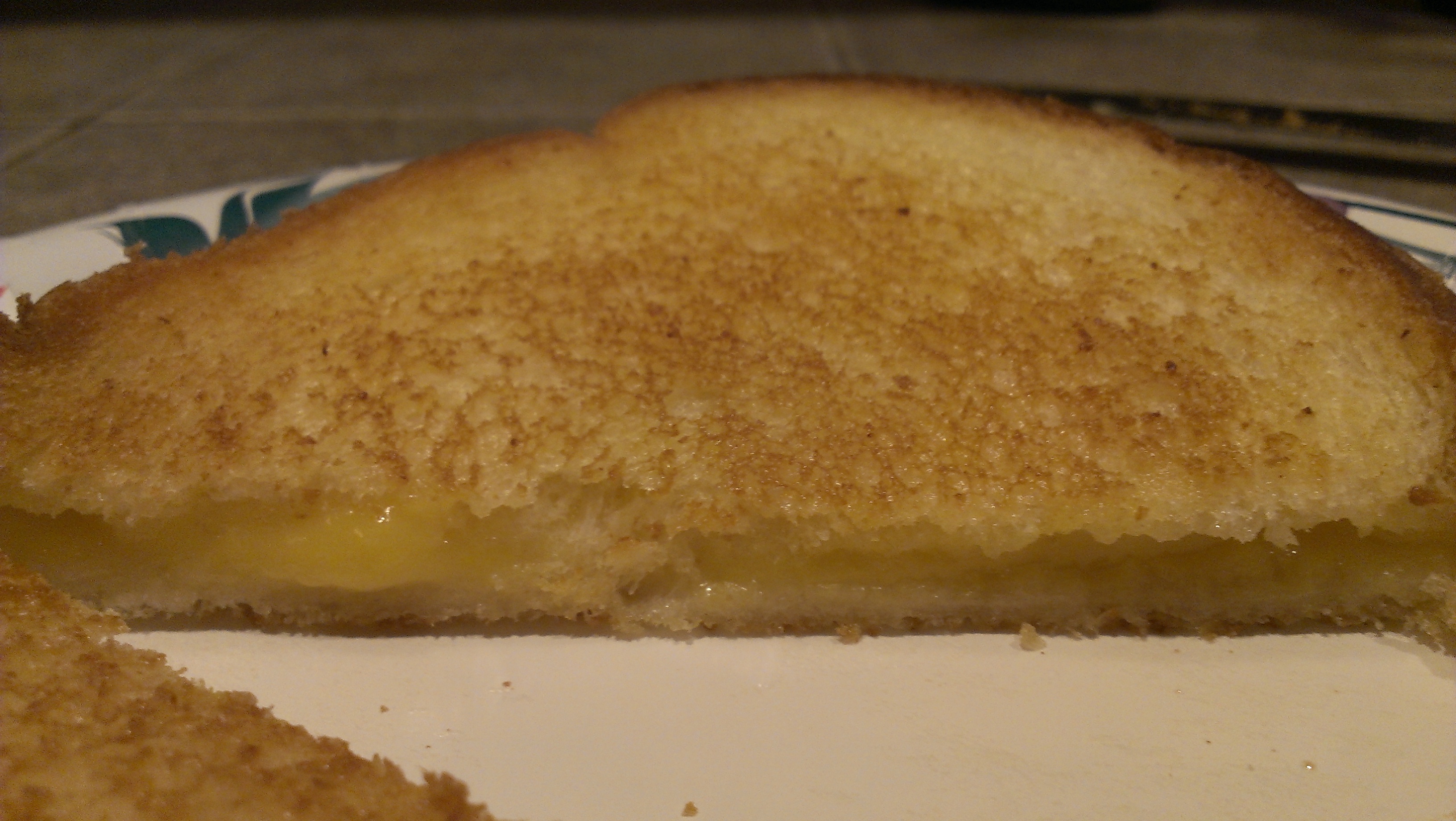
For today’s challenge, we kept it simple and went back to basics. Just bread and cheese (cheddar for Tara and American for moi). After all, why mess with perfection?

Grilled Cheese

Categories: Bread, Dairy | Tags: , , , , | 3 Comments

101/365: National Cheese Fondue Day

I’ll spear you the suspense and get right to the point: April 11th is National Cheese Fondue Day!

Fondue originated in Switzerland as a method of using up hard cheese. One can only have so many paperweights, you know? It comes from the French word fondre, which means “to melt.” OK, logical enough. It was a traditional peasant dish, made with white wine and served in a communal pot; stale bread is most often used for dipping. Stale bread and old, hard cheese, eh? Those Swiss really knew hot to stretch leftovers. Fondue really took off in the 1950s when Konrad Egli introduced it at his Chalet Suisse restaurant in New York. We’ve discussed him before; he’s the dude who invented chocolate fondue as a promotion for Toblerone. Before long, every bell-bottom and polyester-clad cook in the 1970s was serving fondue; it’s as much a symbol of that decade as disco, Watergate, and Farrah Fawcett. It remains popular in Switzerland, too, where it is a symbol of Swiss unity; the Swiss Cheese Union promotes it aggressively with marketing campaigns featuring slogans like Fondue isch guet und git e gueti Luune – “fondue is good and creates a good mood.”

I happen to agree. Fondue IS good and it DOES create a good mood. Tara and I met for lunch at Gustav’s, a German restaurant down the street, midway between where we both work. It doesn’t get more convenient than that. This is the second food holiday we have celebrated here; we also had the fondue for National Cheese Lover’s Day. What can I say? Their fondue is really good! And I’m thinking Tara and I need to break down and buy our own fondue set already. Hey…maybe we’ll get one as a wedding gift!

When the check arrived, I asked our waiter if he knew it was National Cheese Fondue Day, and he had no idea. Then he said, “The cheese fondue is our most popular dish…this would be a great marketing idea!”

Yeah. No kidding. It still amazes me how rarely people in the food business realize when there’s a food holiday celebrating a dish they are known for. Talk about a lot of missed marketing opportunities. Maybe I should consider becoming a food consultant or something…

Cheese Fondue

Categories: Dairy | Tags: , , , , , | 9 Comments

100/365: National Cinnamon Crescent Roll Day

Today marks our 100th food challenge! That in itself feels like a tremendous accomplishment, even though we still have a long way to go. It’s already been an eye-opening experience, teaching us a lot about the backgrounds of many foods, and expanding our culinary horizons. We look forward to seeing this challenge all the way through to the end – which is a mere 265 days away now. On we go…

April 10th is National Cinnamon Crescent Roll Day.

These moon-shaped pastries date back centuries. I talked about their history on National Croissant Day back in January, so I’ll skip all that hullabaloo. Crescent rolls are like a poor man’s version of the croissant. They were popularized by Pillsbury back in the 1950s when prepackaged biscuit dough was introduced. The company, formed by Charles and Allen Pillsbury in 1872, was a corporate juggernaut, and at one time owned a variety of restaurants including Burger King, Godfather’s Pizza, Bennigan’s, Haagen-Dazs, and others. They also owned the grocery brand Green Giant, which begs the question: if they pitted their two most famous mascots – the Pillsbury Doughboy and the Jolly Green Giant – in a cage match together, who would emerge victorious? At first I thought the Jolly Green Giant would win hands down, but the Stay Puft Marshmallow Man from Ghostbusters, who is like a giant Pillsbury Doughboy on steroids (and was, in fact, inspired by him) is pretty badass. I think it would be a tossup.  By the late 1990s they had sold all their restaurants and gotten out of that business completely, focusing on the cake mixes and refrigerated doughs they are best known for. Pillsbury is actually now owned by Smucker’s, who also owns Crisco, Folger’s, Eagle, Laura Scudder, Hungry Jack, and other brands.

Regardless of who owns whom, this morning I whipped up a batch of cinnamon crescent rolls for breakfast. I rolled out and baked a can of regular crescent rolls according to the instructions, then topped them with butter, cinnamon, and sugar. According to the research I did after the fact I could have brushed them with melted butter and sprinkled cinnamon and sugar on them prior to baking…duh, that would have been good!…but they still turned out delicious, and were especially good with coffee.

IMAG0720

Categories: Pastry | Tags: , , , , | 2 Comments

99/365: National Chinese Almond Cookie Day

May fortune smile down upon you today, as we celebrate a Chinese cookie. No, not the one with the tiny slip of paper inside. The other one. April 9 is National Chinese Almond Cookie Day!

Chinese almond cookies have long played second fiddle to the beloved fortune cookie. They’re like the Jan to the fortune cookie’s Marcia, for those of you who grew up in the 70s. And like the fortune cookie, they aren’t an authentic Chinese dish, either. Cookbook author Yuan-Shan Chi famously declared these cookies “as Chinese as blueberry pie” in 1960. Coincidentally, National Blueberry Pie Day is right around the corner (April 28). There is no record of Chinese almond cookies prior to the 1900s; they are believed to be an American invention based on the traditional Chinese walnut cookie, a plain cookie with a walnut in the center that was thought to bring good luck. In the Chinese culture, almonds are believed to be anti-inflammatory and anti-spasmodic, so if you’re in pain or having muscle spasms, reach for the cookie jar. While the Chinese almond cookie may not have originated in China, it’s popular there nowadays, particular in the south and southeastern parts of the country, and in Hong Kong. They are called almond cakes in China and are traditionally served to celebrate Chinese New Year, where their coin-like shape symbolizes prosperity.

Yesterday, when I was out scouting for empanadas, I picked up some Chinese almond cookies from an Asian market in town. We enjoyed those after dinner tonight. Or rather, enjoyed them. Tara caught a cold and her taste buds were so out of whack, she couldn’t taste a thing. She did take a couple of bites though, which is all our rules dictate.

Chinese Almond Cookie

Categories: Desserts | Tags: , , , , , | 2 Comments

98/365: National Empanada Day

Hope you aren’t too stuffed to enjoy today’s food holiday. April 8 is National Empanada Day!

Empanadas come in all shapes and sizes, and there are different versions throughout the world. They originated in Spain and Portugal and are similar to calzones, which are a variation of the Indian samosa; all are essentially a stuffed pastry that can be either sweet or savory. A cookbook published in 1520 features a recipe for a seafood empanada. Made of a thin circular dough patty folded over whatever is stuffed inside, empanadas became popular with the working classes, who were able to carry around the sandwich-sized pie-like lunch meal; this was especially convenient considering Star Wars lunch boxes wouldn’t be invented for another 400 years. Regional favorites include meat, hardboiled egg, olives, and raisins in Argentina; guava, pineapple, and jelly in Costa Rica; spicy tuna and chili peppers in Indonesia; and pumpkin, yams, sweet potatoes, and cream in Mexico.

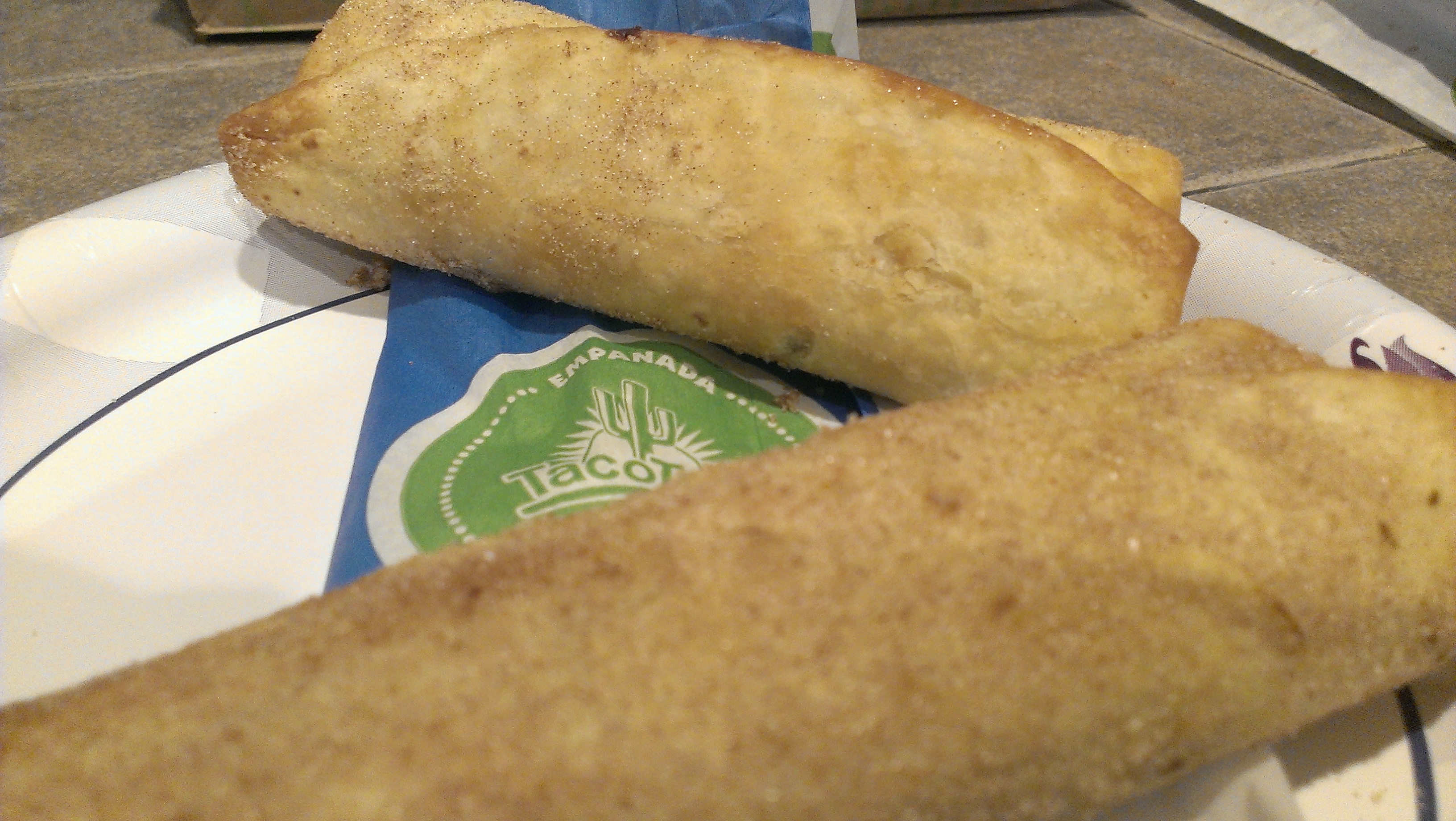
For some reason, I always pictured empanadas as a dessert item. Maybe that’s because there’s a booth at our local farmer’s market that sells sweet empanadas filled with a variety of fruits and dusted with sugar; these are very pie-like. Unfortunately, we were out of town and unable to stop by the farmer’s market to pick some up, so I had to do a little searching around town to find empanadas. I found out Taco Time, a regional Mexican fast-food place, had them, so I swung by the food court in the mall after work to pick up a couple. Granted, they don’t look like traditional empanadas, which are usually half-moon shaped, but they were filled with cherry and berry, dusted with cinnamon and sugar, and tasted pretty damn good.

Empanadas

Categories: Pastry | Tags: , , , , , , , , , , | 1 Comment

97/365: National Coffee Cake Day

Pour yourself a hot cup of joe, dish up a pastry, and celebrate today’s food holiday before morning gives way to afternoon. April 7 is National Coffee Cake Day!

Coffee cake isn’t an invention so much as an evolution. Any sweet cake meant to be eaten for breakfast and paired with coffee is considered a coffee cake. It may also be eaten on a coffee break, or served to guests on a coffee table. Bonus points if it’s dished up by psychic, medium, and spiritual counselor Chip Coffey. The Danish were the first to come up with the idea of eating cake for breakfast, alongside coffee. Funny, you’d think they’d prefer a danish instead. Most coffee cakes are single layers, square or rectangular, and many feature a crumb-like topping. They often contain fruit, nuts, and cinnamon. Contrary to the name, they do not taste like coffee. Unless, of course, you dip them in coffee. In which case, yes – they taste very much like coffee. Scandinavian, German, and Dutch immigrants brought their favorite coffee cake recipes to America, where early Colonialists often took a break from killing indians to indulge in a delicious, sweet coffee cake and a steaming hot mug of java before it got too hot for murder.

Fortunately, coffee cake is pretty simple to find, even when you’re traveling. Virtually any convenience store in America is going to have it. We picked up a marionberry (no relation to the disgraced former mayor of Washington D.C.) coffee cake from the Fred Meyer in Bothell, and enjoyed that as part of a delicious homemade breakfast.

Marionberry Coffee Cake

Categories: Breakfast, Pastry | Tags: , , , , | 3 Comments

96/365: National Caramel Popcorn Day

If you dig the combination of salty and sweet, you’ll be exploding with excitement over today’s food holiday. April 6 is National Caramel Popcorn Day! Funny, we just celebrated caramel yesterday…

Popcorn had been around for awhile when brothers Frederick and Louis Rueckheim, candy entrepreneurs in Chicago, came up with the idea of coating popcorn in molasses and adding peanuts. They debuted their product, which had the snappy name “Candied Popcorn and Peanuts,” at the Chicago World’s Fair in 1893. The molasses proved too sticky, so they went back to the drawing board and eventually developed a process that made the coating crispy and dry and kept the kernels separate. A customer tried a sample in 1896 and exclaimed, “That’s crackerjack!” – turn-of-the-century slang for “that’s really good.” Crackerjack is considered a type of caramel corn because the molasses is caramelized before being poured over the popcorn. See yesterday’s post for information on the caramelization process. Other competitors followed suit, many using caramel instead of molasses, and the caramel corn industry took off, particularly in the 1930s and ’40s. Popular brands include Fiddle Faddle and Crunch ‘n Munch. Nowadays, you can’t go to any farmer’s market or county fair, it seems, without bumping into a caramel popcorn vendor somewhere.

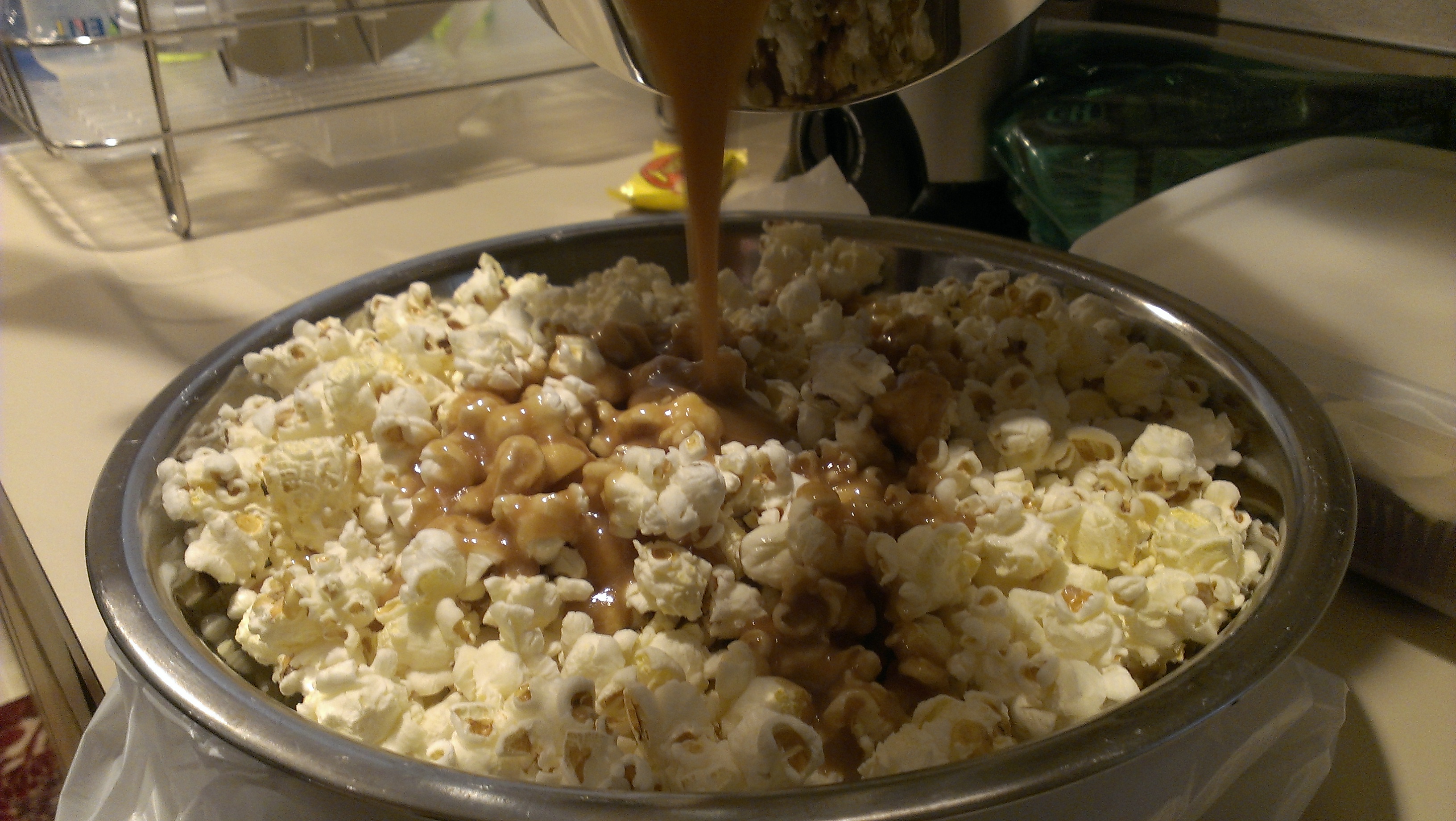
We are in Seattle this weekend, staying with Tara’s mom and celebrating her nephew’s first birthday. We’re having a great time! And yet, the blog is always on our minds, so naturally we made time for some caramel popcorn. Tracy offered to make it for us, and we were more than happy to take her up on the offer. Anytime we can get somebody else to do our dirty work, we do! It looked pretty easy, but took more than just caramel. She whisked in butter, brown sugar, Karo syrup, and vanilla. Dark brown sugar makes it sweeter, while light brown sugar is more subtle. You can use either. And I have to say, it was some of the tastiest caramel corn I’ve ever had! I swear I’m not saying that because Tracy is standing right here…

The art of making caramel popcorn.

The art of making caramel popcorn.

Categories: Snacks | Tags: , , , , , , | 7 Comments

95/365: National Caramel Day*

If you’ve got a sweet tooth, you’ll love today’s food holiday. April 5 is National Caramel Day!

It’s also National Raisin & Spice Bar Day. Caramel appealed to us more. So, caramel it is.

I was surprised to learn that caramel is nothing more than sugar that has been heated slowly to 340F. As the sugar heats, the molecules break down and transform into a sticky brown liquid. This process is known as caramelization, and results in the familiar, decadent treat we love atop an ice cream sundae or wrapped around an apple. I have caramelized onions many times, but never made the connection. This food challenge is teaching us a lot! I ought to try out for Jeopardy next year and pray for a “food & drink” category.

That's melted sugar. Who knew??

That’s melted sugar. Who knew??

Caramel is an American discovery. In the 17th century, our forefathers (and foremothers) were making hard candies out of caramelized sugar and water. By 1850, they had discovered that adding milk and other fats to the mixture resulted in a soft, chewy, and sticky concoction. In Pennsylvania, Milton Hershey founded the Lancaster Caramel Company, with the intention of manufacturing caramel candy covered in chocolate. He became so enamored with chocolate that he ended up selling the caramel business and using the profit to start a chocolate company instead. Foolish move, Hershey! Did you really believe your name could become synonymous with chocolate?

Err…right. Guess it was a good investment after all.

An inventive way to celebrate National Caramel Day!

An inventive way to celebrate National Caramel Day!

Nevertheless, caramel also became popular worldwide, so hopefully the guy who bought the caramel company profited, too. I’m all about sharing the wealth!

We are embarking upon another trip to the Emerald City this afternoon. (Seattle, not Oz). And leaving early, to boot. We don’t have a lot of time to mess with some fancy caramel preparation – kind of hard to cook when you’re in the car driving for three hours – so we celebrated by ordering caramel-flavored coffee drinks. I stopped by Dutch Bros. for a Caramelizer, a blend of triple-bean espresso, mocha, and caramel. I’m not a big fan of overly sweet coffee, but this was pretty good.

Have a great weekend! We’ll be up in Seattle until Sunday, but fortunately, our weekend food challenges are pretty simple and shouldn’t give us any trouble. Tomorrow’s, in fact, will provide a strange sense of deja vu.

Categories: Candy | Tags: , , , , , , | Leave a comment

94/365: National Cordon Bleu Day

You’ll get a blue ribbon if you guess what today’s food holiday is! Give up? April 4th is National Cordon Bleu Day!

If you hadn’t already guessed, “cordon bleu” translates to blue ribbon in French. This scrumptious dish refers to a cutlet of meat – traditionally chicken, veal, or pork – that is pounded thin, stuffed with a slice of ham and a slice of cheese, breaded, and either baked or fried. It’s a relatively recent creation, and not even French, despite the hoity-toity name. A schnitzel with cheese first appeared in Switzerland (naturally) during the 1940s. The earliest mention of “cordon bleu” in America dates to a veal recipe in 1955, while the chicken version appeared in a New York Times article in 1967. A future version – “soylent green cordon bleu” – is expected in 2022. Don’t ask what’s in it. Sometimes prosciutto or bacon is substituted for the ham, and any soft cheese can be used. I’m partial to Swiss myself. I believe that’s the traditional cheese type used, probably in honor of the dish’s place of origin, but that theory could be full of holes.

I’ve made chicken cordon several times in the past, and had actually planned on cooking it for Tara soon anyway, so this food holiday gave me the perfect excuse. It’s easy to make, and the results are always delicious. I use this recipe from allrecipes.com, with a few minor variations (add paprika to the bread crumb mixture and coat the entire breast in it before cooking). Turned out great!

Chicken Cordon Bleu

Categories: Poultry | Tags: , , , , , | 2 Comments

Create a free website or blog at WordPress.com.