163/365: National Peanut Butter Cookie Day

You might find yourself in a sticky situation if you celebrate today’s food holiday…but you’ll love it! June 12 is National Peanut Butter Cookie Day.

George Washington Carver may have had a confusingly Presidential name, but the agricultural teacher at Alabama’s Tuskegee Institute was more interested in peanuts than politics. He advocated them as a replacement crop for cotton, which was being decimated by insects at the time. Carver published a cookbook in 1916 called How to Grow the Peanut and 105 Ways of Preparing it for Human Consumptionwhich might just win the award for Longest Cookbook Title Ever. The book contained three recipes for peanut cookies, all of which called for crushed or chopped peanuts. It wasn’t until a few years later that peanut butter was listed as an ingredient. Originally, the cookies were formed into balls, but these did not cook properly. Bakers began flattening the dough with forks, leading to the signature criss-cross marks so closely associated with peanut butter cookies. Pillsbury touted the use of a fork to make these waffle-like marks, when their recipe for Peanut Butter Balls was published in 1933. Cooks were instructed to press the cookies using fork tines. Alternative methods called for using a device called a cookie shovel, and then transporting them to the oven using a cookie wheelbarrow. Crumbs could be cleaned up using a cookie rake.

Our peanut butter cookies still contained crosshatch marks even though we didn’t make them from scratch. Instead, we opted for some Nutter Butters, which have the added advantage of being peanut butter cookies shaped like peanuts. Mr. Carver would be impressed.

Nutter Butter

Categories: Desserts | Tags: , , , , | 3 Comments

162/365: National German Chocolate Cake Day

Don’t even think about saying auf weidersehen without trying a slice of today’s celebrated food. June 11 is National German Chocolate Cake Day!

Despite the name, this cake has no ties to Germany whatsoever. It’s actually an American cake consisting of chocolate layers and topped with a coconut-pecan frosting. In 1852 Sam German, a chocolate maker, developed a dark baking chocolate for Baker’s Chocolate Company. It was named Baker’s German’s Sweet Chocolate and was a popular ingredient in cakes. It would take another century for the cake we recognize today to catch on; in 1957 the Dallas Morning Star printed a cake recipe submitted by Mrs. George Clay using the baking chocolate and a sweet coconut-pecan topping. Called German’s Chocolate Cake, the pastry was an immediate hit. General Foods, which now owned Baker’s Chocolate, distributed the recipe to newspapers across the country, dropping the possessive (‘s) and renaming it German Chocolate Cake. Baker’s Chocolate saw sales increase by 73%, and the cake became a nationwide staple.

Next you’re going to tell me french fries aren’t really from France.

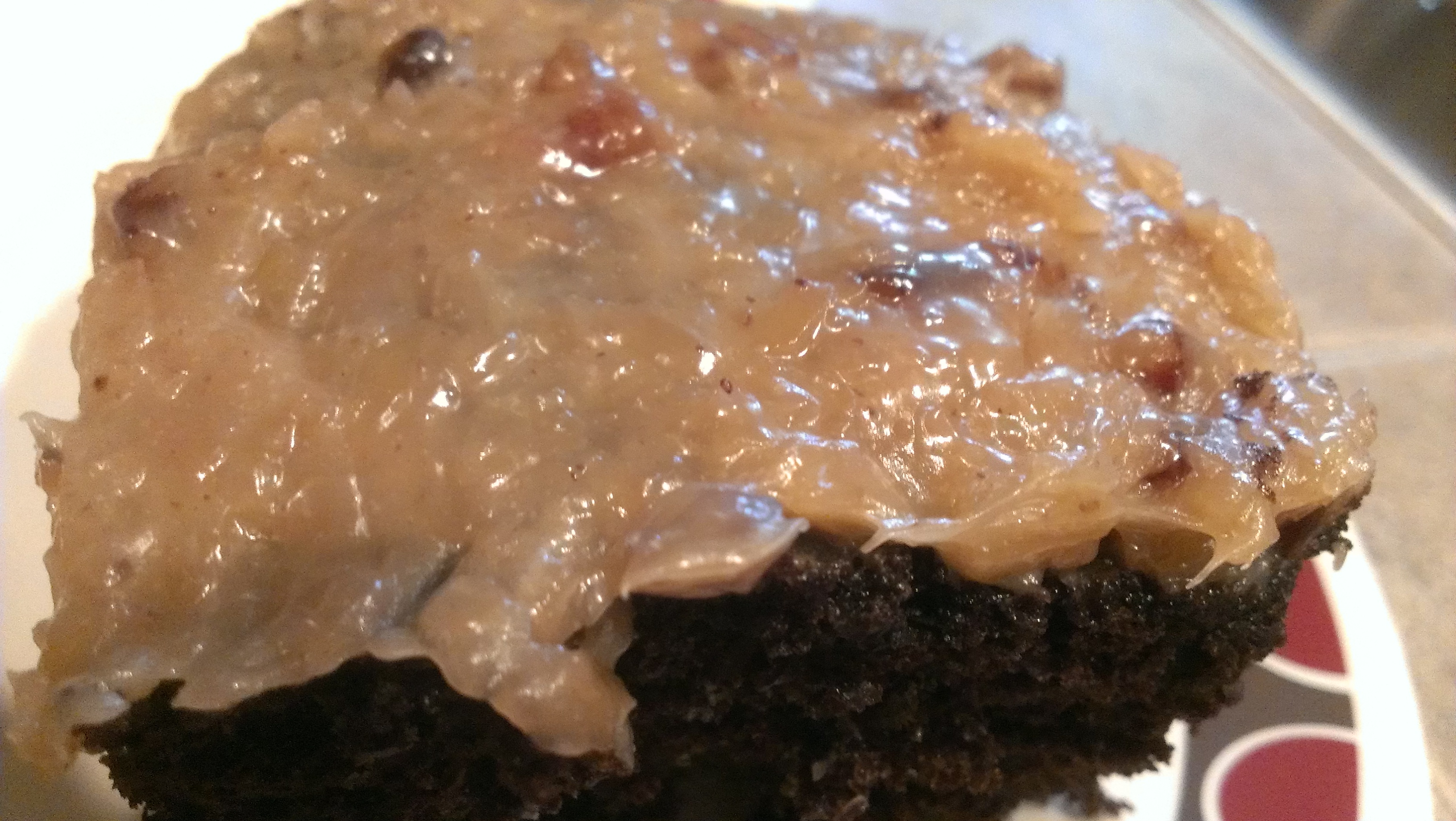
Anyway, I’ve always been a big fan of German Chocolate Cake, and used to request it for my birthday, so I was certainly not complaining about “having to” celebrate this food holiday. German chocolate cake is notoriously difficult to make from scratch – eggs need to be separated and beaten, chocolate needs to be melted – so we took the easy way out and used a dark chocolate cake mix and coconut/pecan frosting. You know what? It still tasted pretty good! Even if it isn’t really German engineered.

National German Chocolate Cake Day

Categories: Desserts, Pastry | Tags: , , , , | Leave a comment

161/365: National Iced Tea Day*

Tea-totallers of the world unite: the 10th of June pays homage to a refreshing beverage that can be either sweet or tart. It’s National Iced Tea Day!

It is also Herbs & Spices Day and Black Cow Day. Technically we also celebrated the former since we cooked dinner using herbs and spices, but that’s hardly unusual. And with so many desserts in the month of June, the Black Cow just didn’t moo-ve us. So, iced tea it was!

There’s a myth that a plantation owner named Richard Blechynden invented iced tea in 1904 at the St. Louis World’s Fair. According to legend, the weather was hot, and Blechynden’s tea wasn’t selling. So he added ice to the drink, and – voila! History was made. The only problem with this story is that recipes for iced tea date as far back as 1876 (Estelle Wilcox’s Buckeye Cookbook), plus the fact that iced tea was being sold at hotels and railroad stations during the latter half of the 19th century. Most likely Blechynden’s iced beverage merely helped to popularize the drink, especially when people realized how refreshing it tasted on a hot day. During Prohibition (1920-1933), iced tea’s popularity grew when liquor, beer, and wine were no longer available. Folks found it a decent enough substitute, but stumbled over the revised lyrics to the old ditty “99 Bottles of Iced Tea on the wall.”

Iced tea was originally made with green tea, but over the years black tea became the preferred choice thanks to inexpensive imports from India, Ceylon, South America, and Africa. Iced tea is most commonly served with a slice of lemon as garnish, and is often sweetened with sugar. In the South, “sweet tea” (a very strong brew with lots of sugar) is especially popular, helping Southerners deal with the heat and humidity. Bottled iced teas are available across the country, manufactured by brands such as Snapple, Lipton, and Nestea. In recent years, the Arnold Palmer (aka “Half and Half”) – a mixture of 1/2 iced tea and 1/2 lemonade, named after the legendary golfer who liked to combine the two at home – has become increasingly popular.

Iced tea is one of my favorite beverages, and I’m not alone: 85% of the tea consumed in America is iced. I’m not a big soda drinker, so 9 times out of 10 when I’m eating out I’ll order iced tea (assuming that alcohol is not in the mix, of course). (And sometimes when it is in the mix: vodka and iced tea ala Jeremiah Weed is a pretty tasty drink). So, I was more than happy to indulge! Tara and I love our Keurig coffeemaker, and have recently discovered Snapple Iced Tea k-cups. They come in both lemon and peach flavors, and each is delicious. We brewed some up tonight to go along with our dinner!

National Iced Tea Day

Categories: Beverages | Tags: , , , , , , , | Leave a comment

160/365: National Strawberry-Rhubarb Pie Day

Today we’re enjoying something a little bit sweet, a little tart, and closely associated with summer. June 9 is National Strawberry-Rhubarb Pie Day!

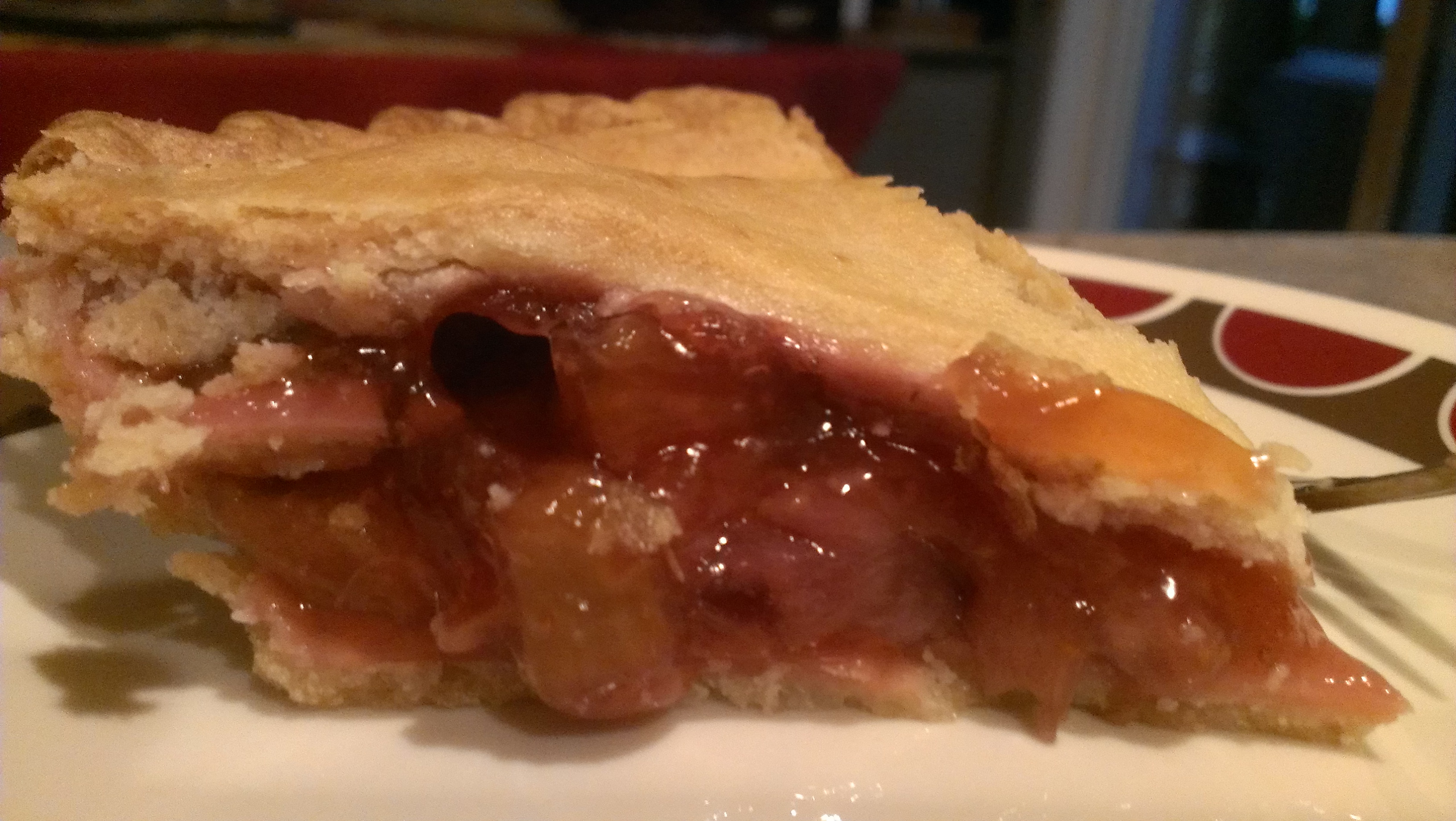
I’ve already talked about the kajillion and one pie holidays celebrated this year (20, to be exact). For some of these we’ve taken the easy way out. But, I promised that when June rolled around, I would make a strawberry-rhubarb pie from scratch. And I had every intention of doing so. Until I happened upon a strawberry-rhubarb pie at the grocery store for $2.99. Adding up the cost of the ingredients I’d need – fresh strawberries and rhubarb, flour, sugar, etc. – not to mention the time and labor involved – and I quickly realized that I’d be a fool to pass up the $2.99 all-the-work-is-already-done-pie from Fred Meyer.

I’ve already talked about the history of pie and discussed strawberries, so let’s delve into rhubarb, shall we? It’s such an interesting food: a giant celery-like stalk that is really, really sour. It’s actually a vegetable that originated in China, where it was used for medicinal purposes for thousands of years, and was brought to the U.S. by Benjamin Franklin, the same dude-who-was-inexplicably-never-President-but-played-a-huge-role-in-American-history. It’s a member of the buckwheat family, but you have to be careful with it: only the stalk is edible. The leaves and roots are poisonous and should be avoided. Typically, the stalks are cut into pieces and stewed with sugar, then used for cooking in dishes like…well, pies. I don’t think I’ve ever had rhubarb any other way. It matches well with strawberries because the sweetness and tartness balance each other out.

In case you’re wondering how the grocery store strawberry-rhubarb pie tasted, it was pretty good! I suppose homemade would have been better, but I’ll just have to save that for a future pie day. We have a few left, you know. Pumpkin pie, for sure…mark my words.

Strawberry Rhubarb Pie

Categories: Desserts, Pastry | Tags: , , , | Leave a comment

159/365: National Jelly-Filled Doughnut Day

You want the truth, the hole truth, and nothing but the truth? You got it: June 8 is National Jelly-Filled Doughnut Day!

This comes on the heels of National Doughnut Day, which was yesterday. There may be much less freedom of choice today, but it doesn’t mean the doughnuts aren’t still delicious, even if they are filled with jelly instead of topped with bacon, as we are fond of doing around these here parts.

The first reference to a jelly doughnut appears in a German cookbook from 1485, Kuchenmeisterei (which translates to “Mastery of the Kitchen”). Called Gefüllte Krapfen (“Gefilte fish taste like crap so eat something sweet instead”), the recipe called for jam sandwiched between two round slices of yeast bread dough and deep fried in lard. This was a bit of a revelation; at that time most filled doughnuts were stuffed with meat, cheese, fish, or mushrooms. Sugar was exorbitantly expensive, so savory foods just made economical sense. When Caribbean sugar plantations opened in the 16th century, the price of sugar dropped to affordable levels, and people were able to create inexpensive fruit preserves. Since a jelly-filled doughnut tastes a heck of a lot better than a doughnut stuffed with, say, trout or gouda (well, presumably, but who am I to say for sure?), sweet filled doughnuts surpassed savory doughnuts in terms of popularity. Still, they were considered a treat reserved for special occasions until the 18th century, when a crafty German invented a metal pastry syringe that enabled bakers to directly inject jelly into doughnuts that had already been fried. By the 20th century, machines further automated the process, and the mass production of jelly doughnuts began in earnest. Known as “Berliners” or “Bismarcks” after their German heritage, jelly doughnuts remain a popular treat around the world today. (Personally, I’m fond of the Manitoba name for these fried pastries, “jam busters”).

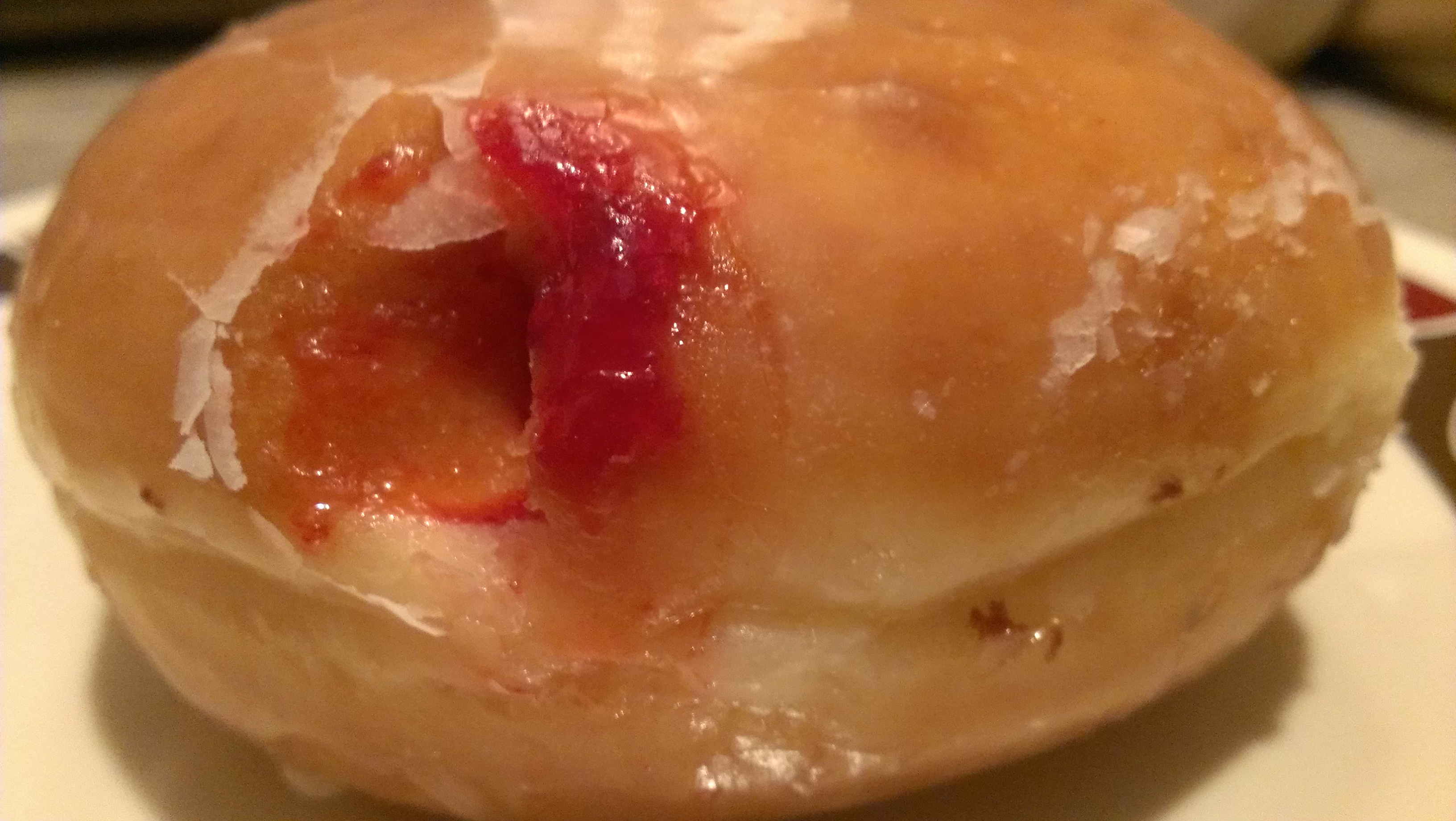
To celebrate jelly-filled doughnut day, we grabbed a raspberry filled doughnut from the corner doughnut shop. It was the perfect fuel for our first hike of the season!

Jelly-Filled Doughnut

Categories: Pastry | Tags: , , , , , | 4 Comments

158/365: National Chocolate Ice Cream Day*

Want the latest scoop? Psst…June 7 is National Chocolate Ice Cream Day!

It’s also National Doughnut Day, a “floating” food holiday that occurs on the first Friday in June. Normally we’d be all over that, except for the not-so-insignificant fact that tomorrow is National Jelly-Filled Doughnut Day. Gotta have a little variety, you know? Then again, a few days ago we celebrated rocky road ice cream…

But back-to-back doughnut days are overkill. So we went with ice cream instead.

When it comes to ice cream flavors, vanilla is the most popular choice hands down (with 29% of the vote). Chocolate comes in second place (8.9%). But hey, there’s no shame in being a runner-up! (Unless you’re only up against one other competitor. Sorry, Super Bowl-losing San Francisco 49ers). Chocolate ice cream is made by blending cocoa powder with eggs, cream, sugar, and vanilla. It’s been around for centuries; the first ice cream parlor in America opened the same year we became a country, in 1776. Quakers brought over their favorite ice cream recipes, and the frozen treat became a widespread hit. Benjamin Franklin, George Washington, and Thomas Jefferson all indulged in ice cream when they weren’t busy flying kites in thunderstorms or secretly crossing the Delaware River and stuff. In fact, there’s a brown smudge on one corner of the Declaration of Independence that is rumored to be a dripping from the chocolate ice cream cone that Jefferson was licking when he put quill to parchment. That’s a totally made up fact, by the way. But it could’ve happened.

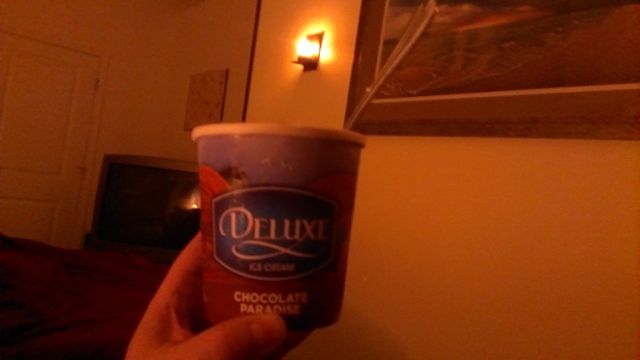
To celebrate, we picked up a small container from Fred Meyer. And ate it in the bedroom by candlelight. Chocolate = romance, right?

Chocolate Ice Cream

Categories: Dairy, Desserts | Tags: , , , , , | Leave a comment

157/365: National Applesauce Cake Day

Today we’ve got a golden delicious treat for you: June 6 is National Applesauce Cake Day!

Cake has been around for eons, and applesauce dates back to the Middle Ages. But the two never co-mingled until fairly recently: during World War I, when a shady sugar shortage shocked the country. Cooks were urged to display patriotism by substituting applesauce for the sugar that cake recipes called for. The concept wasn’t entirely unheard of; Medieval European fruitcakes sometimes called for fresh or dried apples. Applesauce adds sweet flavor to a cake and makes it impressively moist. The cakes grew in popularity through the 1920s and 30s, before falling off the radar for a while. They were rediscovered in the health-conscious 90s, and seen as a healthier, low-cholesterol and low-fat alternative to a traditional cake. They are typically spiced with cinnamon and nutmeg, and make a perfect autumn treat.

But it’s June.

Nevertheless, we soldiered on (pun intended) and completed our challenge. We kept it simple with a yellow Duncan Hines cake mix and chocolate frosting. When you substitute applesauce for oil, you keep a 1:1 ratio, so it was easy enough to switch that out. Oh, and the cool thing is, last fall Tara and I went out to Hood River for bushels of fresh apples, and I made homemade applesauce. That’s what I used in the recipe, so in that sense, the cake is sort of “from scratch” too. And I have to admit, it turned out tasting pretty good! Just a hint of cinnamon-y spice.

Applesauce Cake

Categories: Desserts, Pastry | Tags: , , , , | Leave a comment

156/365: National Gingerbread Day

Run, run, as fast as you can. To the pantry. Because June 5 is National Gingerbread Day!

An Armenian monk named Gregory Makar introduced gingerbread to Europe in 992, teaching French priests how to cook it up until his death in 999 (the poor bastard couldn’t live just one more year to see the calendar flip to 4 digits!). Cooking methods – and the final product – varied: in some places it was a soft cake, in others a crisp, flat cookie. It could be light or dark, sweet or spicy, and was usually cut into shapes depicting people, animals, stars, and Madonna’s cone-shaped bra from her 1990 Blond Ambition tour. During the 13th century Germans brought it to Sweden, where nuns baked it to help ease indigestion. In Medieval England it was also believed to have medicinal properties (though it didn’t do jack shit for javelin wounds). Gingerbread became a fairground delicacy, where it was cut into shapes to denote different seasons: buttons and flowers in the springtime, birds and animals in the autumn. One village in England had a tradition in which young, unmarried women were required to eat gingerbread “husbands” at the fair if they wished to get married. In the 19th century, the Grimm brothers found an old German fairy tale called Hansel and Gretel, about two children lost in the woods who discover a gingerbread house. The publication of this story helped popularize gingerbread houses, particularly in Germany and the United States. Nowadays they are mostly associated with Christmas.

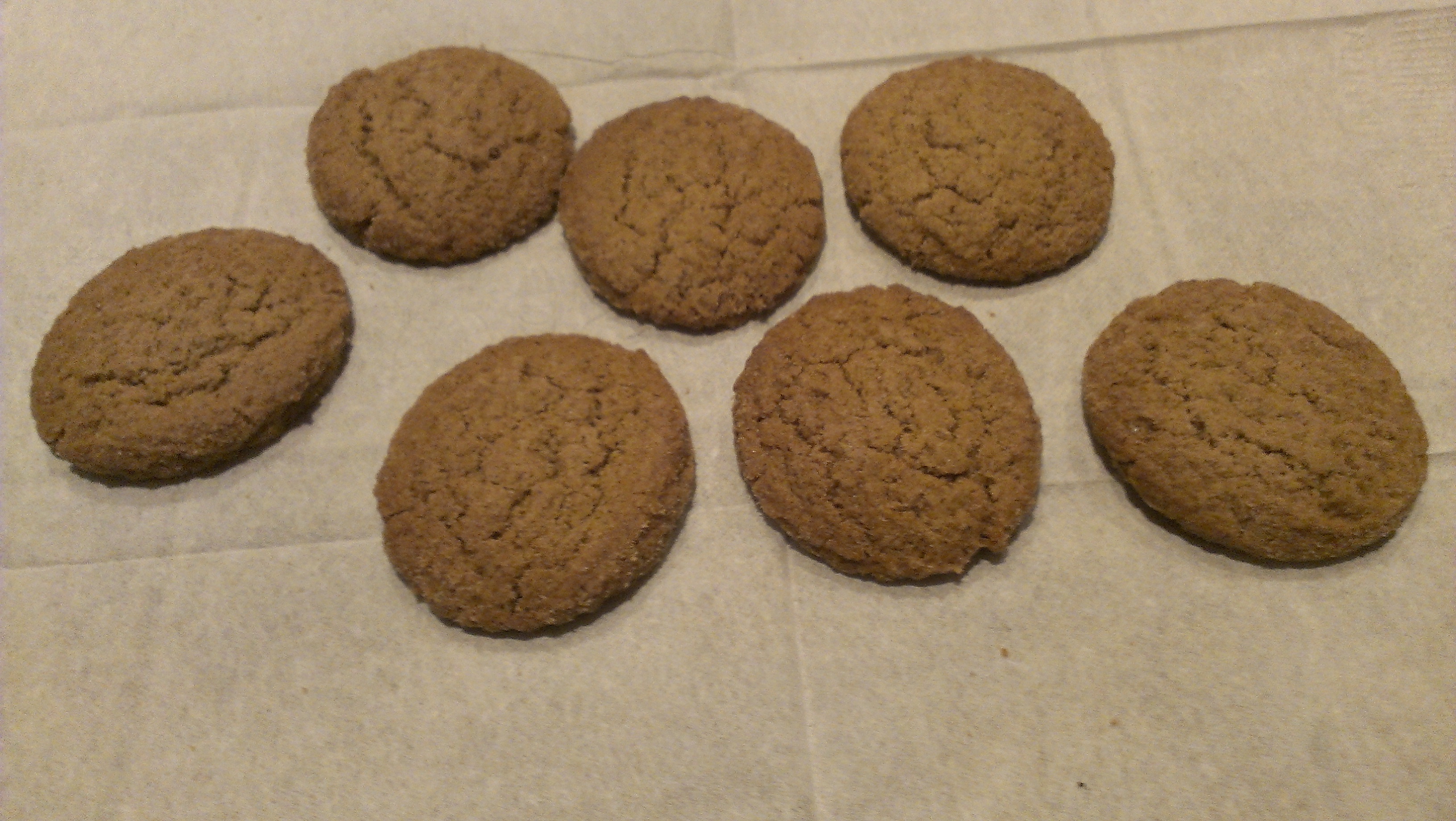
To celebrate the holiday, we went the “crispy cookie” route rather than the “moist cake” way, given that tomorrow is a cake holiday. They were gingery and spicy and seemed a little out of place in June…but, they weren’t bad!

Gingerbread Cookies

Categories: Desserts | Tags: , , , , | 4 Comments

155/365: National Cheese Day

You’ll have to reach whey back in the dairy case to celebrate today’s food holiday. June 4 is National Cheese Day!

Which is not to be confused with National Cheese Lover’s Day. Or cheese fondue day. Or grilled cheese day. Or…well, there sure are a lot of holidays devoted to cheese! And in my not-so-moldy opinion, that’s a good thing. Since I’ve already discussed cheese ad nauseum (fancy way of saying “a lot”), I’ll leave you with some fun cheese facts and quotes instead.

Remains of cheese have been found in 4000 year old Egyptian tombs.

While cows, goats, and sheep are most often used to make cheese, it is occasionally made from the milk of other animals. A farm in Sweden makes moose cheese, and there’s a mozzarella made from the milk of a water buffalo.

The U.S. is the top cheese producer in the world, but Greece consumes the most cheese, with France a not-so-distant second.

Mozzarella is the most popular cheese in the U.S., having recently surpassed cheddar. We can thank pizza lovers (and string cheese manufacturers) for this trend.

Swiss cheese has holes because of gases that expand in the curds during the ripening period.

The term “big cheese” referred to people who were wealthy enough to be able to purchase a whole wheel of cheese.

The best cheese accompaniments are fruit, olives, and nuts.

Cheese tastes best when it’s served at room temperature. Remove it from the refrigerator about an hour before serving.

“A cheese may disappoint. It may be dull, it may be naive, it may be over sophisticated. Yet it remains, cheese, milk’s leap toward immortality.” – Clifton Fadiman

“A dinner which ends without cheese is like a beautiful woman with only one eye.” – Jean-Anthelme Brillat-Savarin

“How can you govern a country which has 246 varieties of cheese?” – Charles De Gaulle

“Age is something that doesn’t matter, unless you are a cheese.” – Luis Bunuel

“The clever cat eats cheese and breathes down rat holes with baited breath.” – W.C. Fields

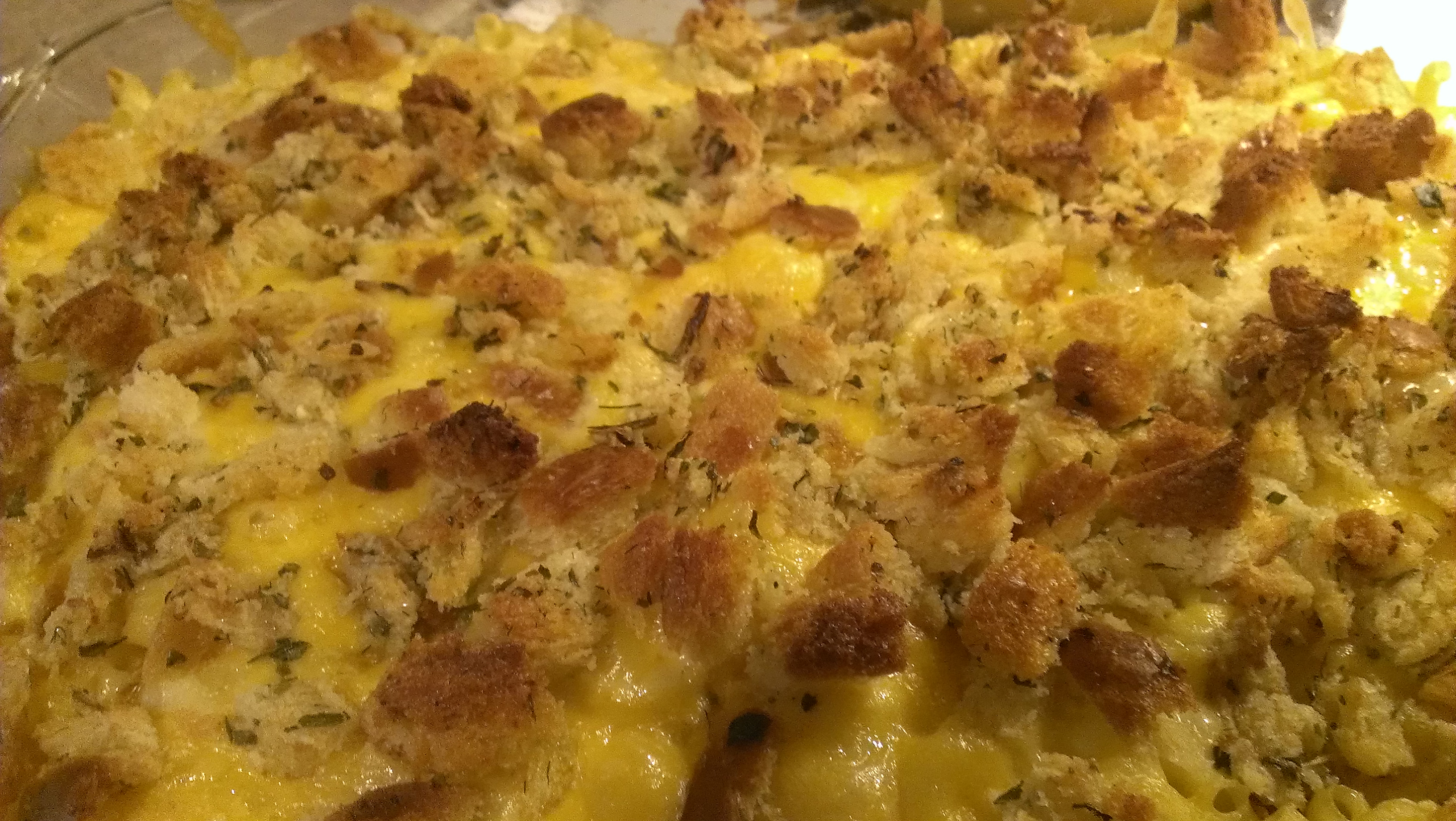
To celebrate National Cheese Day, we made the ultimate comfort food dish: macaroni ‘n cheese. And not out of a blue box, either. From scratch, of course (thank you, Fannie Farmer). It was scrumptious, even on a warm day like today!

Macaroni & Cheese

Categories: Dairy | Tags: , , , | 1 Comment

154/365: National Egg Day

June 3rd is everything it’s cracked up to be, and that’s no yolk. It’s National Egg Day!

National Egg Day is one of the oldest food holidays in the world. It was first declared a holiday by Roman emperor Claudius Nero Germanicus during his reign between 41-54 A.D. A poultry plague devastated Europe at the turn of the century, and people were afraid to eat chicken and eggs. Claudius was convinced eggs were safe and challenged nobles in his realm to eat them in order to prove to the peasants they were harmless. Augustus Antonius took the emperor up on his offer, and ate a meal of boiled eggs before a large gathering. He did not keel over and die, and the Roman population once again embraced eggs and poultry. Claudius issued a royal proclamation declaring June 3rd as the Holy Roman Day of Eggs. The holiday was celebrated for 500 years but eventually faded from memory. In 1805 Napoleon captured historical Italian documents of the Roman Empire. Reading through them, he was intrigued by their fondness for eggs, and in turn declared June 3rd to be “Oeuf Journée Nationale,” or National Egg Day. It has remained popular ever since.

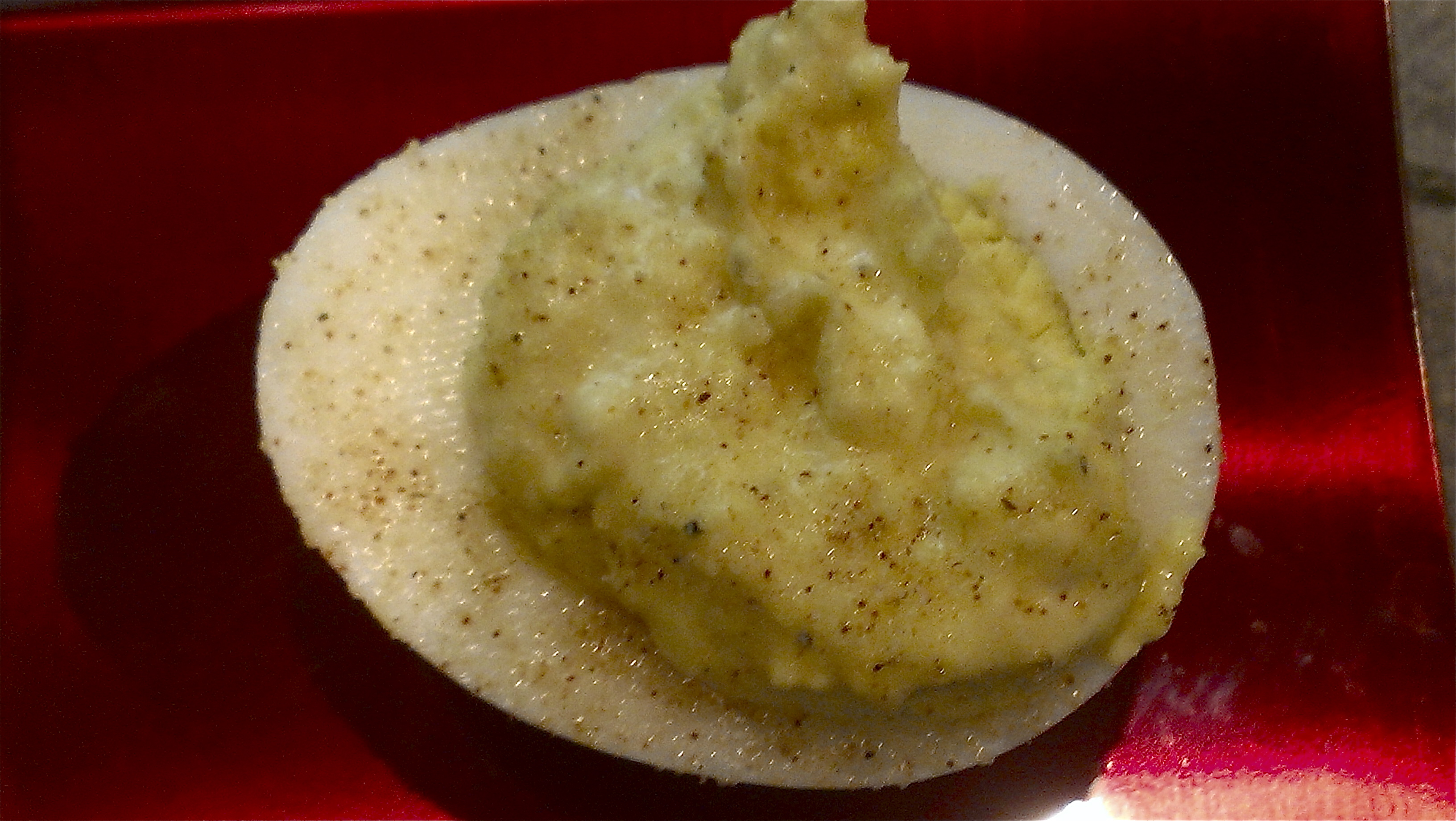
Tara suggested we make deviled eggs to celebrate, and I thought that was a great idea. They’re delicious, simple to make, and usually reserved for special occasions. I think both Napoleon and Claudius would be proud. Tara’s got a special recipe, and will take you through it step-by-step now.

I got the inspiration for this post from a previous blog entry written in 2008 that shows step by step instructions.  At the time, I had an online/blogger friend in Australia that had never seen or tried deviled eggs and I was convinced that she had to have some.  Since pictures are always fun, here we go again!

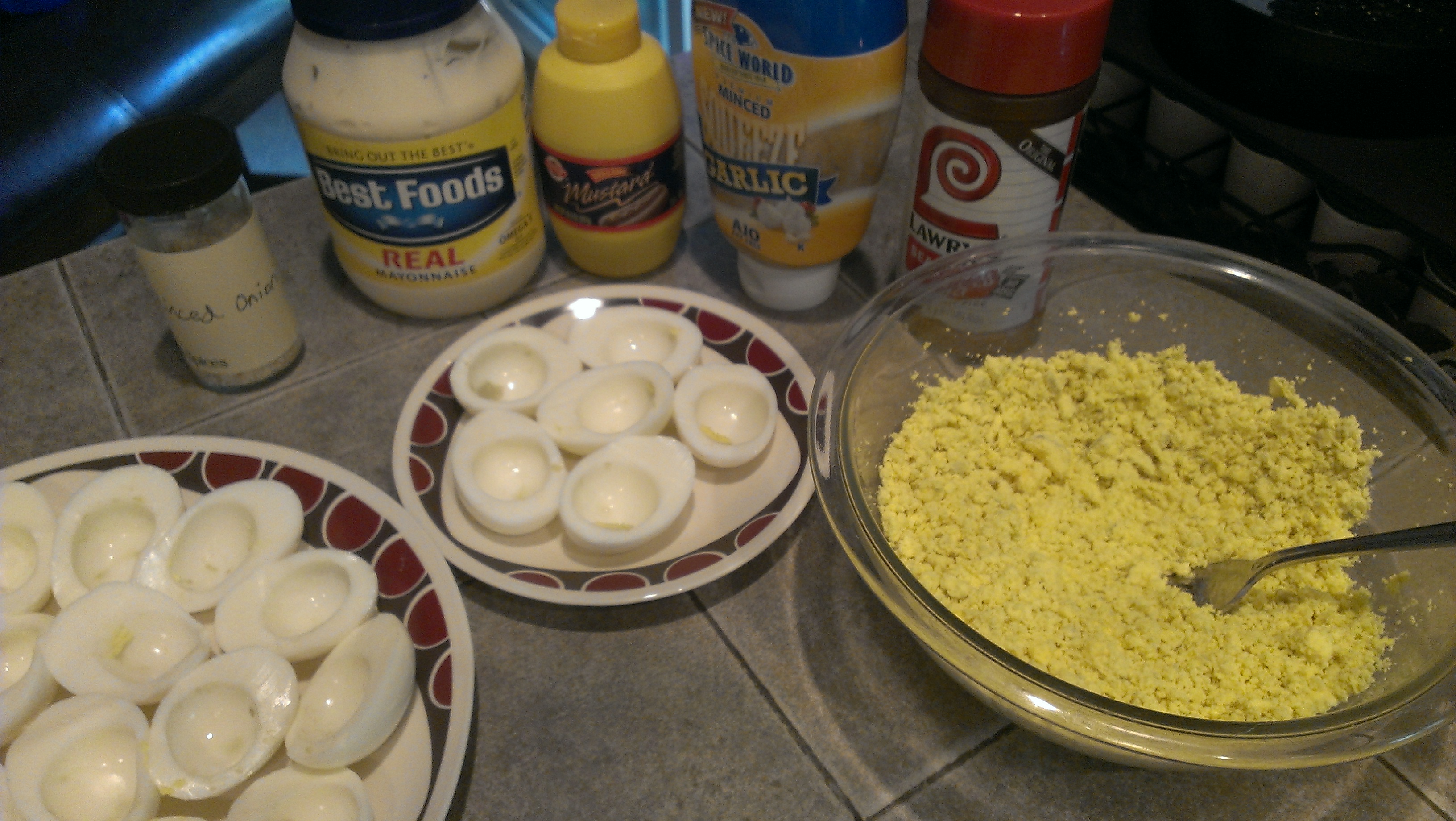
This time I started with a dozen eggs (+1 that was rolling around from our last carton) that I let boil for about 35 minutes.  They were cooled in cold water, peeled, and paper towel dried.  Each egg is cut lengthwise; the whites arranged on a plate, and the yolks mashed with a fork in a bowl.  I then laid out the  mayo, mustard, diced onion*, garlic, pepper, and Lawry’s seasoned salt.

Ingredients for deviled eggs.

Ingredients for deviled eggs.

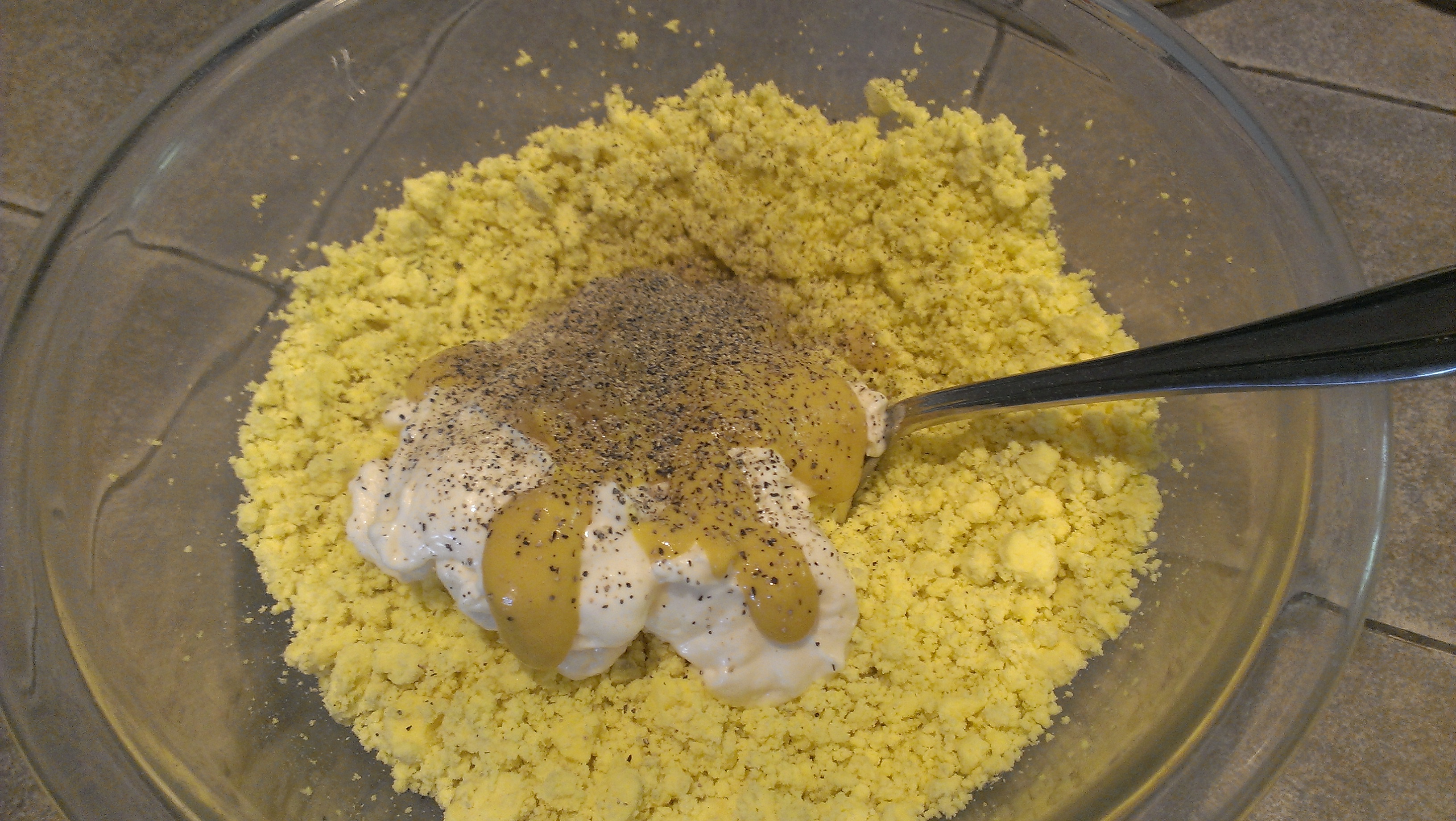
Unfortunately, I can’t give exact measurements on ingredients.  It really depends on your taste and how many eggs you actually end up with.  I don’t know about you, but I always end up with at least one or two eggs that don’t peel right and end up in the trash.  Rough measurements are… two-three heaping tablespoons of mayo, squirt of mustard, ¼ finely diced small onion, 1-2 cloves minced garlic, and five or six shakes of pepper.

IMAG0892

I blend the yolk mixture, taste, and add any of the above ingredients as needed, and then spoon the filling into the egg whites.  Did you catch that the seasoned salt WASN’T added to the filling?  Bonus points if you did!  A trick I learned from the same person I got this recipe from is to use Lawry’s to finish the eggs instead of paprika.  There’s something about the seasoned salt that brings all the flavors together.  Yum!

Spooning is fun.

Spooning is fun.

Cover the eggs and refrigerate for 2-3 hours (overnight is better).  This gives the ingredients time to meld and the flavors to blend.  Enjoy!

*I don’t always use dried minced onion, but when I was digging in the pantry for an onion, there was only one left and it was half rotted.  Minced onion makes a good substitute, just make sure you re-hydrate in warm water before adding to the yolk mixture.

Deviled egg

Categories: Poultry | Tags: , , , , , | 2 Comments

Blog at WordPress.com.