Fruit

176/365: National Strawberry Parfait Day*

Today’s food holiday is perfect! Literally. It’s the French word for “perfect.” June 25 is National Strawberry Parfait Day!

It’s also National Catfish Day. I personally would have preferred celebrating this dish instead, as I love a good fried catfish and there are a couple of really good Southern restaurants in Portland that serve catfish. But Tara isn’t real keen on the fish, so we agreed to celebrate with strawberry parfaits instead. Why break the dessert streak, anyway?

Not too long ago we had chocolate parfaits, so this is somewhat familiar territory for us. Only this time we are fortunate to have fresh strawberries to use. Specifically, Hood strawberries from Oregon, which we picked up from the farmer’s market on Sunday. Hoods are the sweetest, juiciest, most flavorful strawberries in the world. I’m convinced of this. I have friends in California who insist their strawberries are better, but to me it’s not even close. Ours blow theirs away hands down. Click on the above link if you want a refresher course on the history of parfait.

Here’s a fun and random fact about strawberries. In Bavaria, people living in the countryside have an annual rite each spring in which they tie a basket full of strawberries to the horns of their cattle as an offering to elves, who they believe love strawberries and will reward the farmers with healthy calves and an abundance of milk as a thank you gesture.

Ha. Country folk.

I decided to mix things up and go healthier with these parfaits. I layered Tillamook vanilla yogurt, fresh Hood strawberries from Oregon, and granola for a tasty low-cal, low-fat treat. It was very good. But also would have been more apropos for breakfast. Hmm…

National Strawberry Parfait Day

Categories: Desserts, Fruit | Tags: , , , , , | 5 Comments

172/365: National Peaches and Cream Day

You may be feeling peachy keen because it’s the first day of Summer. Which would be appropriate, considering June 21 is National Peaches and Cream Day!

I’m glad peaches and cream get their own holiday and everything, but what about Peaches & Herb?! Reunited and it feels so good? Shake your groove thing? Come on, people. Honor the groovy 70s duo!

Anyway. Peaches and cream is the South’s answer to strawberries and cream, which is a British invention. It’s considered a relatively healthy dessert because it is made with fresh fruit chock full of vitamins, though there’s still that pesky thing called “cream” keeping it from being a true dieter’s friend. Peaches, once called Persian apples, originated in China and were a favorite of emperors. As it spread through Europe it became a popular but rare treat. A fresh peach wrapped in a fancy cotton napkin was considered a high-falutin’ dessert back in the day. Peaches were brought to America by Spanish explorers in the 16th century, but commercial production didn’t actually begin until the 19th century in Maryland, Delaware, Georgia, and Virginia.

Like strawberries and cream, the “cream” in peaches and cream is actually whipped. To celebrate the holiday, we sliced a fresh peach (the benefit of having this holiday land on the summer solstice) and topped it with a generous dollop of whipped cream. There are fancier recipes out there, but we had a concert to attend tonight and needed to keep it simple. It was delicious, anyway!

National Peaches and Cream Day

Categories: Dairy, Desserts, Fruit | Tags: , , | 1 Comment

146/365: National Cherry Dessert Day*

If you’re thinking that life is the pits, cheer up: May 26 is National Cherry Dessert Day!

It’s also National Blueberry Cheesecake Day, which is nice and specific. Cherry dessert, on the other hand? That could refer to anything. Cherry pie, cherry cobbler, chocolate-covered cherries…all of which we have already celebrated. A little more direction here would have been nice, especially since Tara and I are spending the night in a  hotel room on the Oregon coast for a little much-needed R&R. (That’s rest and relaxation, not ravioli and rutabaga. Not everything has to do with food).

Cherry dessert. Cherries are native to Europe, western Asia, and northern Africa. The ancient Greeks and Romans were especially fond of cherries, as are little old ladies when three of them line up in a row on their penny slot machines. Early settlers brought cherries to America in the 17th century, where they flourished around the Great Lakes. The Pacific Northwest became another prime cherry growing area when Henderson Lewelling planted an orchard in western Oregon in 1847. The most famous sweet cherry variety, the Bing, got its start at Lewelling’s orchard, and was named after one of his Chinese laborers (not the search engine, contrary to popular belief). The Rainier cherry, another popular sweet variety (and my personal favorite), is a cross between a Bing and a Van. Today, 650 million pounds of cherries are produced in the U.S. Most of them are grown in two regions: Michigan (75% of the sour cherry crop) and the Pacific Northwest (60% of the sweet cherry crop). California, Utah, Wisconsin, Pennsylvania, and New York also grow cherries.

For the holiday, we stopped at an Arctic Circle in Newport, Oregon. Tara grew up with Arctic Circle fast-food restaurants, but there are only a handful in the whole state, none close by to where we live. It was my first time there, and I was impressed with the mushroom swiss burger and the fry sauce. Best of all, they had ice cream cones hand dipped in a hard cherry shell. Perfect! And because that might be stretching the definition of cherries, we also bought a pint of fresh cherries from a roadside stand on our way to the coast, and had some of those, as well. Either way, we covered all our cherry bases!

Categories: Desserts, Fruit | Tags: , , , , | 2 Comments

141/365: National Strawberries and Cream Day

Today’s food holiday is berry delicious! May 21 is National Strawberries and Cream Day.

I had assume that strawberries and cream were just that: strawberries floating in a bowl of cream. Which doesn’t sound all that appealing. Turns out, most preparations involve whipped cream. Some even call for ice cream. Ahh…well now, that makes sense! Strawberries and whipped cream are a decadent delicacy. I decacacy, if you will.

Strawberries and cream were first served by Cardinal Thomas Wolsey, Lord Chancellor of King Henry VIII’s royal court, in the 1500s. In 1514, Wolsey built a fabulous riverside retreat called Hampton Court which he referred as the “the King’s palace” due to the frequency of Henry VIII’s visits. Opulent parties were thrown, and included lavish feasts whipped up by the chefs in Hampton Court’s oversized kitchens; they were expected to feed some 600 people twice a day. The kitchens were hot and crowded, and the chefs worked like mad, once serving a meal consisting of 44 different cooked animals and birds. One overworked chef said “this is bullshit” – or whatever profanity-laced phrase was popular at the time – and decided to put together a simple dessert that did not require plucking, skinning, butchering, or cooking. He took strawberries, combined them with thickened cream (dairy products were considered a peasant dish at the time), and served them to the royal court. Rather than declaring “off with his head!” the king enjoyed the treat, and it became popular throughout Britain. To this day, strawberries and cream are synonymous with the Wimbledon tennis tournament, where more than 6000 pounds of strawberries and 2000 pounds of cream are served.

I wish this food holiday was just a few weeks later. The best strawberries in the world are grown in the Pacific Northwest, but the season doesn’t begin until June and is much too short. We had to settle for California strawberries from the grocery store instead, which – no offense to Golden Staters – pale in comparison. But – on the plus side – I made my own whipped cream! It’s amazingly simple. Cream, sugar, and a splash of vanilla. Whip until it forms stiff peaks.

That’s what she said.

IMAG0861

Categories: Dairy, Fruit | Tags: , , , , | 2 Comments

133/365: National Fruit Cocktail Day

Today we celebrate a mixture of fruit that comes in a can. May 13 is National Fruit Cocktail Day!

Fruit cocktail was invented as a way to use up scraps of fruit that were too bruised or damaged to be used in other cans of fruit. So basically, you’re getting the rejects when you pop open a can of fruit cocktail. The exact origin is unknown; fruit salads had been popular since 1893, and contained cherries and other dried fruits. A cookbook from 1902 explains where the name was derived: In these latter days, many American cooks make a mixture of fruit, sugar and alcohol and serve them as ‘salad.’ These are not salads … they are heavy, rather unwholesome, and will never take the place of a salad. I prefer to call them fruit cocktails and serve them as a first course at a luncheon or a twelve o’clock breakfast. The author, Mrs. Rorer, is now regarded as America’s first Food Snob. In 1930 San Jose canner Herbert Gray of Barron-Gray Packing Company began selling fruit cocktail, which grew in popularity over the years. To be labeled an official fruit cocktail by the USDA, it must contain pears, grapes, cherries, peaches, and pineapples. Most are packed in either heavy syrup or a lighter, less sugary mixture.

Tara and I bought a can of fruit cocktail to enjoy as a healthy (?) dessert after dinner. Sure enough, it contained the five requisite ingredients to properly be labeled a fruit cocktail!

Fruit Cocktail

Categories: Fruit | Tags: , , , | 3 Comments

124/365: National Orange Juice Day*

Orange you glad today’s food holiday is fresh and fruity? May 4 is National Orange Juice Day!

It’s also National Homebrew Today and National Candied Orange Peel Day. I don’t like beer, and even if I did, it’s doubtful that I’d be brewing my own anyway. And candied orange peels? Do people really eat those?? Choosing to celebrate with a tall, cold glass of orange juice is what we in the biz like to call a “no-brainer.”

Orange juice is one of the most popular juices in the United States. Spanish explorers planted the first orange trees in St. Augustine, Florida in the 16th century. The warm climate and abundant rainfall proved to be the perfect growing environment, and Florida oranges became wildly popular. As delicious as the fresh-squeezed juice was, there was no way to make it available commercially, as it would only last a day before going bad. In 1910, an overabundance of oranges in California (which had also begun growing the citrus fruit) forced growers to destroy 30% of the state’s orange trees, as they had nothing to do with the excess fruit. Soon after, pasteurization was developed, allowing citrus growers to juice the excess fruit and ship it to grocery stores all over the country, where it could be stored for longer periods of time. Growers began touting the health benefits of vitamin C, and by the 1920s orange juice had become a breakfast staple in America, replacing stewed fruit (a popular British breakfast accompaniment) as the go-to choice. Frozen concentrated orange juice was invented in 1948, inspired by the lack of fresh fruit available to soldiers during World War II. The slang term “OJ” popped up around this time, referring to both the juice and, later,  a wife-murdering-former-NFL-star-who-took-an-infamous-ride-in-a-white-Ford-Bronco.

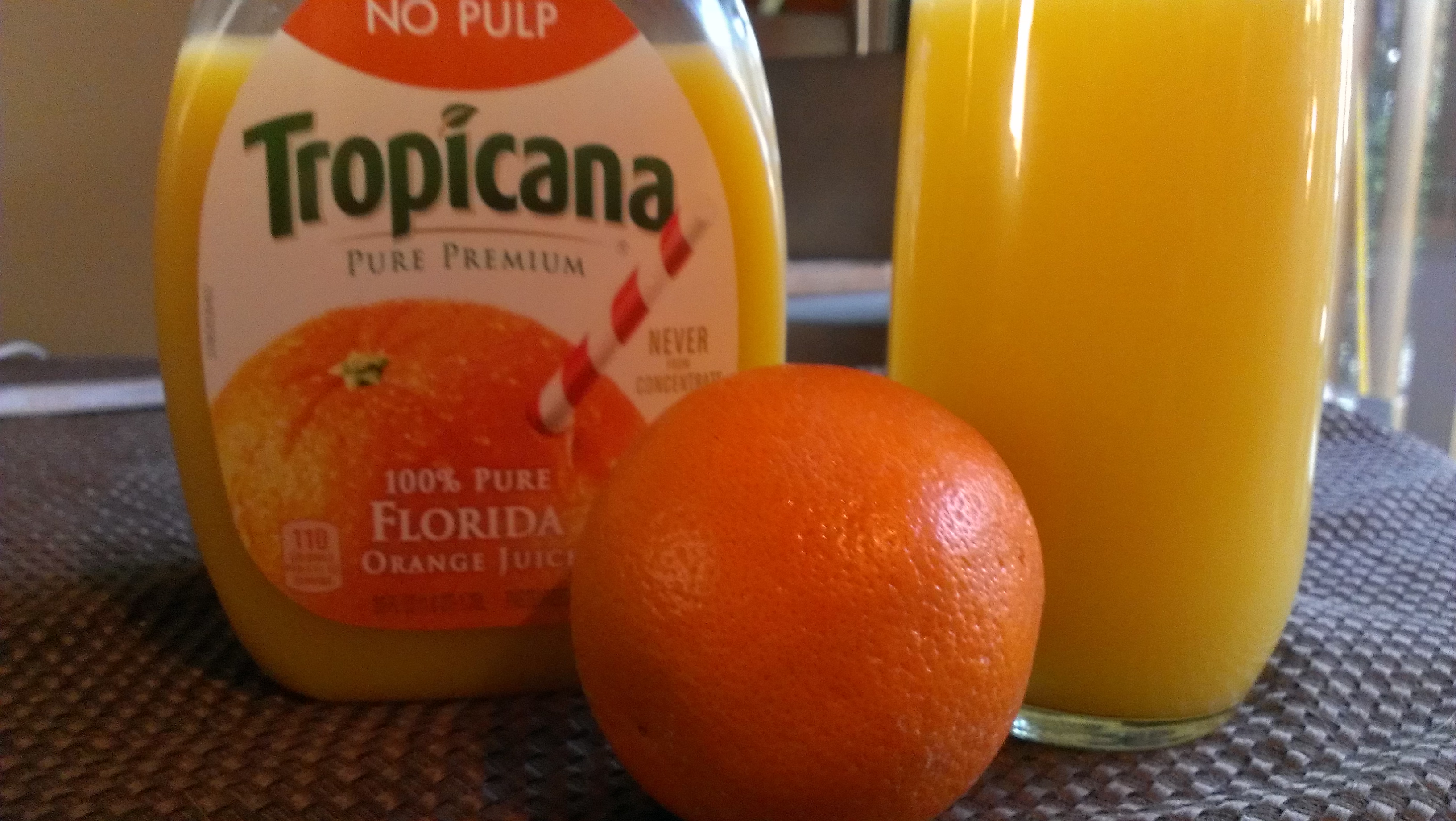
We poured ourselves a tall glass of orange juice in order to celebrate the holiday!

IMAG0794

Categories: Beverages, Fruit | Tags: , , , , , | 4 Comments

92/365: National Peanut Butter & Jelly Day

Whenever you find yourself in a sticky jam, relax and have a peanut butter and jelly sandwich. This childhood favorite is tasty, nutritious, and evokes fond memories for many of us. We are happy to celebrate National PB&J Day today!

Once upon a time, all you could get was a J sandwich: jelly has been around since the 15th century, while peanut butter didn’t make an appearance until late in the 19th century. In 1884, Marcellus Edson of Toronto filed a patent for a peanut paste “with a consistency like that of butter, lard, or ointment.” Dr. Ambrose Stroud of St. Louis decided that this peanut paste would be a great way of providing protein to elderly patients without teeth, and developed a machine that produced a more palatable version of peanut butter, which he patented in 1903. In the early 1900s, peanut butter was considered a delicacy, and could only be found in upscale tearooms in New York City, a favorite of the upper class (and those lucky toothless bastards in Missouri). Peanut butter was paired with many different ingredients early on, including cheese, pimento, celery, and watercress; in 1901, Julia Davis Chandler published a recipe for a PB&J sandwich, and a classic combination was born. By the 1920s, the price of peanut butter had dropped enough that it was no longer relegated to the filthy stinkin’ rich – even average citizens with teeth could enjoy the sticky treat. It became a favorite of children everywhere, and during World War II, both peanut butter and jelly were on the official military rations list.

I remember the first time I tried a peanut butter and jelly sandwich. We were living in Hawaii, and I was 4 or 5 years old. The lady who owned the house where we lived took a liking to me and my brother, and made us PB&J sandwiches one day. This was a novelty to me: for some reason, my mom was more into bologna or tuna. I thought this sandwich was creamy, sweet, and delicious, and it became the first of many for me. Then again, everybody loves peanut butter and jelly sandwiches! Right?

Not happy that today is National PB&J Day.

Not happy that today is National PB&J Day.

Ahh, Tara. One of the few people I know who is not enamored with peanut butter and jelly. To “celebrate,” she had peanut butter on a celery stick and toast with jelly.

As for me? I was always partial to chunky peanut butter and grape jelly, spread between two slices of white bread. So that was my lunch!

PB&J

Categories: Fruit, Nuts | Tags: , , , , , , | 4 Comments

90/365: National Tater Day, National Oranges & Lemons Day*

If whoever created these food holidays had a sense of humor, then the last day of March would be dedicated to lamb. (You know – “in like a lion, out like a lamb” and all). But alas, it is National Tater Day. Not to be confused with National Potato Day (October 27). Oh, and it’s also National Oranges and Lemons Day. And National Clams on the Half Shell Day. And on top of all that, it’s Easter, too. Sheesh! (I mean, Happy Easter). After learning about the clamming accident that has led to supply shortages, we decided to focus our efforts on both potatoes and oranges and lemons, Knocking them all out in one sitting.

Potatoes grew wild throughout the Americas, and were first domesticated in Peru sometime between 8000-5000 B.C. A well-kept secret at first, when the Spanish conquest decimated the Inca Empire, the Spanish brought potatoes to Europe in the 16th century. Over the next couple of hundred years they spread around the world, becoming a staple crop in many countries. Plentiful and easy to grow, the potato is responsible for an estimated 25% of the world’s population growth during this time. Some of this population gain was wiped out in 1845, when the Irish Potato Famine devastated that country, wiping out the entire crop and leading to approximately one million deaths, and causing a mass exodus from the land o’ leprechauns.

Oranges and lemons are two of the most popular citrus fruits. I feel bad leaving out limes and grapefruit, but rules is rules, man. There’s a popular English nursery rhyme about oranges and lemons that goes,

Oranges and lemons,
Say the bells of St. Clement’s.

You owe me five farthings,
Say the bells of St. Martin’s.

When will you pay me?
Say the bells of Old Bailey.

When I grow rich,
Say the bells of Shoreditch.

When will that be?
Say the bells of Stepney.

I do not know,
Says the great bell of Bow.

Here comes a candle to light you to bed,
And here comes a chopper to chop off your head!

Yikes! That’s supposed to help a kid fall asleep? How will that work, with the threat of decapitation looming? Seems like something the brothers Grimm might conjure up. It is believed that oranges originated somewhere in Asia around 2500 B.C. In Europe, oranges and other citrus fruits were grown largely for medicinal purposes; Vitamin C is still considered an excellent cold remedy to this day. Lemons came from the same region, and are a cross between the sour orange and the citron. Christopher Columbus brought lemon seeds along on his voyages, introducing them throughout the New World. Today, they – and oranges – grow exceptionally well in Florida and California.

We celebrated both food holidays with a delicious breakfast (using the taters and oranges) and later, iced tea and sweet tea vodka with fresh lemons. Everything was great!

Taters, oranges, and lemons. That's two food holidays in one!

Taters, oranges, and lemons. That’s two food holidays in one!

Categories: Fruit, Vegetables | Tags: , , , , , , , , | Leave a comment

83/365: National Chocolate Covered Raisin Day

No need to be raisin a fuss today, especially if you like chocolate and shriveled-up dry fruit. March 24 is National Chocolate Covered Raisin Day!

Raisins were an accidental discovery. People had been eating grapes for centuries, but sometime around 1500 B.C. a lazy farmhand in the Middle East left grapes to dry on the vine too long, and they shriveled up. Turns out this was a good thing, as they discovered the dried grapes were sweet, delicious, and easy to store. Raisin comes from the Latin word racemus, meaning “a bunch of grapes.” Phoenicians and Armenians traded raisins with the Romans and Greeks, who were so enamored of the fruit they decorated places of worship with raisins, and handed them out as prizes in sporting contests. Gotta admit, they’re a lot tastier than gold medals given in the Olympics! Vineyards were developed in Spain and Greece, and the Crusaders introduced them to Europe in the 11th century. They were believed to have great medicinal properties and soon became so popular that two jars of raisins could be traded for a slave in ancient Rome! In America, the San Joaquin Valley became known as “raisin valley” with the introduction of the Thompson seedless grape, and is the world’s largest producer of raisins today.

Chocolate covered raisins were first introduced around 1927, when the Blumenthal Brothers Chocolate Company in Philadelphia rolled out Raisenets. They quickly became a popular treat with moviegoers, who liked the contrast between the sweet and creamy chocolate covered raisins and hot, salty popcorn. To this day they are frequently sold in concession stands, but cost a lot more than the nickel a box proprietors charged back in the 1930s.

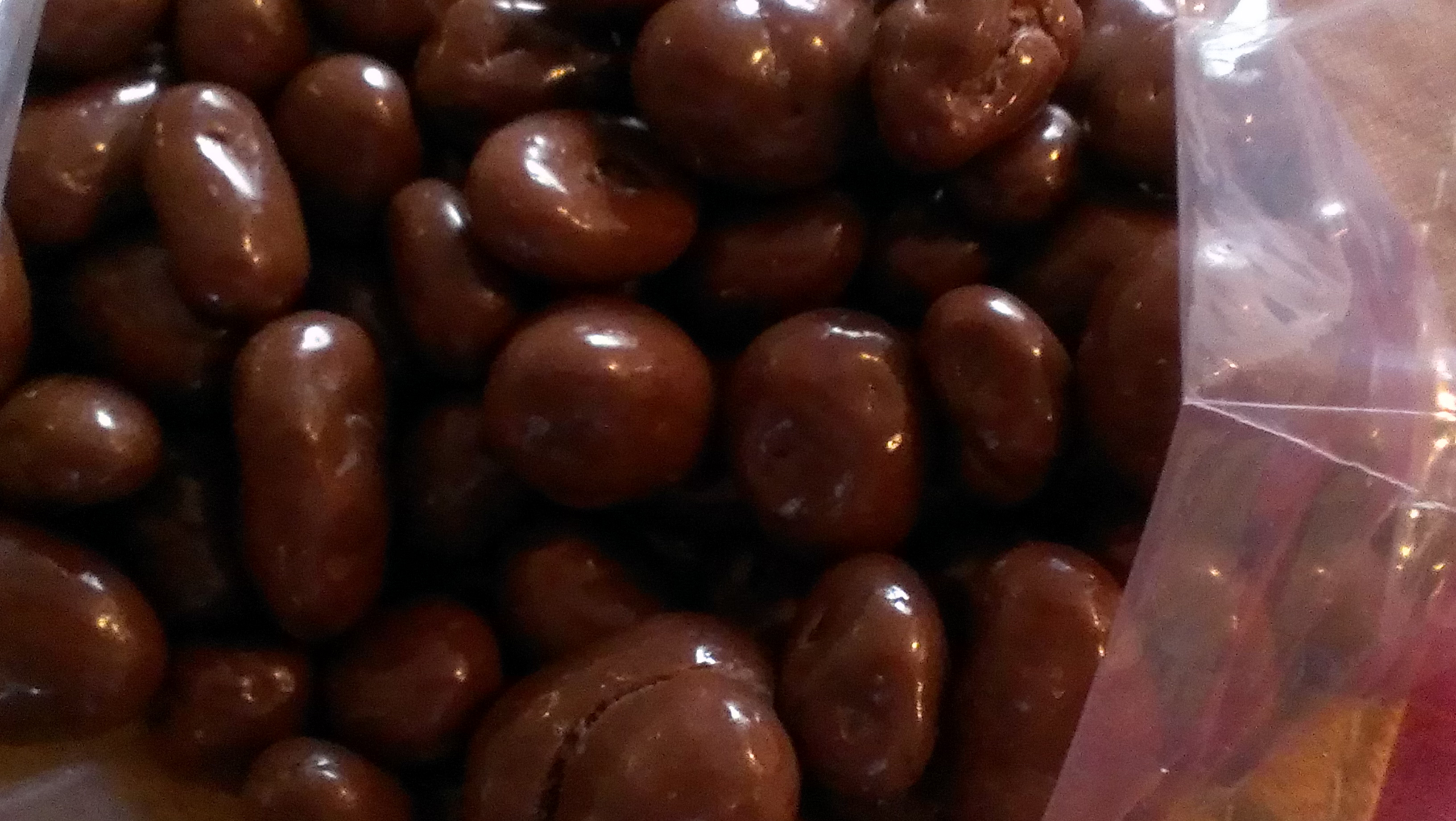
Given their history, Tara and I decided to celebrate chocolate covered raisins by (ahem) sneaking some into the movies. (Don’t worry, we paid for the popcorn). Eaten together, they were pretty tasty!

Chocolate Covered Raisins

Categories: Candy, Fruit | Tags: , , , , | 3 Comments

9/365: National Apricot Day

Apricots are my favorite fruit, so when I learned today was National Apricot Day, I was excited! But then reality hit: it’s January 9. There’s snow in the forecast. Apricots couldn’t be more out of season if they tried. Which begs the question, why celebrate a delicious fruit in the dead of winter, when its peak growing season is five or six months out? Some of these holidays make perfect sense. National Champagne Day on December 31? You couldn’t ask for a more appropriate day to celebrate champagne. And National Whipped Cream Day coincides with the founder of Reddi Wip’s birthday. But apricots in January? Talk about a head scratcher…

One of our Facebook followers asked yesterday, Who is creating these days? Lord please dont tell us its hundreds of food lobbyists convincing politicians to vote for these food days. I think it might be interesting to know the history behind some of these days, follow the money as they say…

Great question, Adrian. I’d been wondering the same thing. I did a bit of research, and guess what? You were pretty much on the mark.

Here’s the scoop: the President has the authority to declare a commemorative day by proclamation. The job is not all foreign affairs and let’s-kill-bin-Laden blather! Constituents (including trade associations and P.R. firms) introduce petitions to honor certain foods, and the Senate has the power to issue resolutions proclaiming commemorative holidays. Governors, mayors, and state legislatures can do the same. Once the observance day has been authorized, the petitioner handles all promotion. Well, the petitioner, and also your friendly neighborhood food holidays blog. 🙂

An apricot and its cross section

So, if you’d like to see a day set aside to honor your favorite food, simply call your congressman!

Back to apricots. The fruit, a relative of the plum, dates back to ancient times. It is believed to have originated in Armenia, a country best known today for (nerd alert!) producing really good chess players. The Chinese, in their ongoing quest for world domination, insist the apricot is native to their country, and India says no, you are wrong, we cultivated apricots way back in 3000 BC. And by the way, are you happy with your current cell phone provider? Regardless of where apricot trees first blossomed, they were exported to continental climates around the globe, where they gained popularity. Alexander the Great brought them to Greece, Roman General Lucullus introduced them to Europe, and English settlers exported them to America.

Apricots contain more carotenoids – cancer-fighting antioxidants – than any other food. Not only are they good for your heart, they also lower cholesterol levels, and – best of all! – are considered an aphrodisiac in Europe. Shakespeare was well aware of this (the horny ol’ coot) and referenced it in a scene from A Midsummer Night’s Dream:

Be kind and courteous to this gentleman.
Hop in his walks and gambol in his eyes.
Feed him with apricoks and dewberries,
With purple grapes, green figs, and mulberries.
The honey bags steal from the humble-bees,
And for night tapers crop their waxen thighs
And light them at the fiery glowworms’ eyes
To have my love to bed and to arise.
That’s hot. Especially the part about “waxen thighs.” (And yes, he spelled it “apricoks.” I’m just going to let that obvious pun go).
Cookie dough with diced apricots. Screw baking, I could eat this as is!

Cookie dough with diced apricots. Screw baking, I could eat this as is!

Without the benefit of fresh fruit (since it’s JANUARY!! The apricot petitioner really screwed up with this one), we had to use dried apricots. Which is fine, they’re still pretty tasty – a nice combination of sweet and tart. Tara had a recipe for white chocolate chip and apricot cookies, so she baked up a batch last night and – no kidding – I took my first bite at 6:30 this morning. In the shower, no less. What can I say? I couldn’t wait. I love apricots that much.

What I don’t love is when people pronounce them “ap-ricots” rather than “ape-ricots,” but I’ll save that rant for another day and a different blog.
Tara's apricot and white chocolate chip cookies. Good stuff!
Tara’s apricot and white chocolate chip cookies. Good stuff!

Categories: Fruit | Tags: , , , , , , | 10 Comments

Blog at WordPress.com.