Monthly Archives: May 2013

141/365: National Strawberries and Cream Day

Today’s food holiday is berry delicious! May 21 is National Strawberries and Cream Day.

I had assume that strawberries and cream were just that: strawberries floating in a bowl of cream. Which doesn’t sound all that appealing. Turns out, most preparations involve whipped cream. Some even call for ice cream. Ahh…well now, that makes sense! Strawberries and whipped cream are a decadent delicacy. I decacacy, if you will.

Strawberries and cream were first served by Cardinal Thomas Wolsey, Lord Chancellor of King Henry VIII’s royal court, in the 1500s. In 1514, Wolsey built a fabulous riverside retreat called Hampton Court which he referred as the “the King’s palace” due to the frequency of Henry VIII’s visits. Opulent parties were thrown, and included lavish feasts whipped up by the chefs in Hampton Court’s oversized kitchens; they were expected to feed some 600 people twice a day. The kitchens were hot and crowded, and the chefs worked like mad, once serving a meal consisting of 44 different cooked animals and birds. One overworked chef said “this is bullshit” – or whatever profanity-laced phrase was popular at the time – and decided to put together a simple dessert that did not require plucking, skinning, butchering, or cooking. He took strawberries, combined them with thickened cream (dairy products were considered a peasant dish at the time), and served them to the royal court. Rather than declaring “off with his head!” the king enjoyed the treat, and it became popular throughout Britain. To this day, strawberries and cream are synonymous with the Wimbledon tennis tournament, where more than 6000 pounds of strawberries and 2000 pounds of cream are served.

I wish this food holiday was just a few weeks later. The best strawberries in the world are grown in the Pacific Northwest, but the season doesn’t begin until June and is much too short. We had to settle for California strawberries from the grocery store instead, which – no offense to Golden Staters – pale in comparison. But – on the plus side – I made my own whipped cream! It’s amazingly simple. Cream, sugar, and a splash of vanilla. Whip until it forms stiff peaks.

That’s what she said.

IMAG0861

Categories: Dairy, Fruit | Tags: , , , , | 2 Comments

140/365: National Quiche Lorraine Day*

Contrary to popular belief, real men do eat today’s celebrated food. May 20 is National Quiche Lorraine Day!

It’s also National Pick A Strawberry Day. But here in the Pacific Northwest, strawberries won’t ripen for another couple of weeks yet. I suppose we could “pick” some from the grocery store, but that doesn’t really count. (Actually, we did pick some from the grocery store when we went shopping yesterday. For tomorrow’s challenge).

Quiche Lorraine is another in a long line of French dishes that are official American food holidays. Somewhere, a guy named Jacuques must be bribing government officials. He’s probably wearing a beret, too. The bastard. Not that I’m complaining: by and large, the French meals have been c’est magnifique. Named for the Lorraine region of France, and the German word kuchen (“cake”),  later altered to kische, Quiche Lorraine is a staple of France dating back to the 16th century, where it is usually served as either a light lunch or a first course at dinnertime. Recipes for savory custards baked in pastry and filled with meat, fish, and fruit are found in English cookbooks 200 years prior to that. Julia Child describes Quiche Lorraine as “an open pie with a filling consisting of an an egg and cream custard with smoked bacon or lardons.” In American versions, cheese is a popular addition, especially gruyere.

Tara baked us a quiche from scratch this morning. Actually, we ended up with two, since we had a pair of crusts (those were frozen…shh), so I took the second one to work. True to form, her quiche contained bacon, cheddar, and a dash of nutmeg and was a delicious way to start a Monday!

Quiche Lorraine

Categories: Uncategorized | Tags: , , , , , | 3 Comments

139/365: National Devil’s Food Cake Day

Today is one hell of a delicious food holiday. May 19 is National Devil’s Food Cake Day!

Devil’s food cake is a moist and rich chocolate layer cake that was created in the late 19th century. Its name was a sarcastic response to angel food cake, which was the complete opposite: light (both in color and texture) and airy. Interestingly, devil’s food cake was originally more like a red velvet cake. It was actually dyed with red food coloring and topped with white frosting. It didn’t become the sinful chocolate dessert we associate it with until the 1970s. In fact, in many turn of the century cookbooks, the names are used interchangeably. The Waldorf Astoria Hotel claims to have invented devil’s food cake, but has been unable to back up this claim with any proof other than “we did, too!” They still serve a red velvet cake similar to the original devil’s food cake recipe.

Nowadays, what distinguishes devil’s food cake is its decadent chocolateness. (My computer says “chocolateness” is not a word. I’m using it anyway). Typical recipes call for cocoa and, sometimes, coffee. It is usually frosted in chocolate, as well.

We had a long drive home and a busy afternoon, so there were no fancy made-from-scratch cakes today. But that’s why they invented Duncan Hines, right?

Devil's Food Cake

Categories: Desserts | Tags: , , , , , | 3 Comments

138/365: National Cheese Souffle Day

There’s no need to feel deflated today, not when you’ve got the perfect excuse to enjoy a puffy, flaky, cheesy treat. May 18 is National Cheese Souffle Day!

Back in February, we celebrated National Chocolate Souffle Day by having a friendly little bake-0ff. In front of a live audience. It was our first (and only) interactive food challenge, and we had a blast. It doesn’t matter who won – the point is that we had fun! (Which, of course, means Tara won. Whatever). We were looking forward to repeating the challenge when cheese souffle day rolled around, only minus the streaming video feed this time. The camera was simply too distracting to me. We would, instead, rely on real-time Facebook posts charting our progress. Either way, I wanted an opportunity to avenge my initial souffle misdeeds and earn the title of Souffle King, which has (through a very odd childhood quirk) been a lifelong dream of mine.

And then, we learned that we would be in Seattle the day of the challenge. In an unfamiliar kitchen, with unfamiliar utensils and an unfamiliar oven. And busy as hell, to boot. So another interactive challenge seemed like too much trouble. It would be tricky enough just finding the time to make a cheese souffle in the first place. But persevere we must, regardless of the circumstances! So it was full speed ahead, strange kitchen or not. I was much more focused on my souffle this time. We mixed, we whipped, we stirred, and we baked. And in the end? Well, let’s take a look at some photos first.

Whisking action.

Whisking action.

Tara's recipe.

Tara’s recipe.

Waiting anxiously for some rising action.

Waiting anxiously for some rising action.

Mark's souffle doesn't look half bad!

Mark’s souffle doesn’t look half bad!

Souffle

Tara’s souffle is pretty impressive, too.

But in the end, there can be only one winner. And though the results were close – both souffles were delicious – in the end, the victory went to…surprisingly and shockingly, I’ll be the first to admit…Mark! So, HA! Redemption is mine. Mine, all mine. Tara’s sharp cheddar and garlic rose impressively and tasted great, but my gruyere and parmesan had a slight edge. Even according to Tara. Yes!!

Truthfully though, this was a lot of fun, and souffles are so technically challenging I’m just proud that both of us could make a souffle that rose impressively and tasted great. Good job, babe!

Categories: Pastry | Tags: , , , | 5 Comments

137/365: National Cherry Cobbler Day

When you’re playing the slots, three cherries in a row is a lucky spin. Today’s food of honor requires more than just three cherries, but you’ll feel lucky you get to indulge in such a sweet treat. May 17 is National Cherry Cobbler Day!

We’ve already celebrated one cobbler-themed food holiday this year: April 13 was National Peach Cobbler Day. I already talked about the history of the cobbler then, and its many other fun-to-say-out-loud names (pandowdy, buckle, grunt, slump), so I won’t bother pushing the Deja Vu button again. How about a fun cherry fact instead? The United States grows 370 million pounds of cherries a year. Nearly half of the annual harvest – 175 million pounds, to be exact – is either frozen, canned, or packed into maraschino cherry jars.

Last time, we bought a pricey but very good cobbler from a local supermarket. I couldn’t find a suitable cherry cobbler this time around, but I didn’t search too strenuously, either. I figured I should just make one from scratch this time; I can bake a decent enough pie, and cobbler is like a poor man’s version of pie, anyway. Unfortunately I couldn’t find any fresh cherries – those are probably still a few weeks away yet – so I had to settle for frozen cherries instead. Despite this grievous misfortune, the cobbler still turned out pretty good.

I had to make it the night before, since Tara and I are headed up to Seattle again this weekend. But that just gave us an excuse to indulge in a little cobbler for breakfast. Nothin’ wrong with that! It turned out okay. A little sweet for my tastes, though.

Cherry Cobbler

Categories: Desserts | Tags: , , , | 2 Comments

136/365: National Coquilles St. Jacques Day

You’ll have to come out of your shell in order to enjoy today’s food holiday. May 16 is National Coquilles St. Jacques Day!

Or, as I referred to it when I first learned of it, National what St. who day?! What can I say, my French is a little rusty. (By the way, considering these are American food holidays, there sure have been a lot of French dishes celebrated. Must be a lobbyist named Pierre working his ass off up on Capitol Hill). Coquille St. Jacques, it turns out, translates to “Scallops St. James.” I’m still not sure how James is the same as Jacques, but then again, I’ve never understood how Dick is derived from Richard, so it’s a moot point. Anyway, once I learned the dish was based on scallops, I breathed a sigh of relief. I love scallops!

St. James was an apostle who, according to legend, once rescued a drowning knight covered in scallops. That dude failed the first rule of Knighthood 101: always remove your armor prior to swimming. No doubt he never lived down the fact that he was attacked by a bunch of fierce, bloodthirsty bivalves. In any case, St. James became associated with scallops, and medieval Christians who made the pilgrimage to his shrine at Santiago de Compostela in Galicia, Spain often wore scallop shells on their clothing, or carried them along. The grooves on the shell supposedly represent the different paths the pilgrims would take to arrive at the same destination: the cathedral. When the scallop shell was presented at a church or castle, the pilgrim was allowed to take as much food as he could carry in a single scoop. The pilgrim would walk away with a scallop shell full of oats, barley, or another grain. Or – if he were really lucky – beer or wine.

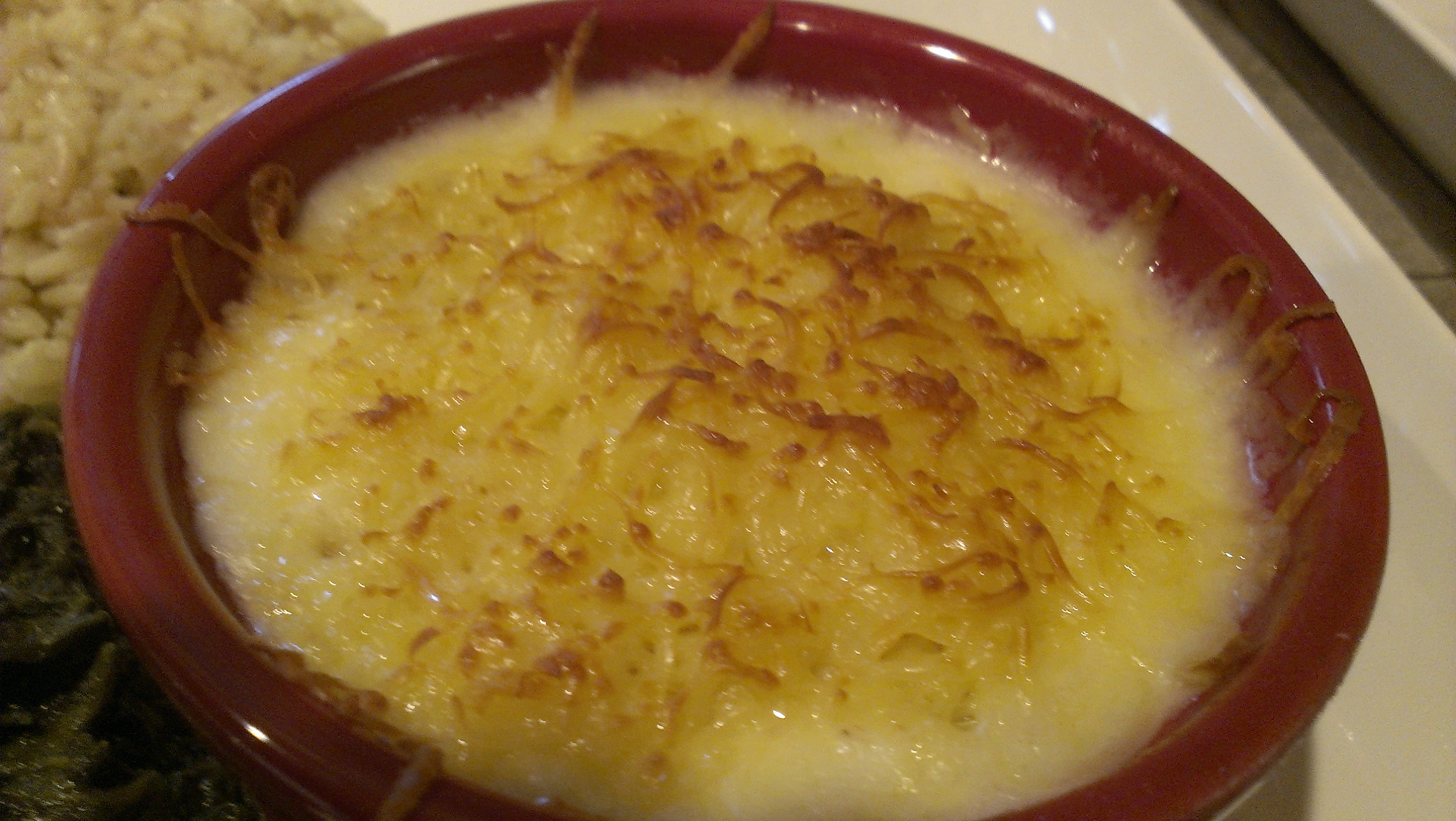
Coquilles St. Jacques is traditionally made with scallops poached in white wine. They are then placed atop a scallop shell over sauteed mushrooms and topped with poaching liquid, cream, cheese, and breadcrumbs, and broiled until crisp. Pretty fancy! Only, we were plum out of scallop shells. Fortunately, I found a recipe that allows you to use ramekins instead. Whew! It turned out delicious, too. Which is great, considering neither of us had ever heard of the dish before embarking upon this challenge.

Coquilles St. Jacques

Categories: Seafood | Tags: , , , , , | 7 Comments

135/365: National Chocolate Chip Cookie Day

You won’t cry when you’re eating today’s teardrop-shaped morsel of chocolatey goodness. May 15 is National Chocolate Chip Cookie Day!

It may also be National Chocolate Chip Day, depending on which source you believe. Either way, we’ve got the holiday covered.

Like several other of the foods we’ve honored already, chocolate chip cookies were created by accident. Ruth Graves Wakefield was a dietitian who graduated from Framingham State Normal School’s Department of Household Arts (home of the Fightin’ Spatulas!) (just kidding, but it ought to be) and gave lectures on food. She and her husband Kenneth opened a lodge called the Toll House Inn near Whitman, Massachusetts, and she was responsible for preparing meals for the guests. One evening she decided to make chocolate butter drop cookies, but found herself missing a key ingredient: baker’s chocolate. Undeterred, Ruth decided to substitute a Nestle semi-sweet chocolate bar. She broke it up into chunks, thinking it would mix together with the dough and create an all chocolate cookie, but the morsels only softened. The cookies tasted great anyway, so she served them, and they became a big hit. The chocolate bar had been a gift from Andrew Nestle himself, as Ruth’s reputation as a talented baker spread far and wide. Sensing a good marketing idea, Ruth contacted Nestle, and struck up a deal with the company: they could print her “chocolate chunk cookie” recipe on their chocolate bar labels if they supplied her with free chocolate bars for her cookies. This was a win-win for both: sales of Nestle semisweet chocolate bars increased, and Ruth ended up with free chocolate (and loads of publicity) for life. Nestle wanted to make it easy for home cooks to make the cookies and even included a tiny chopper in the packaging until 1939, when they introduced chocolate chip morsels.

Ruth and Kenneth owned the Toll House Inn until 1966, when they sold it to a family that turned it into a nightclub. A few years later it was sold again to another family who turned it back into a lodge, and continued to bake the original recipe Toll House cookies for their guests. The inn burned down on New Year’s Eve, 1984. As for chocolate chip cookies? Well, they went on to become the most popular cookie in America. Here’s Ruth’s original recipe.

Mrs. Wakefields Original Toll House Cookie Recipe

2 1/4 cups all-purpose flour
1 teaspoon baking soda
1 teaspoon salt
1 cup (2 sticks) butter or margarine, softened
3/4 cup granulated sugar
3/4 cup packed brown sugar
1 teaspoon vanilla extract
2 large eggs
1 2/3 cups (11-oz. pkg.) semisweet chocolate chips
1 cup chopped nuts

PREHEAT oven to 375° F.

COMBINE flour, baking soda and salt in small bowl. Beat butter, granulated sugar, brown sugar and vanilla extract in large mixer bowl until creamy. Add eggs one at a time, beating well after each addition. Gradually beat in flour mixture. Stir in morsels and nuts. Drop by rounded tablespoon onto ungreased baking sheets.

BAKE for 9 to 11 minutes or until golden brown. Cool on baking sheets for 2 minutes; remove to wire racks to cool completely.

 
As for Tara and I, we picked up a couple of chocolate chip cookies from the farmer’s market over the weekend. No, they aren’t Ruth’s Toll House recipe, but there’s no such thing as a bad chocolate chip cookie, you know?
Chocolate Chip Cookie
Categories: Desserts | Tags: , , , , , , , | 6 Comments

134/365: National Buttermilk Biscuit Day

You don’t need a lot of bread to be able to afford today’s food of honor. May 14 is National Buttermilk Biscuit Day!

Biscuits are small “quick breads” that use baking powder or baking soda as a leavening agent rather than yeast and are similar to British scones. European settlers appreciated their simplicity and brought them to America, where they caught on in the early 19th century when cooks were looking for a bread that could be made without yeast, which was expensive and difficult to store at the time. Biscuits were preferred over bread because their harder consistency enabled them to be used to wipe up gravy; as a result, biscuits and gravy became a popular meal. Pre-shaped, ready to bake refrigerator biscuits were introduced in 1931, making it easy for anybody to prepare biscuits whenever the biscuit mood struck.

Buttermilk became a popular ingredient in biscuits, particularly in the South, and are usually served as a side dish topped with butter, syrup, honey, or jelly. They are often used as a base for fast-food breakfast sandwiches, and are traditionally served alongside fried chicken at restaurants that specialize in spaghetti fried chicken.

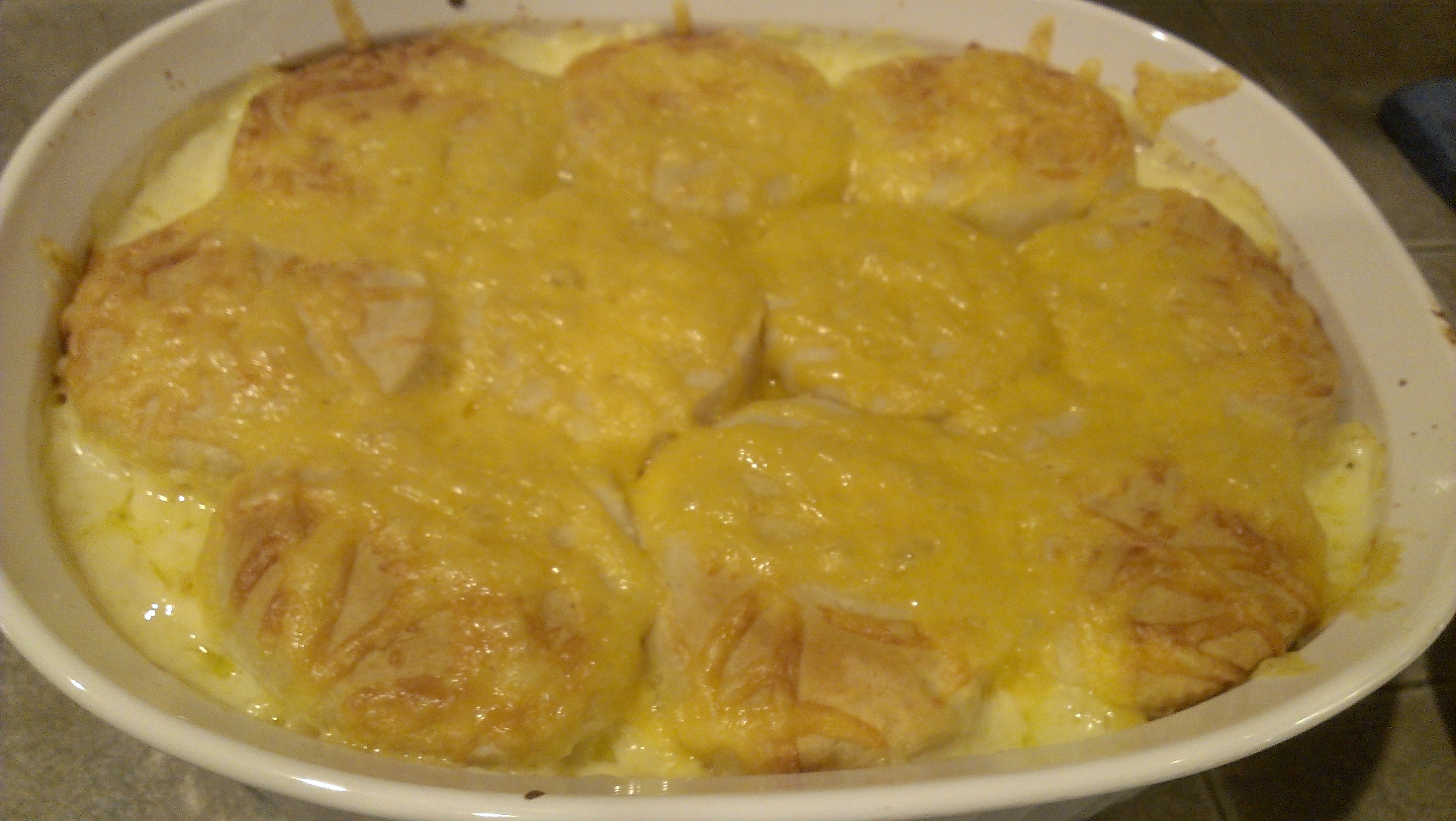
To celebrate buttermilk biscuits, we didn’t want to take the obvious or the simple approach. We opted instead for a cheesy chicken casserole recipe that uses refrigerated biscuit dough as a topping; as it bakes the dough rises, and you end up with a crunchy, chewy top layer. In other words, deliciousness!

Buttermilk Biscuits

Categories: Bread | Tags: , , , , | 2 Comments

133/365: National Fruit Cocktail Day

Today we celebrate a mixture of fruit that comes in a can. May 13 is National Fruit Cocktail Day!

Fruit cocktail was invented as a way to use up scraps of fruit that were too bruised or damaged to be used in other cans of fruit. So basically, you’re getting the rejects when you pop open a can of fruit cocktail. The exact origin is unknown; fruit salads had been popular since 1893, and contained cherries and other dried fruits. A cookbook from 1902 explains where the name was derived: In these latter days, many American cooks make a mixture of fruit, sugar and alcohol and serve them as ‘salad.’ These are not salads … they are heavy, rather unwholesome, and will never take the place of a salad. I prefer to call them fruit cocktails and serve them as a first course at a luncheon or a twelve o’clock breakfast. The author, Mrs. Rorer, is now regarded as America’s first Food Snob. In 1930 San Jose canner Herbert Gray of Barron-Gray Packing Company began selling fruit cocktail, which grew in popularity over the years. To be labeled an official fruit cocktail by the USDA, it must contain pears, grapes, cherries, peaches, and pineapples. Most are packed in either heavy syrup or a lighter, less sugary mixture.

Tara and I bought a can of fruit cocktail to enjoy as a healthy (?) dessert after dinner. Sure enough, it contained the five requisite ingredients to properly be labeled a fruit cocktail!

Fruit Cocktail

Categories: Fruit | Tags: , , , | 3 Comments

132/365: National Nutty Fudge Day

May 12 is devoted to a sweet and rich confection that was probably invented accidentally. It’s National Nutty Fudge Day!

The exact origin of fudge – a drier version of fondant, made by boiling sugar in milk until it reaches the soft ball stage and then beating it while it cools until it’s smooth and creamy – is unknown. Most historians believe that fudge, an American invention, was created by accident when a batch of caramels recrystallized, leading to the exclamation “Oh, fudge!” The earliest mention of the treat dates to 1886, when Vasser College student Emelyn Battersby Hartridge wrote a letter discussing how her schoolmate’s cousin made a batch of fudge in Baltimore and sold it for 40 cents a pound. Fudge became popular at women’s colleges because it tasted delicious and was easy to make: students could cook a batch using nothing but a gas light or chafing dish. Wellesley and Smith soon had their own versions of fudge floating around campus in the late 19th and early 20th centuries. This is going to make me sound terrible, but could there be a correlation between the popularity of fudge at women’s colleges, and…well…PMS? I’m just wondering. Some women do seem to crave chocolate during certain times of the month.

Women aren’t the only ones who appreciate fudge, though. And there are no fewer than 3 fudge-related food holidays this year. I wasn’t actually sure where to find it, because fudge is one of those things you see all the time at bake sales, but rarely appears on grocery store shelves. My mom mentioned that a local produce store carries locally-made fudge, so we swung by there last weekend to pick up some fruits and veggies and, sure enough, were rewarded with fudge, too. So we grabbed a hunk of chocolate nut fudge to enjoy. It was creamy, nutty, and tasted great!

Nutty Fudge

Categories: Candy | Tags: , , , , | 15 Comments

Create a free website or blog at WordPress.com.