33/365: National Heavenly Hash Day

Today is one of the odder food holidays we’ll be celebrating, because there seems to be no general consensus over what, exactly, “heavenly hash” is. It’s described as a sweet confection containing marshmallows, and can refer to candy, ice cream, cake, cookies, brownies, rice pudding, or ambrosia. I even came across a recipe for a heavenly hash martini. So, I guess, pretty much anything involving marshmallows and fruit, then?

At least it’s not Groundhog Day. I mean, it is Groundhog Day, but at least we don’t have to eat groundhog. Although that would be a lot simpler, and it probably tastes like chicken anyway.

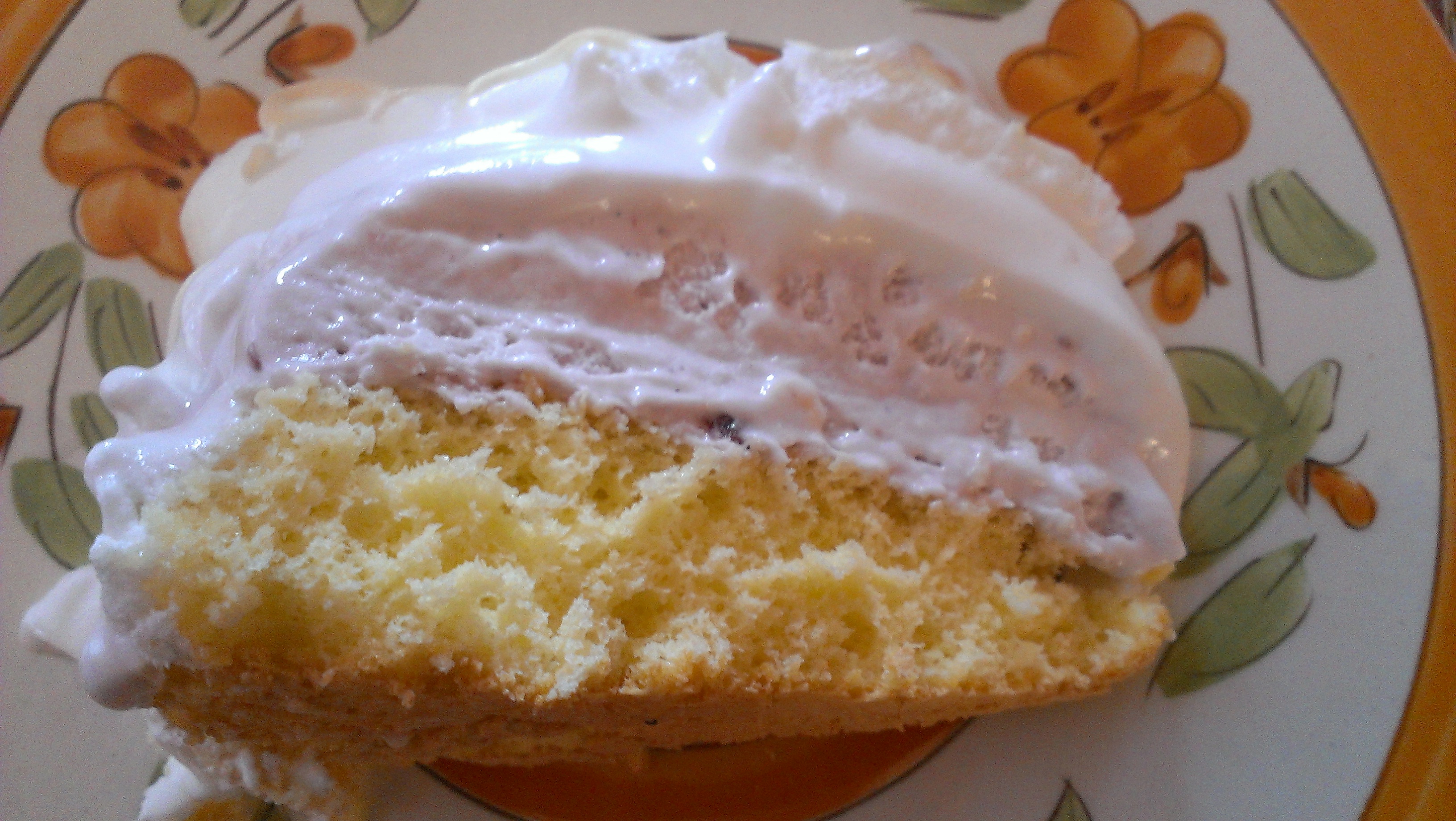
So much confusion reigns that one intrepid blogger contacted several ice cream companies to ask them the difference between Heavenly Hash and Rocky Road (which Wikipedia claims are basically the same thing). The responses are amusing (and still somewhat inconclusive). Rocky Road is a mixture of chocolate ice cream, mini marshmallows, and almonds, while Heavenly Hash is a mixture of chocolate and vanilla ice cream, mini marshmallows, and nuts. Since both Edy’s (Dreyer’s on the west coast) and Ben & Jerry’s agree – and because we’re both slightly hung over and thinking too hard hurts – we’re keeping it simple. We bought a pint of Rocky Road, and we still have leftover vanilla ice cream from our Peach Melba challenge last month. We just mixed the two together and created our own Heavenly Hash. If by definition that’s good enough for the Ice Cream Conglomerates, then it’s good enough for us!

I don’t even have a history on Heavenly Hash (though Rocky Road was created during the Great Depression and its name was meant to make people smile. “We’ve got a rocky road ahead of us.” Ha-ha, yeah, that’s a hoot. Said people jumping to their deaths from tall buildings after losing their life savings in the stock market crash). I guess in that regard, Heavenly Hash is an appropriate name, too…

Heavenly Hash

Categories: Desserts | Tags: , , , , , , , , , | 6 Comments

32/365: National Baked Alaska Day

Happy February! Today is National Baked Alaska Day – one of a handful of holidays that gave us pause when initially looking over the food calendar. Because Baked Alaska isn’t a real common dessert, and can be difficult to find when dining out. Plus, it’s a pretty complicated recipe to make yourself. Which wouldn’t be a big deal – Tara and I can handle anything – but we just happen to have plans tonight involving a concert and an overnight stay in Portland. So, we were sweating it a little – until my mom came to the rescue.

“I’ll make a Baked Alaska for you,” she said.

“That’s okay, you don’t have to do that, it’s an awful lot of work and we’d hate to put you out, but…well…okay, if you insist!” we replied. “What time should we be there?”

Whew. Thank you, mom. Growing up, we used to dine often at the NCO Club on Hickam AFB in Hawaii, and I remember my mom was always fond of the Baked Alaska. The servers would light it on fire and carry it to the table, which was a pretty cool spectacle for a kid. Plus, it tasted phenomenal. Ice cream wrapped in sponge cake and topped with meringue – what’s not to love? I hadn’t had Baked Alaska in probably 30 years, before today.

The dish has been around for awhile, and was originally called omelette à la norvégienne (Norwegian omelette). My idea of an omelette differs from the Norwegians’, apparently (where’s the cheese and mushrooms and meat?). Actually, the name makes sense, since meringue is nothing more than whipped egg whites. In 1876, Secretary of State William Seward purchased the Alaska Territory from Russia for $7.2 million, which amounts to two cents per acre, from Czar Alexander II (the same dude who may or may not have been the inspiration for the Brandy Alexander). Despite what seems like a really good deal on paper, critics scorned the move, calling it “Seward’s folly.” One New York Tribune writer said Alaska “contained nothing of value” and “would not be worth taking as a gift.” And then gold was discovered in the 1890s and everybody started praising Seward for his magnificent foresight. Lot of good it did the poor guy, as he was dead by then. Anyhoo, chef Charles Ranhofer at Delmonico’s Restaurant in New York didn’t think Seward was off his rocker, and wanted to celebrate the purchase of Alaska with a dessert. He whipped up a Norwegian omelette and simply renamed it Baked Alaska. Not exactly original, I suppose, but kudos to the guy for not getting all up in Seward’s grill.

A slice of Norwegian omelette. Err...Baked Alaska!

A slice of Norwegian omelette. Err…Baked Alaska!

Since we have plans tonight, we met up at my parents’ house for lunch today. Nothing like a sandwich topped off with a slice of Baked Alaska! There hasn’t been a more interesting combination of hot and cold since Heat Miser and Snow Miser squared off in the Rankin-Bass Christmas classic The Year Without a Santa Claus. The result? Pretty freakin’ delicious! Good job, mom. Not only was it her first time making a Baked Alaska, but she had never even done a sponge cake, either. It turned out great, and saved us a lot of time and trouble.

I told her she was free to make us a carrot cake on Sunday, but she kind of rolled her eyes. I guess the buck has to stop somewhere.

Categories: Desserts | Tags: , , , , , , | 7 Comments

31/365: National Brandy Alexander Day

All we are saying is give today’s food holiday a chance: we celebrate the Brandy Alexander, which happened to be John Lennon’s favorite drink! (He referred to it as his “milkshake”).

Also, today marks the successful conclusion of our first month of food challenges! We still have a long way to go, and while the task seems daunting, taking it one day at a time is the key to success. While also planning ahead, of course. For January, our favorites were curried chicken and New England clam chowder. The ones we liked least? The hot toddy and the Irish coffee. I think we’ll do a brief recap like this every month.

The Brandy Alexander was supposedly created in honor of Princess Mary’s wedding to Viscount Lascelles in London in 1922, but there is some dispute over this because Lascelles’ name is Henry, not Alexander. SOME dispute? How exactly do you get Alexander from Henry?? (And for that matter, how do you get Dick from Richard? I’ve always wondered). Others say it was named after Russian czar Alexander II. Regardless of who it was really named after (I vote for Alexander Graham Bell, even though he’s not in the running), it replaced another cocktail called the Alexander, which was made with gin. It became quite popular after numerous pop culture references, and is featured prominently movies (Days of Wine and Roses, Too Much Too Soon), television shows (Cheers, Mad Men, The Rockford Files, The Big Bang Theory), books (Brideshead Revisited, Invisible Monsters), and music (Feist released a song called “Brandy Alexander”). As ubiquitous as this drink is, I’m surprised I’d never had one before!

It’s really quite simple to make.

1.5 oz. brandy
1 oz. creme de cacao
1 oz. half-and-half (or cream)
Dash of nutmeg

Combine the first three ingredients in a shaker half filled with ice, strain into a glass, and sprinkle with nutmeg. It’s a very dessert-like drink – and really good!

I don’t know that I’d call it “really good”, but definitely better than the hot toddy, buttered rum, and Irish coffee.  Funny that we started this challenge with a cocktail and ended our first month with one as well.  Too bad all the cocktail holidays can’t be as good as my beloved Bloody Mary!

Tara’s exact words were “still quite stout.” Which sums up the Brandy Alexander well!

Now, on to February…

Brandy Alexander

Categories: Alcohol, Beverages | Tags: , , , | 2 Comments

30/365: National Croissant Day

We would be pretty flaky if we failed to celebrate today’s food holiday, National Croissant Day!

Most people associate croissants with France. But unlike the Eiffel Tower, escargot, and Gerard Depardieu, croissants actually originated in Austria. The hills were alive with the sound of croissant bakers perfecting their craft as far back as the 13th century! It was called kipferl then, and came in different shapes and sizes, but the concept was the same: pastry dough layered with butter, rolled, and folded. The result is a flaky, buttery, layered pastry that can be either sweet or savory (whereas Mr. Depardieu is merely unsavory). Various legends state the croissant was invented in Europe in 732 to celebrate the defeat of the Umayyad forces by the Franks, with the shape representing the Islamic crescent; by the Viennese in 1683 to celebrate the Christian victory over the Ottomans in the siege of that city, the crescent a nod to the Ottoman flag; and by Gerard Depardieu, hungry for a snack that looked like a smile after yet another public relations disaster. Nobody knows the true source, but this much is clear: in 1839 August Zang, an Austrian soldier and baker, opened a bakery in Paris and introduced the City of Light to the crescent-shaped pastry. It was a match made in heaven.

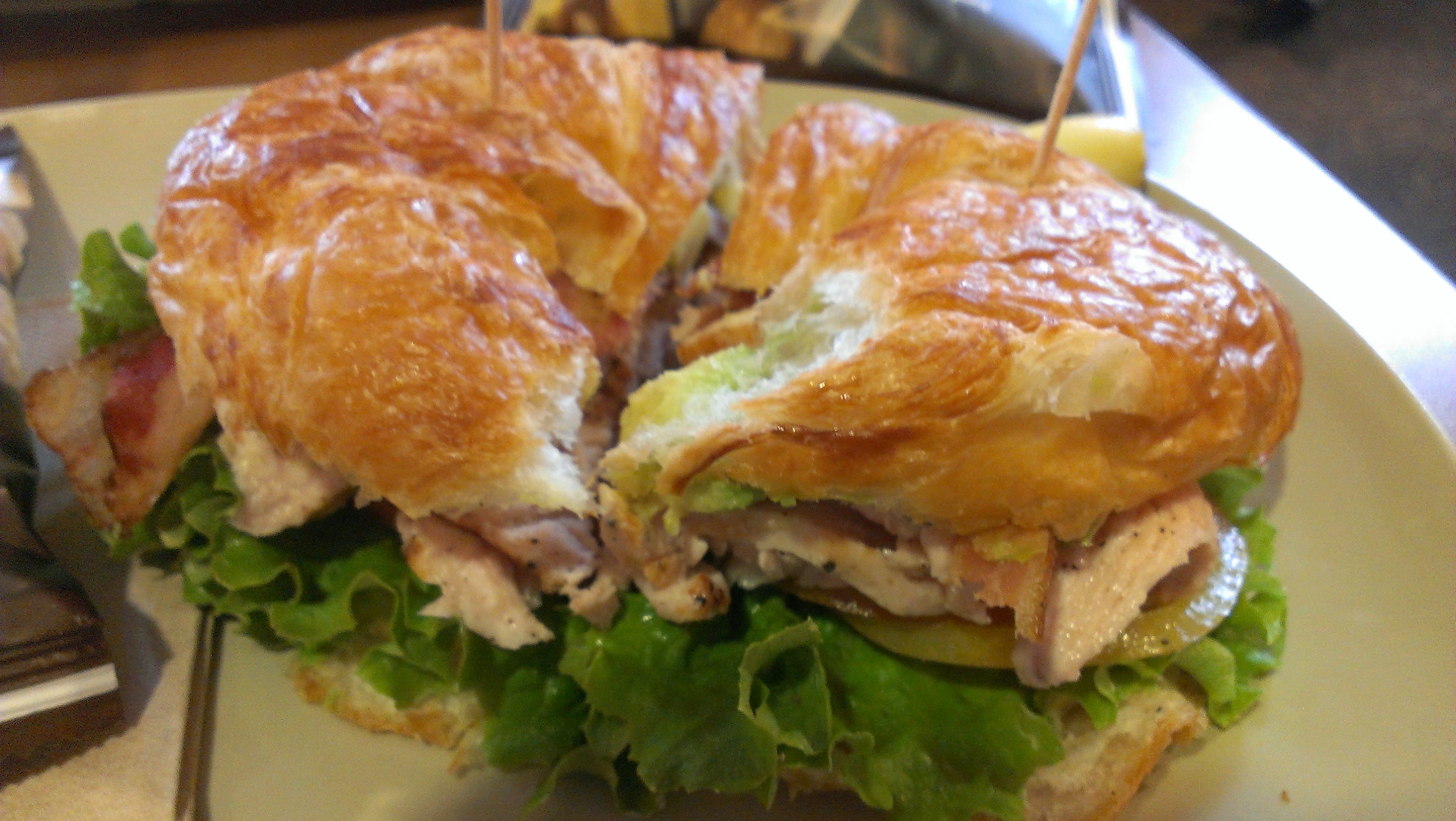
I love croissants. Other than bananas, they are the only food that resembles a sliver of moon…and that makes them out of this world! (Insert canned laughter). Because a warm croissant for breakfast would have been too easy (and Tara and I are proving to be loathe to go the easy route, which may be to our own detriment as the year rolls on and these challenges pile up – even our East Coast culinary consultant, John, advises us to keep it as simple as possible), we decided to up the ante and order a croissant sandwich for lunch!! We are rebels, she and I. So we met up at Panera a little after noon. I laughed when I saw their menu advertising a “French croissant.” But then I remembered that, up until this morning, I too thought that croissants were French. This experience has been an eye-opener, that’s for sure.  I ordered a turkey avocado BLT and had them make it on a croissant instead of the usual bread. It was, as the French say, “c’est magnifique!”

No idea what they say in Vienna…

Turkey Avocado BLT on a croissant

Categories: Pastry | Tags: , , , , , , | 8 Comments

29/365: National Corn Chip Day

It’s National Corn Chip Day, so tear open a bag of Fritos and get wild! That’s what we did. Minus the “get wild” part.

Many people confuse corn chips with tortilla chips, but they are in reality quite different. Both are made from corn, but tortilla chips go through a process called nixtamalization (the corn is soaked and cooked in an alkaline solution before being hulled, resulting in a milder flavor and less crunch). Think of them as being neutered, if you will. (Or don’t. You may lose your appetite). Tortilla chips are bigger and thinner, while corn chips are thick and crunchy, and taste strongly of corn. Gee, no kidding. fritos-original

In 1932, Charles Elmer Doolin owned a convenience store, but there was nothing convenient about it: the tortillas he kept stacked on the shelves kept spoiling. It was the height of the Depression, and Doolin could ill afford to let his food go to waste. He met a guy from San Antonio who was selling fried corn chips, and offered him $100 for the recipe; his mother, Daisy, pawned her wedding ring to come up with the cash. C.E. (as he was called) got to work, experimenting with different varieties of corn until he found the perfect strand – a type of corn he grew himself. Daisy loved to whip up new recipes for the corn chips, and one day tossed a handful into a pot of chili, creating the Fritos Chili Pie, which is pretty much the National Dish of Rednecks everywhere. Doolin went on to form The Frito Company and other inventions followed, including Cheetos in 1948. In 1961, he merged with H.W. Lay & Company, and Frito-Lay has been a powerhouse in the snacking industry ever since.

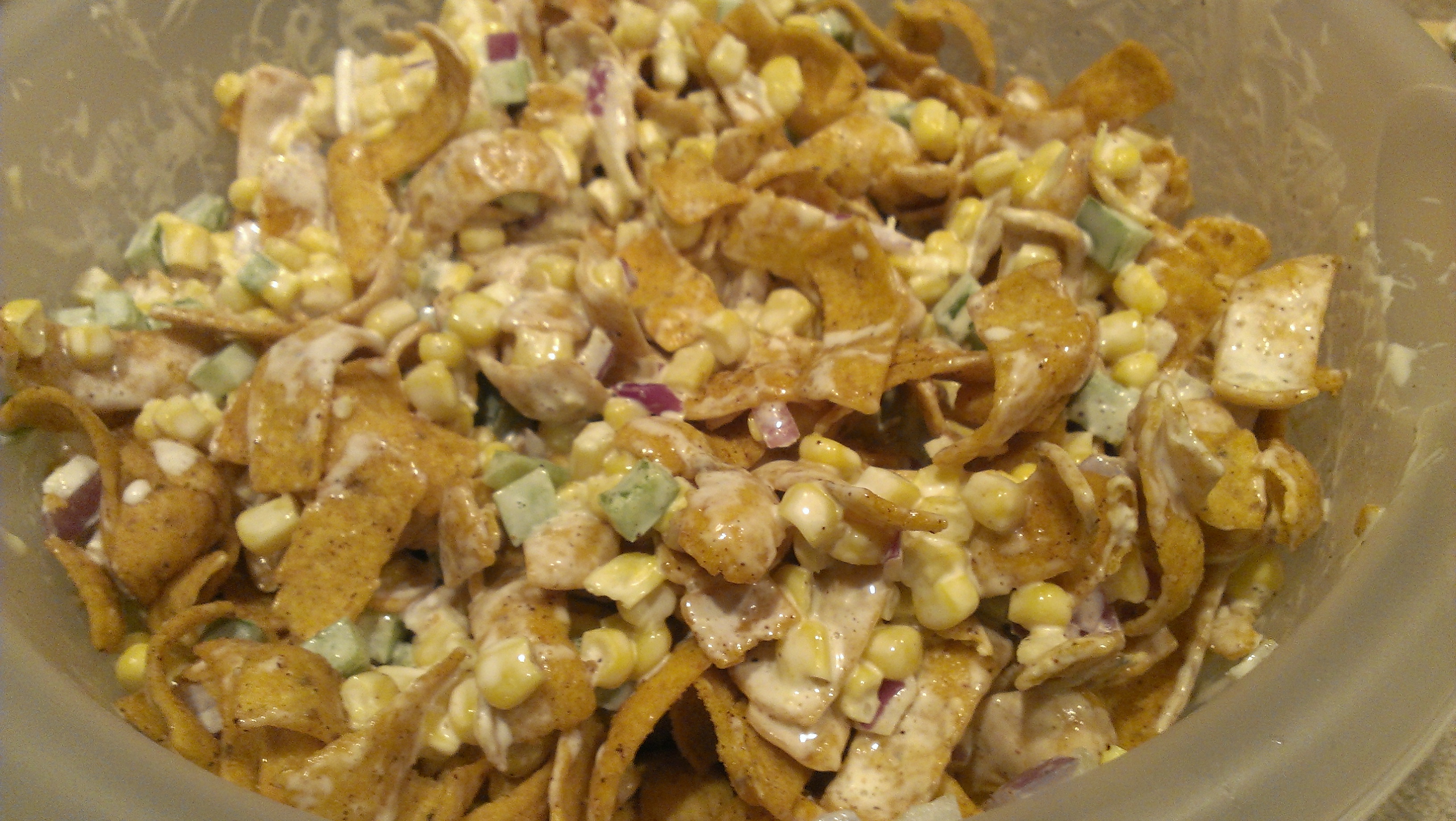
I love Fritos and bean dip, but somebody isn’t a fan of beans around here. Cheese dip is good, but too obvious. And we don’t skin our own squirrels for breakfast, so Chili Pie was out. I happen to have an excellent recipe for a Fritos Corn Salad that I got from somebody I used to work with. She would make this for office potlucks, and it was always a big hit – the one item that disappeared faster than anything else (even cocktail wienies!) and people were always wanting the recipe for. Tara was skeptical – a lot of people are, I guess given what seems like an odd combination of ingredients – but it’s really, really good. Trust me. I made it for a family function a couple of years ago, and my aunt demanded the recipe. Now she makes it any time she’s got a potluck, and people hit her up for the recipe. It’s the circle of life, I tell you.

Frito Corn Salad
2 cans of corn (well drained)
1/2 cup diced red onion
1 cup diced green pepper
1 cup mayonnaise
1 bag Chili Cheese Fritos

Simply mix all the ingredients in a large bowl, adding the Fritos right before serving. The Chili Cheese work best, but you could substitute regular if you’re afraid of a little kick (it’s pretty mild, actually).

I made it tonight to go along with hot dogs, and of course it was a big hit. Even Tara liked it!
Frito Corn Salad
Categories: Snacks | Tags: , , , , , , | 6 Comments

28/365: National Blueberry Pancake Day

January 28 is National Blueberry Pancake Day. IHOP is trying to muscle in and create their own “Pancake Day” on February 5th. In many parts of the world, pancakes are traditionally eaten on Shrove Tuesday (aka Fat Tuesday, or Mardi Gras). But that occurs the following Tuesday – Feb. 12th. Just what are you doing, IHOP? Trying to bypass the official petition-your-congressman procedure? We’re sticklers for the official rules, which state that September 26 is the true National Pancake Day, and that’s what we’re going with. See how easy it is to get bogged down in the details, though?

Pancakes were created by the same folks who gave us Plato, democracy, gyros, and the Olympics. Hats off to Ancient Greece! They were called tagenon, which means “frying pan,” and were originally made with wheat flour, olive oil, honey, and curdled milk. A papyrus scroll was recently unearthed in an archeological dig near Athens; scholars made the startling discovery that it is in fact an ancient fast-food menu touting a breakfast sandwich called the McTagenon, a precursor to the McGriddle. (It should be noted that not all scholars agree with this particular interpretation). Eventually, the thin, round cakes spread throughout Europe and Asia, with multiple regional variations including crepes, potato pancakes, blintzes, blini, and crumpets. The first reference to the word “pancake” appears in the 15th century. In North America, pancakes are sometimes called flapjacks, hotcakes, griddlecakes, or johnnycakes. They are typically served at breakfast topped with butter and maple syrup, and occasionally double as blankets for pigs. In other parts of the world pancakes may be topped with ingredients like fruit, honey, jam, cream, cheese, nuts, and vegetables.

Fruit is often added to pancake batter, and in the U.S., blueberry pancakes are especially popular. It’s no wonder they’ve got their own food holiday! We wanted to savor our blueberry pancakes, so instead of knocking back a quick microwaveable breakfast, we decided to make Brinner instead. In case you’re unfamiliar with the term, Brinner is simply “BReakfast for dINNER.”

God, I miss Scrubs. 

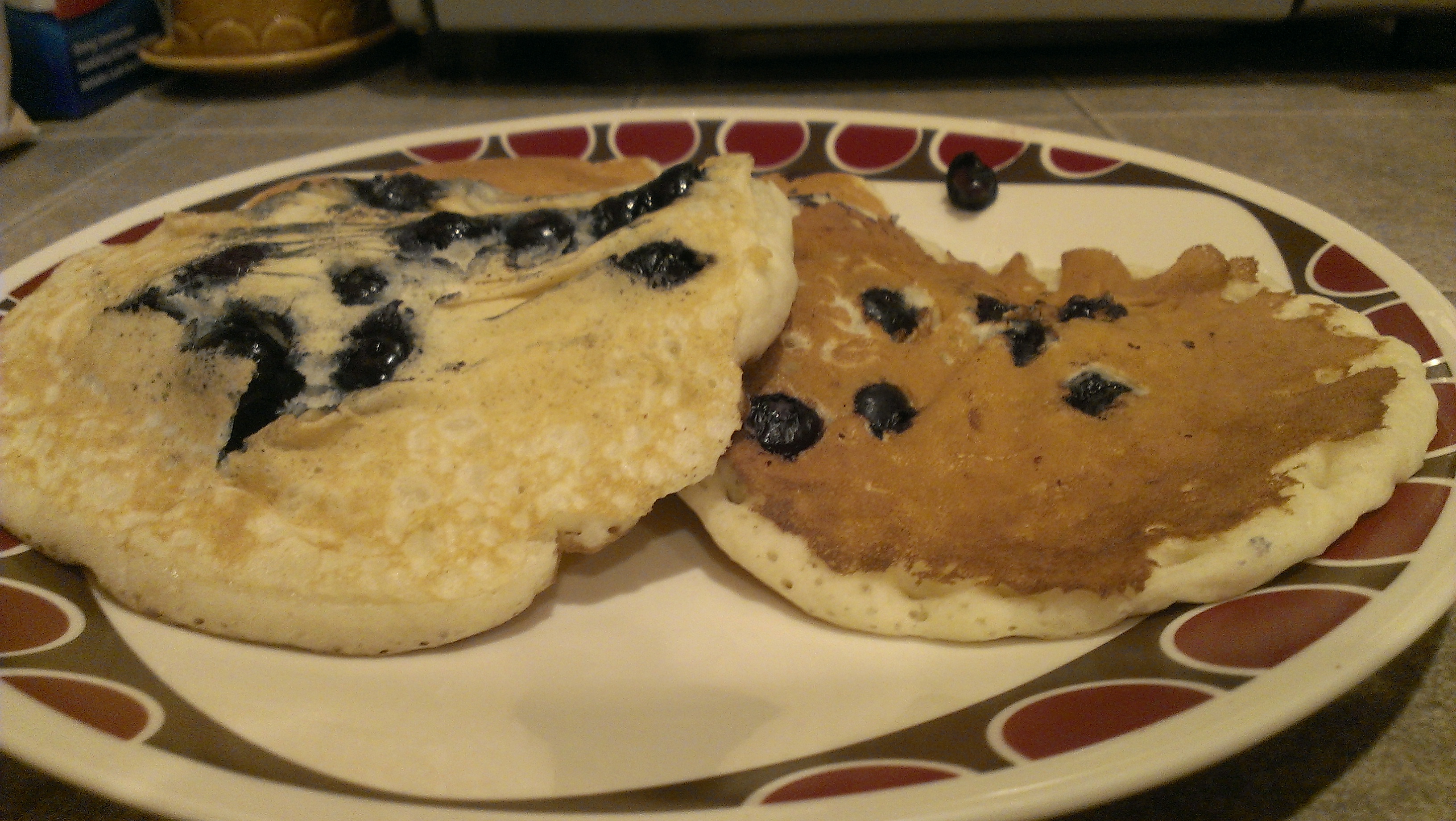
Anyway, Tara whipped up blueberry pancakes from scratch, and we were good to go!

Blueberry Pancake

Categories: Breakfast | Tags: , , , , , , | 4 Comments

27/365: National Chocolate Cake Day

January 27th is one of those days where you can have your cake and eat it, too! In fact, if you’re celebrating National Chocolate Cake Day – like we are – that’s pretty much an order! What a delicious order, too. Few things in this world are more sweetly satisfying than chocolate cake.

Cake has been around for a long time. The word dates back to the Viking times and the Old Norse word “kaka.” Umm…I’m glad we modernized the spelling, because around these parts “kaka” means something else entirely (and is most definitely NOT tasty). Cakes, breads, and pastries were interchangeable back then, and basically all referred to anything that was bread or bread-like. Modern cakes are sweet, and associated with special occasions such as weddings, anniversaries, birthdays, and vasectomies. Once upon a time baking a cake took real skill, but in the 1930s the first boxed cake mix was introduced by the Duff Company. Duncan Hines and General Mills followed suit with cake mixes that required nothing more than the addition of water. They were so easy, even a caveman could make them! Hey, that would make a good tagline for some company…

Today, the most popular cake is chocolate. There are dozens of varieties: Black Forest, Devil’s Food, Ganache, German Chocolate, Molten Chocolate, Red Velvet…the list is endless. Tara made one of her favorite recipes. I’ll let her tell you all about it! 

Wow…Mark actually asked me if I wanted to contribute this time.  He’s such a blog hog!  😉

Anyway, the chocolate cake recipe.  It’s awesome.  I found it in one of those Parade newspaper inserts several years ago and though I was a little bit leery of making a cake from scratch, I quickly found it was very easy.  It’s also the right blend of moist and not too sweet, which is a plus for someone (me) that can tear through half an entire cake in one night.  Okay…that only happened one time and it had been a helluva week.

Buttermilk Brownie Cake

Cake:

2 cups granulated sugar
2 cups all purpose flour
1/4 cup cocoa powder
1 cup water
1/2 cup vegetable oil
1/2 cup butter
1/2 cup reduced-fat buttermilk
1 teaspoon baking soda
2 eggs, lightly beaten
1 teaspoon vanilla extract

Preheat oven to 400° F. Grease a 15″x10″ baking dish (I used my 9×13, it works fine)

Combine sugar, flour, and cocoa.  Mix well

Combine water, oil, and butter in a medium sauce pan.  Bring to a boil.  Add to flour mixture and mix well.

Add buttermilk, baking soda, eggs, and vanilla.  Beat well and pour into pan.  Bake 20-25 minutes until a wooden pick inserted in the middle comes out clean.  Let cool.

Frosting:

1/2 cup butter
1/4 cup cocoa powder
1/3 cup reduced-fat buttermilk
1 pound confectioners sugar
1 teaspoon vanilla extract

Combine butter, cocoa, and buttermilk in a saucepan.  Bring to a boil. Remove from heat.

Gradually beat in confectioners sugar and vanilla until well blended.  Spread evenly over cake.

Enjoy!

Chocolate Cake

Categories: Desserts | Tags: , , , , | 6 Comments

26/365: National Peanut Brittle Day

Today is National Peanut Brittle Day. Why we call this hard candy “brittle” is a mystery, for it is anything but. Liable to break or shatter easily? Peanut brittle sometimes requires a mallet to break apart into pieces!

OK, I exaggerate. And I have to say, it’s really, really good. Tara’s mom sent us a bunch of treats for Christmas, including homemade brittle. Why we didn’t save a little bit for today is a good question! 

Brittles are one of the oldest candies around. When not busy hunting leprechauns or picking four-leaf clovers, the Irish enjoyed eating sugar coated peanuts as snacks. They began adding syrup, and brittle was born. There are many variations around the world. The Greeks have pasteli, the French have croquant, Indians have Gacchac, and Canadians have peanut brittle, eh. In the Middle East it’s made with pistachios, and in Asia, a mixture of sesame seeds and peanuts.

When we began this challenge, I wondered if anybody else had attempted it. I scoured the internet, but could find no similar quest. And then a couple of days ago I stumbled upon a blog in which somebody did, in fact, attempt to do the same thing in 2011. He took a similar approach to us, and I was impressed with his posts, until they ended abruptly in May. I wasn’t sure if he burned out at that point, so I sent him an email, and he was kind enough to respond. The guy’s name is John, he lives twenty miles outside of New York City, and he did in fact complete his own holiday food odyssey – but was stymied by a computer that died and a lack of technological and social media savviness. He has been very supportive of our own attempt, is impressed with this blog, and has been quick to offer tips and advice. He wrote, “From time to time you may get sick of foods or desserts or whatever it may be. But I’m not sensationalizing or exaggerating when I say it changed my life. Food history is an amazing over looking part of history I think. I learned so much about culture and different time periods just be researching these meals. Also, growing up predominantly eating the meals of my grandmother from Italy, I became aware of this whole “American” culture in cuisine. I think you’re going to learn more than you expect.” 

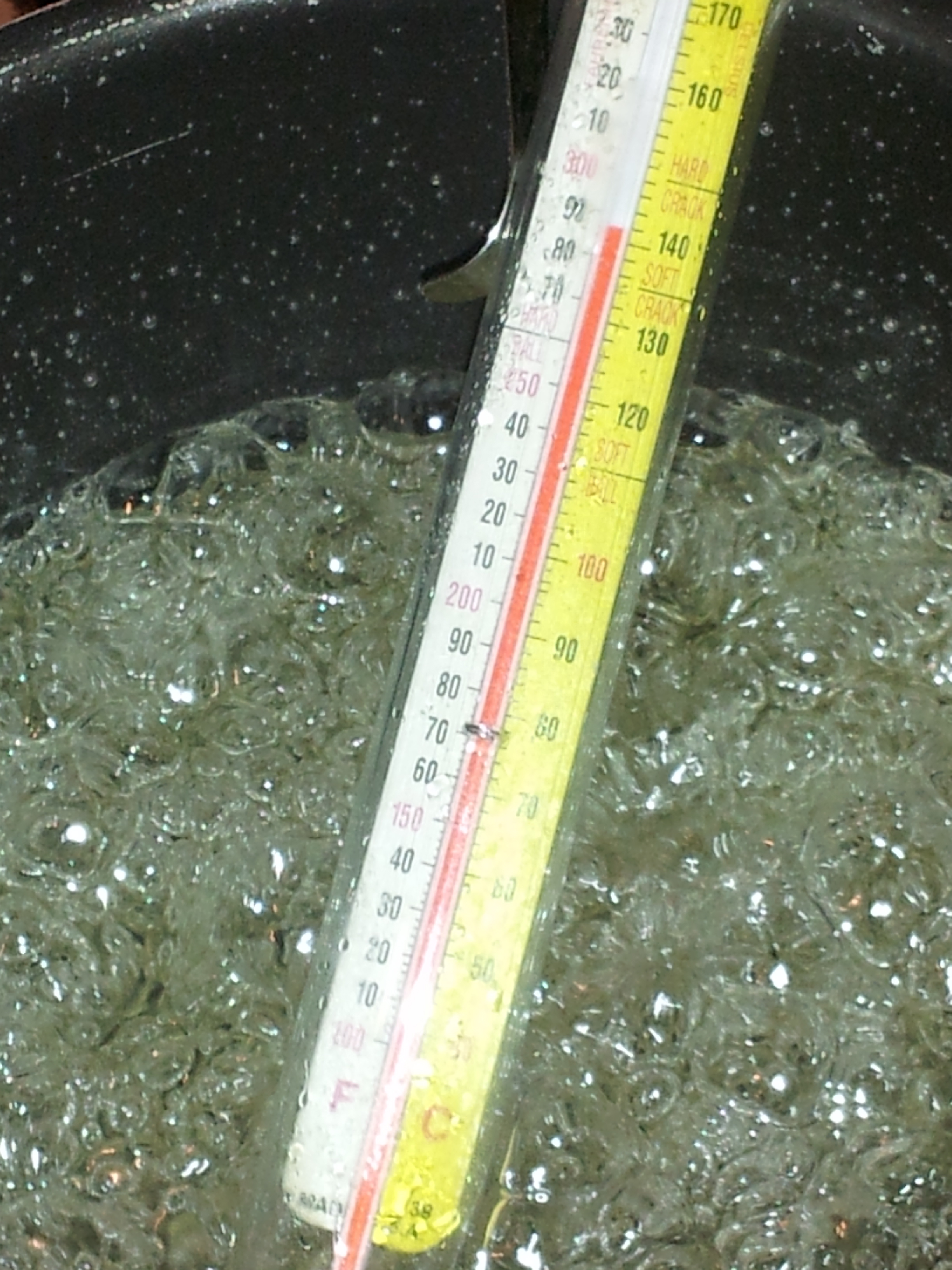
Tara workin' that candy thermometer to the "hard crack" stage.

Tara workin’ that candy thermometer to the “hard crack” stage.

Thanks, John! Tara and I have already learned a lot, and feel like our own food horizons are expanding with each day that goes by. If you don’t mind, you can be our official “culinary consultant.” I may have a need for suggestions as we plow our way through the year!

Back to today. We sort of found ourselves scrambling late in the day, because our calendar had erroneously listed National Pistachio Day twice: January 26 AND February 26. So much for the bag of nuts we had sitting on the counter. A quick run to the grocery store yielded no peanut brittle, but Tara had a recipe in her trusty Fannie Farmer cookbook, and whipped together a batch of brittle. Start to finish, it took less than an hour – and turned out very tasty!

Categories: Candy, Nuts | Tags: , , , , | 3 Comments

25/365: National Irish Coffee Day

January 25th is National Irish Coffee Day. I was initially thinking we could knock this one out early – coffee is a breakfast drink, after all – but the whiskey (a key ingredient in Irish coffee) made this more of an after-work splurge. Which was fine, as we were going out anyway. On Friday evenings, we like to be in close proximity to a bar. Some bar. Any bar. Getting an Irish coffee would not be a problem.

Irish coffee was invented in 1942 by Joe Sheridan, a bartender at Foynes Air Base in Ireland. A Pan Am flight landed there one miserably cold winter evening, after a long eighteen-hour journey across the Atlantic Ocean. The passengers disembarked and headed for the bar. In an effort to warm them up, Sheridan brewed hot coffee, added a splash of whiskey, and topped it with a dollop of  cream. One of the passengers asked, “Is this Brazilian coffee?” Sheridan laughed and replied, “No, it’s Irish coffee.” A decade later Stanton Delaplane, a travel writer for the San Francisco Chronicle, brought Irish coffee to the U.S. after tasting it at the same airport during a trip abroad. Sadly, customs agents confiscated the pair of leprechauns he tried to sneak through. Delaplane nearly drank himself into a coma trying to figure out how to get the cream to float on top of the coffee over the next few months; finally a dairy farmer came to the rescue by suggesting the cream would be more likely to float if it were aged 48 hours first. Voila! Delaplane then introduced the drink to the Buena Vista Cafe in San Francisco, and popularized it in the U.S. by mentioning it frequently in his column.

I can see how this drink warmed up an airplane full of people in 1942!

I can see how this drink warmed up an airplane full of people in 1942!

When asked for the original recipe, Sheridan replied, “Cream as rich as an Irish brogue; coffee as strong as a friendly hand; sugar sweet as the tongue of a rogue; and whiskey smooth as the wit of the land.”

Oh, those wacky Irish. Faith and begorrah, you’ve gotta love ’em. Clearly, Sheridan missed his calling as a poet.

Tara and I met up at Cactus Ya Ya in Vancouver after work for cocktails and dinner. Interesting fusion of Mexican and Asian food here. They’ve been around for at least 15 years, so it must be working for ’em! The important thing was, they had Irish coffee. Remember those hot toddies we weren’t so fond of a couple of weeks ago? Let’s just say the Irish coffee was STRONG. And hot. We could only manage a few sips each. But hey…mission accomplished!

Categories: Alcohol, Beverages | Tags: , , , , | 4 Comments

24/365: National Lobster Thermidor Day*

We could have taken the easy way out today. There are two food holidays celebrated on January 24th, and one of them is peanut butter. This would have required little effort on our part, but Tara was adamant we make lobster thermidor instead. I’m glad I listened to her, too. One of the goals of this challenge is to try foods we’d never had before. A month ago I’d never tasted curried chicken or hot buttered rum and Tara had never tried Peking duck, and it’s fun to expand our culinary horizons. Lobster thermidor is a complicated dish requiring quite a bit of preparation, but with a few shortcuts – it’s almost impossible to find whole lobster out here, so we had to substitute lobster tails – we ended up with a dish that was very good, and new to us both!

Lobster Thermidor was invented by a Paris restaurant named Marie’s in 1894, in honor of the play Thermidor, a tale of the French Revolution. “Thermidor” is also the eleventh month in the French Revolutionary calendar, occurring from July 19-August 17, and means “month of heat.” You have to love the French language: every word sounds beautiful. Lobster Thermidor could very well have been called Lobster Brumaire (second month) or Lobster  Pluviôse (fifth month). Or, for that matter, Lobster Beret or Lobster Peugeot.

The French sure love cooking foods with shells, but I’ve gotta say lobsters are a lot more appealing than snails. Did you know that they are one of the few creatures that don’t slow down or weaken as they age and, in fact, are more fertile the older they are? Lobsters are the Hugh Hefners of the deep! Like tortoises, mussels, and Quahog clams, they can live for hundreds of years. In fact, some scientists believe that barring injury, disease, predation, and clarified butter, lobsters could in theory live indefinitely.

Somebody needs to invent a pill…

Our poor lobsters were not so fortunate. But boy, were they tasty! Thank you, Rachael Ray, for this recipe utilizing lobster tails. Interesting preparation: you remove the meat from the shells, saute it in butter with onions, shallots, mushrooms, milk and cheese, and then stuff it back in the shells, top with bread crumbs, and broil for about 5 minutes. Dinner was fantastic! And with candles, wine, and jazz records, very romantic. 🙂

Lobster Thermidor

Categories: Seafood | Tags: , , , , , | 8 Comments

Create a free website or blog at WordPress.com.