313/365: National Split Pea Soup Day*

All we are saying is give peas a chance. Especially today: November 9 is National Split Pea Soup Day!

It’s also National Scrapple Day. If you’re wondering what the heck scrapple is, so was I. I’m almost afraid I bothered to look it up. Apparently, scrapple is a loaf of meat made with the scraps left over from butchering hogs. Spices and buckwheat flour are added to the pork fat and trimmings, and the whole thing is poured into a loaf pan to chill and take on a semi-solid congealed texture. Later, it’s sliced and fried, and this “delicacy” – popular in the Mid-Atlantic states – is panfried and served with ketchup, jelly, honey, mustard, or syrup. It’s considered a traditional meal of the Pennsylvania Dutch and Amish. And people give me a hard time for liking Spam! {Shudder}. What a shame scrapple is pretty much impossible to find out here on the West Coast. Of course, some people (cough*Tara*cough) don’t consider split pea soup much of a step up, but given the alternative, c’mon! (And there’s a 3rd food holiday – National Cook Something Bold and Pungent Day – that is much too wide open to interpretation to do us much good. We’re having a fun and busy weekend in the Emerald City. Who’s got time to think?).

Oh, and it’s also my mother-in-law’s (Tara’s mom’s) birthday. Happy birthday, Tracy! Sorry I don’t have a nice, gift-wrapped scrapple for you.

Peas have been cultivated for nearly as long as humans have walked the earth, and pea soup dates back to ancient times. Greeks and Romans were growing peas around 500 to 400 B.C., and street vendors in Athens often peddled hot pea soup. The soup is made from dried split peas and can range from grayish-green to yellow in color, depending on the variety of pea used.

We have a busy day planned and nobody was crazy about serving split pea soup on Tracy’s birthday (with the possible exception of me – I love the stuff), so we took the easy way out and heated up a can of Campbell’s Split Pea with Ham. For an appetizer before the birthday dinner. As per usual, I loved it. Tracy loved it. Anne loves it. Tara thought it was disgusting, but took her requisite spoonful. My nephew Anthony and I polished off the rest of the bowl, ’cause we can appreciate a delicious soup!

National Split Pea Soup Day

Categories: Soup | Tags: , , , , , , | 6 Comments

312/365: National Cappuccino Day*

You may feel a little jittery if you miss out on today’s holiday. Actually, you may feel even more jittery if you don’t. November 8 is National Cappuccino Day!

It’s also National Harvey Wallbanger Day. I really, really wanted to celebrate this one. With such a colorful name and history, it was tough to resist! But we’re headed up to Seattle for a long-overdue family visit immediately after work, and can’t in good conscience knock back a cocktail before hitting the road. A Harvey Wallbanger is simply a screwdriver (vodka and orange juice) mixed with Galliano, a sweet (and bright yellow) Italian herbal liqueur. It you believe the tales, it was invented in the 1960s when a party host ran out of everything but vodka, OJ, and Galliano, and was named for a California surfer who would knock back so many of the drinks after a busy day “hanging 10” that he’d stagger into the walls. Probably false history, but it sure does make for a fun story. Note to self: this is one holiday we’ll have to revisit in 2014.

National Cappuccino DaySo, cappuccino it is, and I’ve got nothing against the Italian coffee drink made with espresso, hot milk, and steamed milk foam, other than the fact that it’s a pain in the ass to spell correctly. I keep leaving out a “p” or a “c” or adding an “n” where none belongs. At least this word has an interesting history, too: it comes from the Italian “cappuccio,” meaning hood, and refers to the hooded robes worn by monks and nuns of the capucin order, which were a distinctive reddish-brown in color, in 17th century Europe. It was around this time that people began adding milk to coffee, and in the 1700s, a beverage called a “Kapuziner” began appearing in Viennese coffee shops. This coffee with cream and sugar closely matched the color of those hooded robes, and the name evolved over the years, eventually turning into cappuccino in the 1930s. By then espresso machines, with an ability to brew at a higher pressure and produce a finer grind while also heating milk, had been invented, and Italians began producing the modern version of the cappuccino we are familiar with today.

Tara surprised me by dropping off a cappuccino after lunch. With a cupcake to go along with it. I gots me a good wife, that’s for sure! We are normally both more likely to order a flavored latte, but we found the cappuccino quite enjoyable. Frothy and foamy, with a nice flavor. I’d get one again!

Categories: Beverages | Tags: , , , , , | Leave a comment

311/365: National Bittersweet Chocolate with Almonds Day

Celebrating a food holiday you’ve already honored previously is bittersweet. Literally. November 7 is National Bittersweet Chocolate with Almonds Day.

OK, so it’s not exactly the same as National Milk Chocolate with Almonds Day (July 8) -but it’s almost identical to National Bittersweet Chocolate Day, one of our first challenges way back in January.  Bittersweet chocolate is, by its very definition, bitter. It contains less sugar and more cacao for a rich, intense flavor that is best suited to baking. It is sometimes lumped together with semisweet chocolate and the two can be used interchangeably in most recipes, though semisweet chocolate does contain a little more sugar. The darker the chocolate the healthier it is for you, so eating bittersweet chocolate is akin to snacking on three broccoli florets. OK, not really, but we can pretend, right? Almonds are a natural pairing: 40% of the world’s almond crop goes to the chocolate industry.

To celebrate, we split a Hershey’s bittersweet chocolate with almonds bar. I am not a fan of dark chocolate, and found it much too bitter (truth in advertising!) for my liking. Wouldn’t you know it, Tara liked it. For once, the tables were turned. I think this would have been better used in baking rather than eaten plain.

National Bittersweet Chocolate with Almonds Day

Categories: Candy, Nuts | Tags: , , , , | 2 Comments

310/365: National Nachos Day

It’s nacho fault if you’re craving Mexican food today. November 6 is National Nachos Day!

Unlike many of the foods we have celebrated, there is no confusion over who invented nachos. That honor goes to Ignacio “Nacho” Anaya, a restaurateur in Piedras Negras, Coahuila, Mexico, just across the border from Eagle Pass, Texas. In 1943, a group of soldier’s wives on a shopping trip across the border entered Anaya’s restaurant, El Moderno, after it had closed for the day. Pissed that he hadn’t yet locked the door, Anaya was nevertheless gracious to his gringo guests, and put together a snack with the few ingredients he still had left in his kitchen: tortillas, which he cut into triangles, and shredded cheddar cheese. He heated them up until the cheese melted, added sliced jalapenos, and served them to the grateful group. One of the women nicknamed the dish “Nacho’s Especiales.” They raved over it, and word spread throughout Texas and the Southwest. Over time the apostrophe was dropped, and “Nacho’s Specials” became “special nachos” and then, simply, nachos. Anaya died in 1975 and a plaque was erected in Piedras Negras. El Moderno still serves Anaya’s original nachos to this day. Arlington Stadium in Texas began serving a modified version of nachos with a prepared cheese sauce in 1976, and broadcaster Howard Cosell further popularized them by mentioning the dish frequently in his football telecasts over the next few weeks. Nowadays, nachos can be as simple as Anaya’s original snack, or complex and loaded with a variety of toppings including meats, beans, vegetables, salsa, and sour cream.

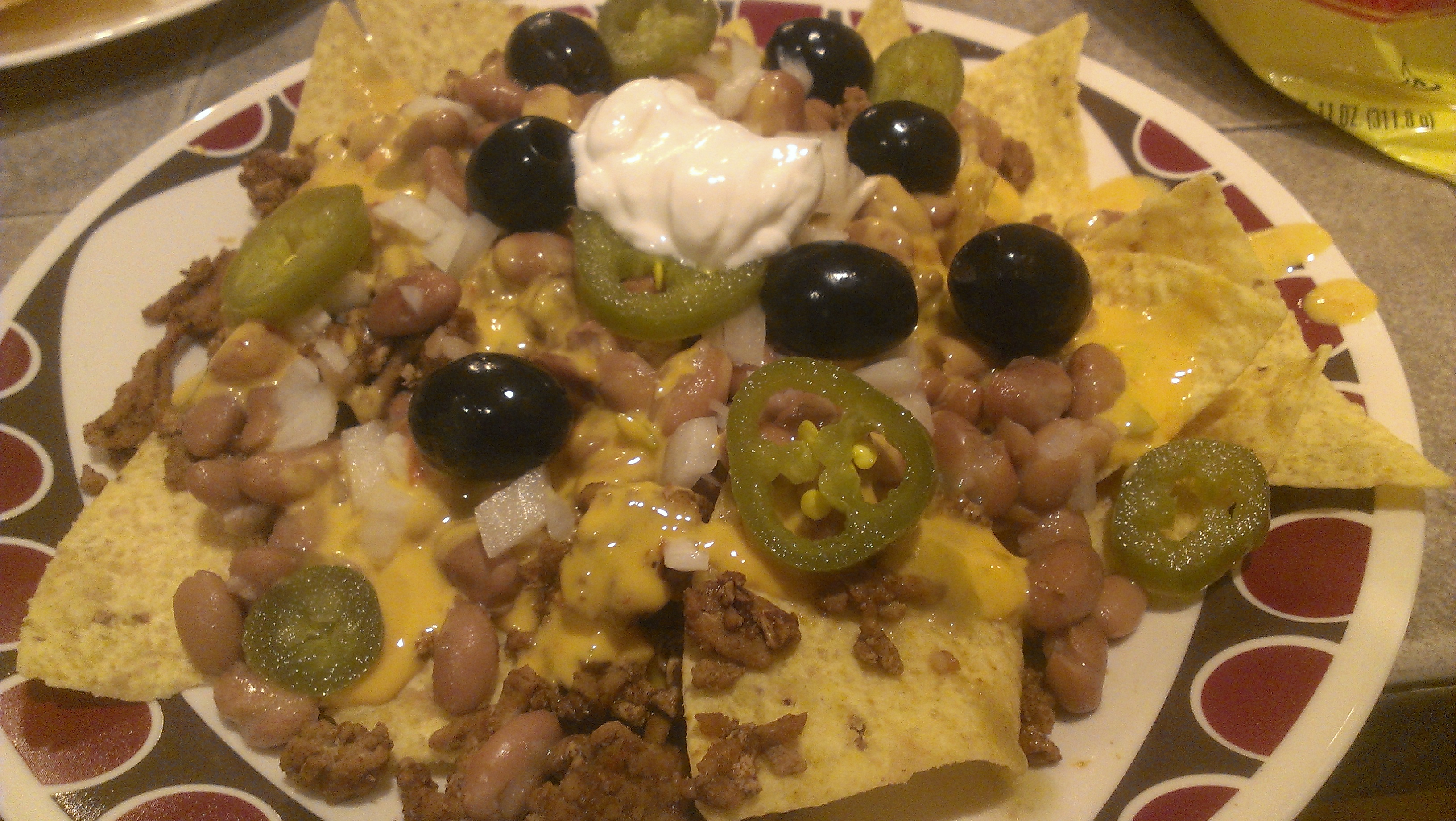
To celebrate, we made nachos-for-dinner. As opposed to nachos-for-an-appetizer. We used seasoned ground turkey, pinto beans, cheese, onions, black olives, jalapeno slices, and sour cream. The result? Muy bien!

National Nachos Day

Categories: Snacks, Too Weird to Categorize | Tags: , , , , , | 4 Comments

309/365: National Doughnut Appreciation Day

You want the truth, the hole truth, and nothing but the truth? November 5 is National Doughnut Appreciation Day!

Some calendars list it as simply National Doughnut Day, but research shows this floating holiday is typically the first Friday in June, and landed on the 7th this year. What did we celebrate on June 7th? Chocolate ice cream, as a matter of fact. Because we had National Jelly Filled Doughnut Day the very next day! No doubt, we’ve celebrated doughnuts several times this year, most notably on our wedding day.  But there’s always room for one more doughnut holiday, right?

I’ll always have a soft spot for doughnuts…not just because they’re delicious, but because they were the inspiration for this food challenge in the first place. ‘Twas one of the doughnut holidays (I can’t remember which exactly, but I do think it was fall, if I remember correctly) when I was driving to work and the DJ announced it was National Whatever Doughnut Day. When I arrived at the office, somebody had brought in doughnuts. How cool! I thought. I wonder how many other food holidays exist? I laugh over my naivety now. The answer, my friends, is right here in this blog. MANY. LOTS. HUNDREDS. At least one for every day of the year. Sometimes, two or more. We have celebrated over 300 ourselves to date, with over 50 to go yet.

And it all started with doughnuts.

In order to appreciate doughnuts, we stopped by Tonalli’s Donuts Plus, just down the road from our townhouse. They’re one of the better doughnut places in the Portland metro area, and sure enough, did not disappoint.

National Doughnut Appreciation Day

Categories: Pastry | Tags: , , | 5 Comments

308/365: National Candy Day

If you’ve got a sweet tooth, you’re going to be smiling a lot today. November 4 is National Candy Day!

Candy is defined as a sweet confection made with sugar or other sweeteners, and often flavored with fruits or nuts. The word is believe to derive from the Persian Qandi (=قندی ), meaning “cane sugar.” In the U.S. it’s a pretty broad term that includes candy bars, chocolates, licorice, hard candies, taffies, and gumdrops. In Europe it’s often called “sweets” or “confectionery,” and in Australian and New Zealand, is referred to as “lollies.” How fun would it be to walk around Melbourne, approach a stranger, and say, “G’day, mate! Let’s throw another shrimp on the barbie. And then eat lollies for dessert.” There’s no way you would be mistaken for a tourist if you talked like that! Regardless of what it’s called, candy has been enjoyed as far back as ancient times, when people scooped honey from beehives and ate it raw. The first true confections consisted of fruits and nuts rolled in honey. Sugar was initially expensive and enjoyed only by the wealthy, but as prices dropped in the 17th century, hard candies became popular. In the mid-1800s, there were over 400 candy factories in the U.S., giving Willy Wonka some seriously stiff competition. A survey by Bloomberg Businessweek ranking the world’s bestselling candies lists M&M’s at #1, followed by Snicker’s. Can’t say I’m really surprised. Rounding out the Top 5: Trident gum, Kit Kat, and Wrigley’s Orbit gum.

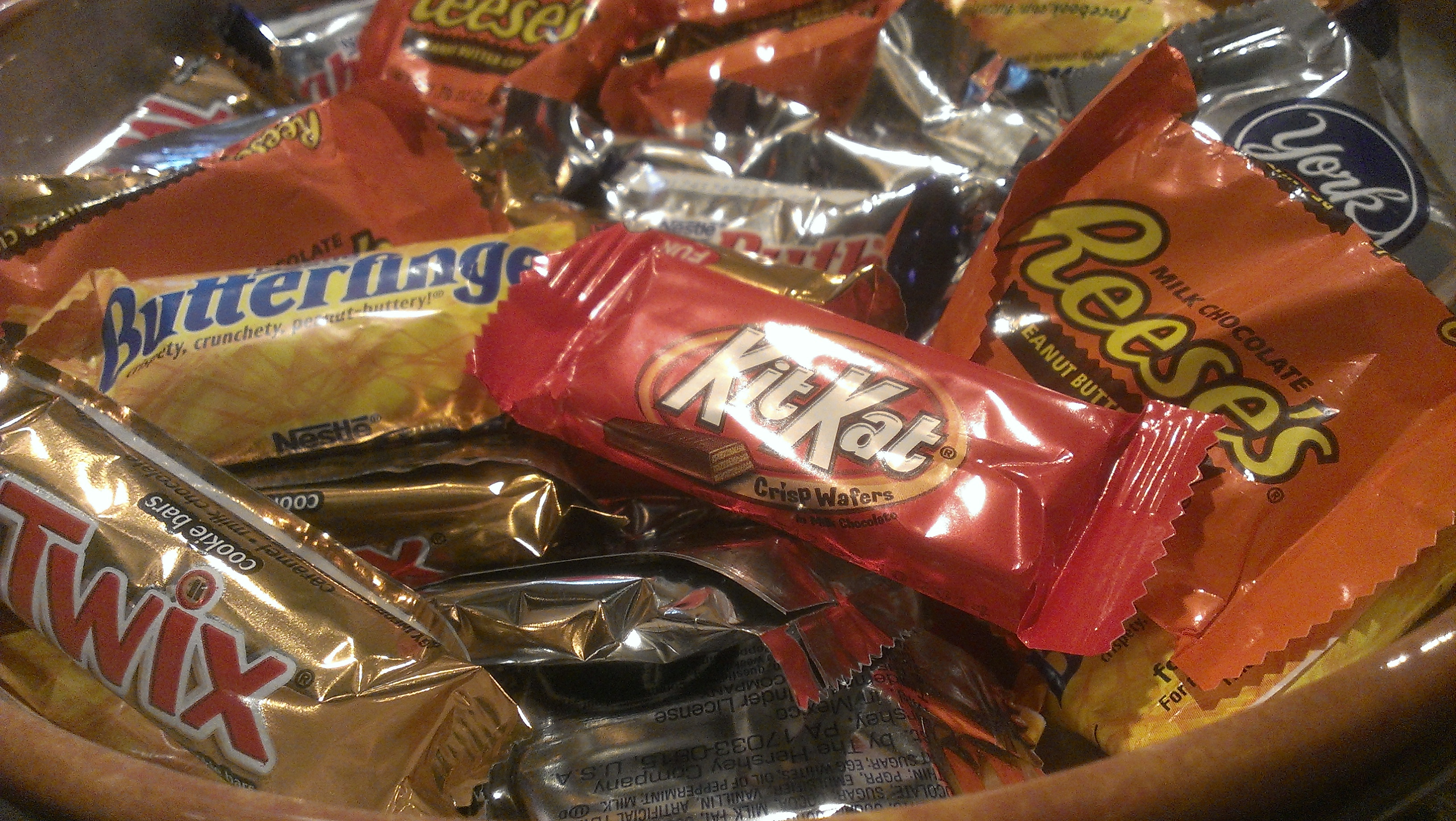
This is one holiday where the timing makes perfect sense. It’s four days after Halloween, so most homes have at least some candy on hand. Ours is no exception. We live in a condo complex and never get trick-or-treaters, but we’re always prepared just in case. That preparation inevitably leads to left over candy, of course. Which made today pretty easy to celebrate.

National Candy Day

Categories: Candy | Tags: , , , , , , , , | 3 Comments

307/365: National Sandwich Day

You can relax if your wallet has only a few dollars in it today: it doesn’t take a lot of bread in order to enjoy today’s food holiday. Two slices, to be exact. November 3 is National Sandwich Day!

Fittingly, this holiday is celebrated on the birthday of John Montagu, the fourth Earl of Sandwich. According to legend, this 18th century English aristocrat was an avid gambler who didn’t want to waste precious cribbage-playing time by putting down his cards to eat. So he instructed his servants to bring him meat tucked between two slices of bread, allowing him to eat his meal with one hand, and preventing his cards from getting greasy. Impressed with the portability and convenience of this meal, others began ordering “the same as Sandwich,” and the name stuck. While sandwiches got their name from the Earl, he was not the actual inventor; it is believed that Hillel the Elder, an ancient Jewish sage who passed away in 10 A.D., first took lamb and herbs and stuffed them between two slices of matzah during Passover to create the first true sandwich. During the Middle Ages, thick slices of bread – often stale – were used as plates for meat and other foods. After the meal, the food-soaked scraps of bread (known as “trenchers”) were fed to dogs. Or beggars. As lowly a practice as this was, it laid the groundwork for what we refer to today as open-faced sandwiches. Later still, in the 17th century, beef hanging from the rafters of taverns in the Netherlands was sliced into strips and served atop buttered bread. Here’s a great article that takes a look at the 50 greatest sandwiches of all time.

Narrowing down what type of sandwich to eat today was tricky, given the wide variety of available options. I just happened to be running to a little market/restaurant in Portland to pick something up, and they had a deli counter with a handful of sandwiches available. My favorite type of sandwich is tuna, so I ordered theirs; it contained Oregon coast tuna, Mama Lil’s bread & butter pickles, dijon mustard, and lettuce on Roman Candle whole wheat bread. Definitely a step up from the canned tuna I’m used to making. It hit the spot for a perfect lunch today!

National Sandwich Day

Categories: Sandwich | Tags: , , , , | 4 Comments

306/365: National Deviled Egg Day

Today’s one hell of a good day if you happen to be a fan of hard boiled eggs. November 2 is National Deviled Egg Day!

Deviled eggs consist of hard-boiled eggs that have been split in half and filled with a mixture of egg yolk and other ingredients, typically mayonnaise and mustard (but never Miracle Whip, unless you’re my mom – blech). There are many other additions that can be mixed in, ranging from pickle relish and worcestershire sauce to onion, capers, and paprika. The “deviled” in the name refers to the spices that are added to the mixture. Deviled eggs date back to ancient Rome. When they weren’t busy feeding gladiators to the lions, the Romans domesticated fowl, and began making egg dishes of all sorts. Boiled eggs served with spicy sauces poured on top were the precursor to modern deviled eggs. A recipe from a 15th century Italian cookbook says, “Make fresh eggs hard by cooking for a long time. Then, when the shells are removed, cut the eggs through the middle so that the white is not damaged. When the yolks are removed, pound part with raisins and good cheese, some fresh and some aged. Reserve part to color the mixture, and also add a little finely cut parsley, marjoram, and mint. Some put in two or more egg whites with spices. When the whites of the eggs have been stuffed with this mixture and closed, fry them over slow fire in oil. When they have been fried, add a sauce made from the rest of the egg yolks pounded with raisins and moistened with verjuice and must. Put in ginger, cloves, and cinnamon and heat them a little while with the eggs themselves. This has more harm than good in it.” I’m a little unclear what “verjuice” and “must” are, let alone why anybody would want to follow a recipe that boasts “more harm than good” right there in the instructions, but who am I to judge life in 15th century Italy?

Tara happens to be renowned for her deviled eggs. Renowned within her immediate family, anyway. We actually made them earlier this year to celebrate National Egg Day. Oops. (We didn’t realize there was a holiday dedicated specifically to deviled eggs later in the year). Tara gave step-by-step directions on making her deviled eggs in that post, so click on the link if you’d like the recipe. They’re so good, we enjoyed them just as much in November as we did back in June!

National Deviled Egg Day

Categories: Appetizers | Tags: , , , , | 4 Comments

305/365: National Deep Fried Clams Day*

We hope to entice you out of your shell today and help us celebrate the food holiday for November 1st. It’s National Deep Fried Clams Day!

And also National Vinegar Day. No offense to this tangy, acidic, fermented liquid, but we’d rather honor a food that takes a starring role, rather than an ingredient that lends flavor to a dish. Clams it is! I only wish we were in Seattle today; they’ve got a great local chain called Ivar’s that specializes in fried clams. We’re going to be up there in a week, but our food challenge won’t allow us to take a rain check. Boo.

Fried clams are a quintessential seaside meal typically found in restaurants along the coast. They are especially popular in New England, but even out here in Washington and Oregon they’re easy to find if you’re spending a day at the beach. They date back to at least 1865, where they appeared on a menu at the Parker House restaurant in Boston. This place was mentioned not too long ago; it’s where Boston Cream Pie originated. It’s unclear whether they were deep fried or batter dipped, but either way, I’m sure they were delicious. Modern deep fried clams are said to have been the brainchild of Lawrence Henry “Chubby” Woodman, who owned a small roadside restaurant in Essex, Massachusetts. Woodman specialized in homemade potato chips. One day he dug up a bunch of clams from the mud flats near his home and fried them up using the large vats of oil normally reserved for his chips. Customers ate these up – literally. Another Massachusettan (Massachutan? Massa…whatever you’d call somebody from Massachusetts!) named Thomas Soffron created clam strips from the “foot” of sea clams and sold them exclusively to Howard Johnson’s restaurants. As that chain grew, clam strips became popular throughout the country.

To celebrate, we tried a bar and grill in Portland called Holman’s. A yelp search revealed they are known for their fried clams, and sure enough, the basket we split as an appetizer was scrumptious. Crispy, slightly chewy, and fresh-tasting. We enjoyed them!

National Deep Fried Clams Day

Categories: Seafood | Tags: , , , , , , , | 3 Comments

304/365: National Caramel Apple Day

Happy Halloween! I’m not going to trick you: today’s food holiday is a real treat. October 31 is National Caramel Apple Day!

National Caramel Apple DayOnce upon a time, people handed out homemade caramel apples to trick-or-treaters who came to their doorsteps, but the fear of candy tampering put an end to this. That’s a real shame, because personally I’d much rather have a caramel apple than a lame Tootsie Roll, but that’s just me. Caramel apples were invented in the 1950s by Dan Walker, a sales representative for Kraft Foods. Individually-wrapped caramels were one of Kraft’s top-selling candies, and Walker’s creation led to increased sales (and probably made apple growers pretty happy, too). Recipes for caramel apples were printed on the labels, and still appear to this day. Vito Raimondi invented and patented a caramel apple making machine in 1960, speeding up the manufacturing process. Most people are content to make their own nowadays.

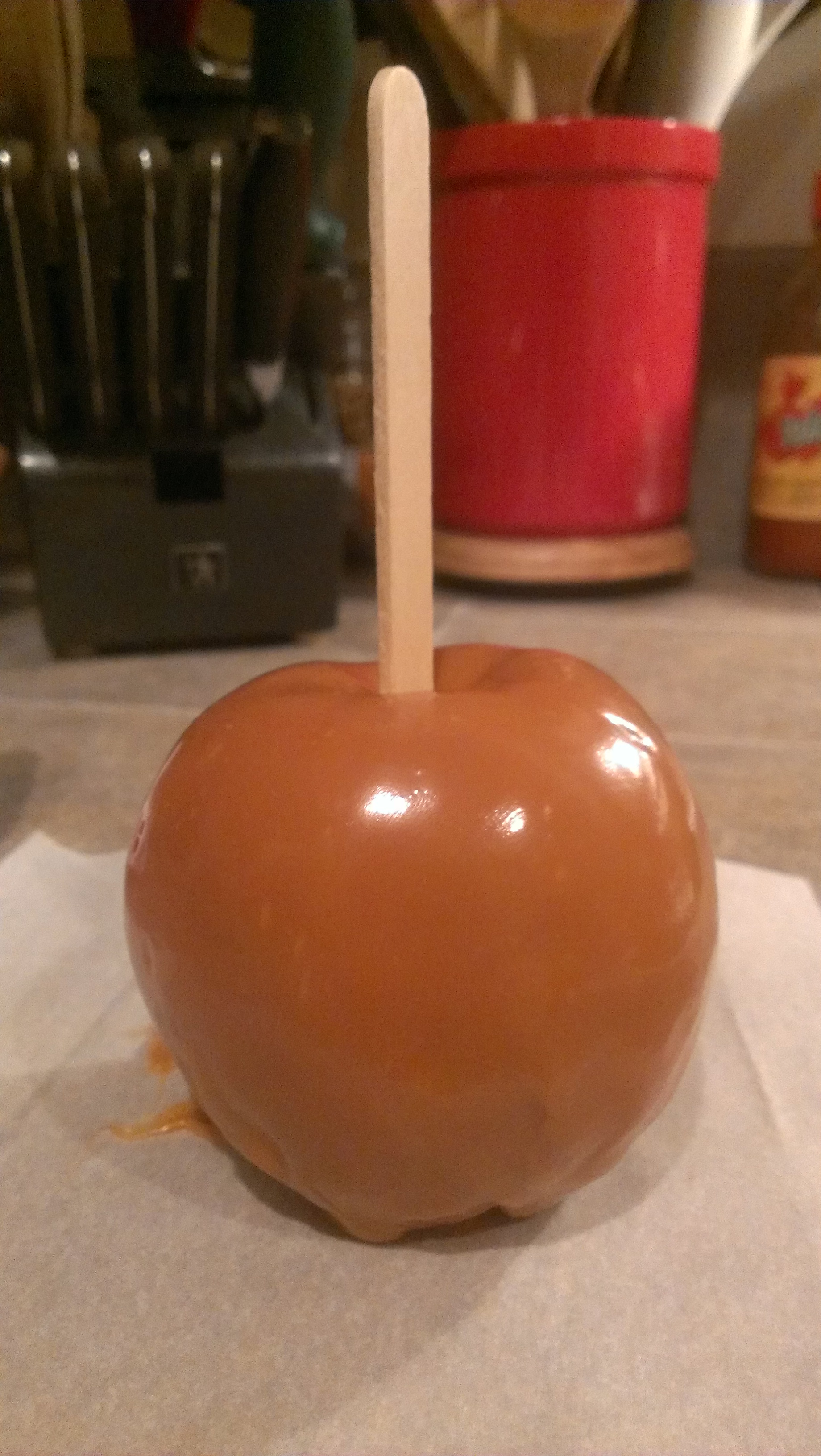
I hadn’t had a caramel apple in years. A couple of weeks ago we went to Hood River, Oregon to buy fresh apples along the “Fruit Loop.” We had some tart, crispy Crimson Crisps left over, so we made caramel apples from scratch. (Well, using a packaged caramel apple kit, but close enough). The contrast between sweet and tart, soft and crisp was wonderful!

Hope you had a spooktacular Halloween!

Categories: Candy, Fruit | Tags: , , , , , | 6 Comments

Create a free website or blog at WordPress.com.