Desserts

135/365: National Chocolate Chip Cookie Day

You won’t cry when you’re eating today’s teardrop-shaped morsel of chocolatey goodness. May 15 is National Chocolate Chip Cookie Day!

It may also be National Chocolate Chip Day, depending on which source you believe. Either way, we’ve got the holiday covered.

Like several other of the foods we’ve honored already, chocolate chip cookies were created by accident. Ruth Graves Wakefield was a dietitian who graduated from Framingham State Normal School’s Department of Household Arts (home of the Fightin’ Spatulas!) (just kidding, but it ought to be) and gave lectures on food. She and her husband Kenneth opened a lodge called the Toll House Inn near Whitman, Massachusetts, and she was responsible for preparing meals for the guests. One evening she decided to make chocolate butter drop cookies, but found herself missing a key ingredient: baker’s chocolate. Undeterred, Ruth decided to substitute a Nestle semi-sweet chocolate bar. She broke it up into chunks, thinking it would mix together with the dough and create an all chocolate cookie, but the morsels only softened. The cookies tasted great anyway, so she served them, and they became a big hit. The chocolate bar had been a gift from Andrew Nestle himself, as Ruth’s reputation as a talented baker spread far and wide. Sensing a good marketing idea, Ruth contacted Nestle, and struck up a deal with the company: they could print her “chocolate chunk cookie” recipe on their chocolate bar labels if they supplied her with free chocolate bars for her cookies. This was a win-win for both: sales of Nestle semisweet chocolate bars increased, and Ruth ended up with free chocolate (and loads of publicity) for life. Nestle wanted to make it easy for home cooks to make the cookies and even included a tiny chopper in the packaging until 1939, when they introduced chocolate chip morsels.

Ruth and Kenneth owned the Toll House Inn until 1966, when they sold it to a family that turned it into a nightclub. A few years later it was sold again to another family who turned it back into a lodge, and continued to bake the original recipe Toll House cookies for their guests. The inn burned down on New Year’s Eve, 1984. As for chocolate chip cookies? Well, they went on to become the most popular cookie in America. Here’s Ruth’s original recipe.

Mrs. Wakefields Original Toll House Cookie Recipe

2 1/4 cups all-purpose flour
1 teaspoon baking soda
1 teaspoon salt
1 cup (2 sticks) butter or margarine, softened
3/4 cup granulated sugar
3/4 cup packed brown sugar
1 teaspoon vanilla extract
2 large eggs
1 2/3 cups (11-oz. pkg.) semisweet chocolate chips
1 cup chopped nuts

PREHEAT oven to 375° F.

COMBINE flour, baking soda and salt in small bowl. Beat butter, granulated sugar, brown sugar and vanilla extract in large mixer bowl until creamy. Add eggs one at a time, beating well after each addition. Gradually beat in flour mixture. Stir in morsels and nuts. Drop by rounded tablespoon onto ungreased baking sheets.

BAKE for 9 to 11 minutes or until golden brown. Cool on baking sheets for 2 minutes; remove to wire racks to cool completely.

 
As for Tara and I, we picked up a couple of chocolate chip cookies from the farmer’s market over the weekend. No, they aren’t Ruth’s Toll House recipe, but there’s no such thing as a bad chocolate chip cookie, you know?
Chocolate Chip Cookie
Categories: Desserts | Tags: , , , , , , , | 6 Comments

129/365: National Butterscotch Brownie Day

Today’s food holiday doesn’t really honor a brownie so much as a blondie, despite the name. May 9 is National Butterscotch Brownie Day!

I’d never heard of a butterscotch brownie before. I figured it was a chocolate brownie made with butterscotch chips, but that’s not the case at all. A butterscotch brownie is really just another name for a blondie, or a blonde brownie, which we already celebrated once this year. The butterscotch doesn’t even refer to actual butterscotch chips, but rather, the ingredients that go into making butterscotch: brown sugar and butter. Which are part of what makes up butterscotch brownies. Are you confused yet? I am!

Chocolate brownies may be more popular, but butterscotch brownies have been around about a hundred years longer. They date back to the 19th century, and are based on gingerbread cakes that were popular during the Renaissance period. Those cakes evolved into flatter ones baked in shallow pans that often included nuts and brown sugar. As delicious as they are, they just don’t have the same appeal as their darker cousin, the brownie. I get it. Chocolate is sexy. Butterscotch brownies literally pale in comparison, and are never topped with frosting. But, as I’ve said, they’re still quite good.

Tara made us a batch of butterscotch brownies from scratch. They were fantastic! Very butterscotchy

blondie

Categories: Desserts | Tags: , , , , , | 6 Comments

123/365: National Chocolate Custard Day*

May 3rd is one of those days where more than one food holiday is celebrated. According to our calendars, it is both National Chocolate Custard Day and National Raspberry Tart Day. But wait…some calendars list May 5 as National Chocolate Custard Day. And they all show August 11th as National Raspberry Tart Day. The deeper into this challenge we get, the more confusing it becomes! I thought this would be the perfect opportunity to discuss how we decide which food holiday to celebrate when there is conflicting information like this.

First off, though we have an official calendar, this is really a compendium of multiple food holiday calendars out there. There are no fewer than 7 or 8 different food calendars on the internet and, while they all agree with each other 95% of the time, that other 5% can be really annoying. Every day I check our calendar against two or three other reputable ones to make sure they’re all in agreement. When they aren’t, my philosophy is, “majority rules.” Today is a perfect example. More calendars claim May 3 is chocolate custard day than May 5, so we’ll go along with that. Occasionally, I’ll come across a food holiday listed on one calendar that doesn’t show up anywhere else, or that I’ve otherwise missed. Take May 6, for instance. Up until a few days ago, I’d assumed we were making crepes suzette. But then I discovered a listing for National Beverage Day. When that happens, I scour the internet for backup proof. Sure enough, multiple websites list May 6 as National Beverage Day. As long as I have correlating documentation, I consider it official. For that reason, our own calendar is constantly evolving. The truth is, crepes suzette would have been a challenge for a workday with the kids, so I’m glad I found out we can just gulp down a drink of our choice instead, and call it good. At this point, we are glad when we can take the easy way out. There’s no shame in that. Hey, next week we have to cook a roast leg of lamb. Trust me, we are paying our dues and working hard at this project!

When there are multiple food holidays, we simply choose the one that appeals to us most. That may be based on personal tastes, what our schedules look like, or something else intangible, like the fun factor. We both hate lima beans, but we chose them over pineapple upside down cake on April 20 because we thought it would be far more interesting to eat something we otherwise wouldn’t touch with a ten-foot pole. Because there are two holidays for raspberry tart, today’s choice was a no-brainer: we’re celebrating National Chocolate Custard Day!

Frozen Chocolate Custard(Whew. Longest explanation ever).

Custard is prepared using a cooked mixture of milk or cream and egg yolk. It can vary from thin to thick, based on the amount of egg yolk and thickener added to the recipe. Most custards are used in dessert preparations, and include sugar and vanilla. They can also be used as a base for quiches and other savory foods. Custards have been popular in Europe for centuries, dating back to the Middle Ages.

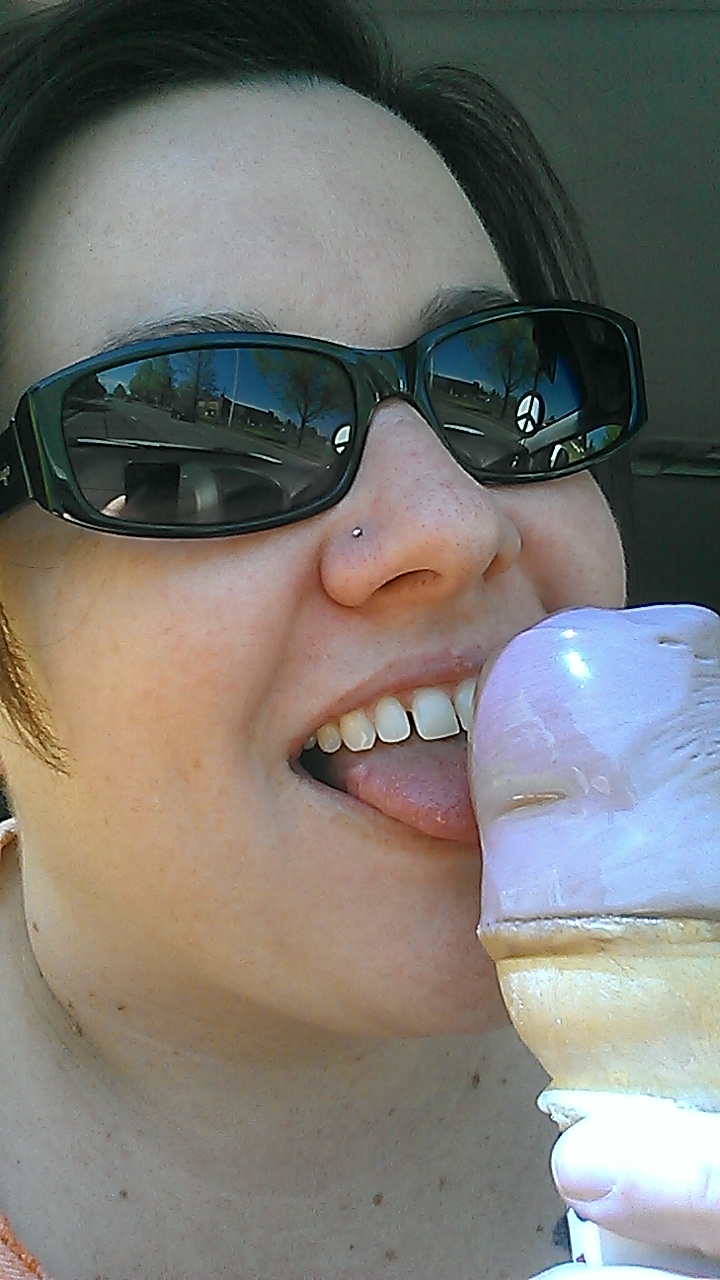
Because we had chocolate parfait a couple of days ago, we decided to switch things up today and celebrate with frozen chocolate custard. There just so happens to be a place called Sheridan’s right down the street from us that serves delicious frozen custard. We hadn’t been there in awhile, so we stopped by on our lunch and got some frozen custard. With the temperature pushing 80 degrees, it hit the spot on a warm Friday afternoon!

Categories: Desserts | Tags: , , , , | 8 Comments

121/365: National Chocolate Parfait Day

May 1st is the “perfect” day to celebrate chocolate desserts: it’s National Chocolate Parfait Day!

It also marks a special occasion: today we are 1/3 of the way through our food challenge. Four months down, eight to go. We still have a lot of ground to cover, but we’re making progress. I’ve begun dreaming of 2014, when we’ll be able to eat whatever we feel like on any given day. Seems like such a novelty now. Which is not to say that I’m not enjoying this project. I am. We both are. But it’s definitely a lot of work! And expense.

As alluded to above, parfait is a French word meaning perfect. It was invented in 1894 in France (duh) and was originally a frozen dessert consisting of cream, sugar syrup, and eggs. Nowadays it may also contain frozen custard, whipped cream, sauce, and fruit, and is usually served on a plate rather than in a glass. The preparation varies by country. In the U.S., parfait describes a chocolate mousse or pudding layered with whipped cream, fruit, and cookie crumbs or other toppings. No matter how you partake of your parfait, you will find it c’est magnifique!

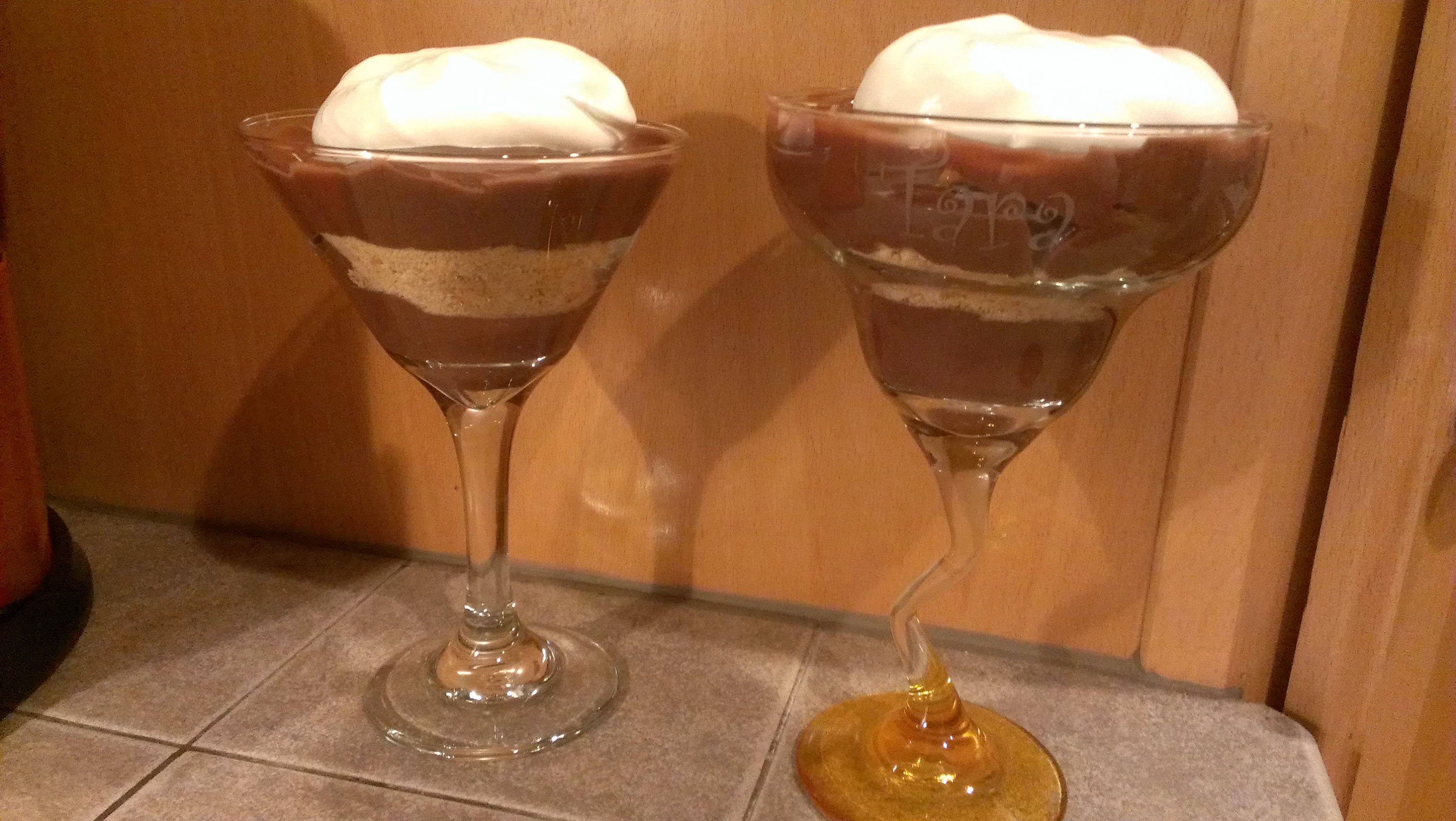
We partook of our parfait by preparing a prepackaged pouch of pudding perfectly. Instant chocolate pudding, to be exact, and both fat-free and sugar-free, to boot. We layered that in a glass with generic Cool Whip and crushed graham crackers, and voila! A quick and easy parfait.

Chocolate Parfait

Categories: Desserts | Tags: , , , , , | 7 Comments

118/365: National Blueberry Pie Day

Few things are as American as blueberry pie. Which makes April 28th a pretty patriotic day: it’s National Blueberry Pie Day!

Blueberries are native to North America, and weren’t even introduced to Europe until the 1930s. They grow like crazy in New England, and appealed to early settlers, who found many uses for the fruit – but strangely, eating them plain was rare. Until the 19th century, consuming fresh fruit was thought to be unhealthy, so the blueberries were typically baked into pies. I’m guessing the colonists’ food pyramid looked a lot different than ours! New England housewives almost always had a supply of both sweet and savory pies on hand, ready to serve to family and guests. Pies were proof that the family farm was thriving.

Most of the time, celebrating these food holidays is fun. But not so much when you’ve got a delicious leftover birthday cake, and the next day you’ve got to eat blueberry pie. We wanted to buy a slice to share and call it good, but blueberry pie is hard to find. Maybe if this were Maine we’d have better luck, since blueberry pie is that state’s official dessert. But blueberries would have to be in season for us to have any shot of finding one locally, and we’re still a couple of months away from that happening. We came up with a pretty good solution, though: bake a mini pie instead! I found some small aluminum pie tins in the grocery store, and used this recipe. The result? Pretty amazing, actually! The blueberries were fresh, at least (but flown in from California). I was left wondering why you don’t see blueberry pie on more menus around these parts. I probably could have gobbled the whole thing up in two minutes, but we did have that chocolate cake waiting. @#$! timing.

Blueberry Pie

Categories: Desserts | Tags: , , , , , | 4 Comments

113/365: National Cherry Cheesecake Day*

Today we celebrate a dessert that has been around, in one form or another, for thousands of years. I’d call that a pretty gouda run! April 23 is National Cherry Cheesecake Day.

It’s also National Picnic Day, and while the weather is ideal for such an outing, the fact that it’s a workday made the idea of trying to plan a picnic lunch in the city tricky at best. Besides, a picnic doesn’t honor any particular food, so we chose to celebrate the cheesecake instead.

Cheesecake originated in ancient Greece, and – because it was considered a good source of energy – was served to athletes in the very first Olympic games, in 776 B.C. It won rave reviews there (but the East German judges gave it a 4.6). Early recipes were pretty crude: pound some cheese, mix it in a pan with honey and spring wheat flour, heat, cool, and dig in. When Rome conquered Greece they brought the recipe back home and modified it by adding crushed cheese and eggs, and cooking it under a hot brick. As the Roman empire expanded, cheesecake recipes spread throughout Europe, with regional variations popping up in each country. Centuries later, European immigrants introduced cheesecake to America. Our unique spin on the popular dessert was the addition of cream cheese, discovered by accident when a New York dairy farmer was attempting to recreate Neufchatel, a soft French cheese. Meanwhile, Italians make theirs with ricotta, Greeks use mizithra or feta, Germans use cottage cheese, and the Japanese incorporate egg whites and cornstarch into theirs, and sell it in vending machines with a whole bunch of other odd things. In America, it can be served plain (i.e. decadent New York-style cheesecake, made with heavy cream) or with toppings such as fruit, nuts, or chocolate.

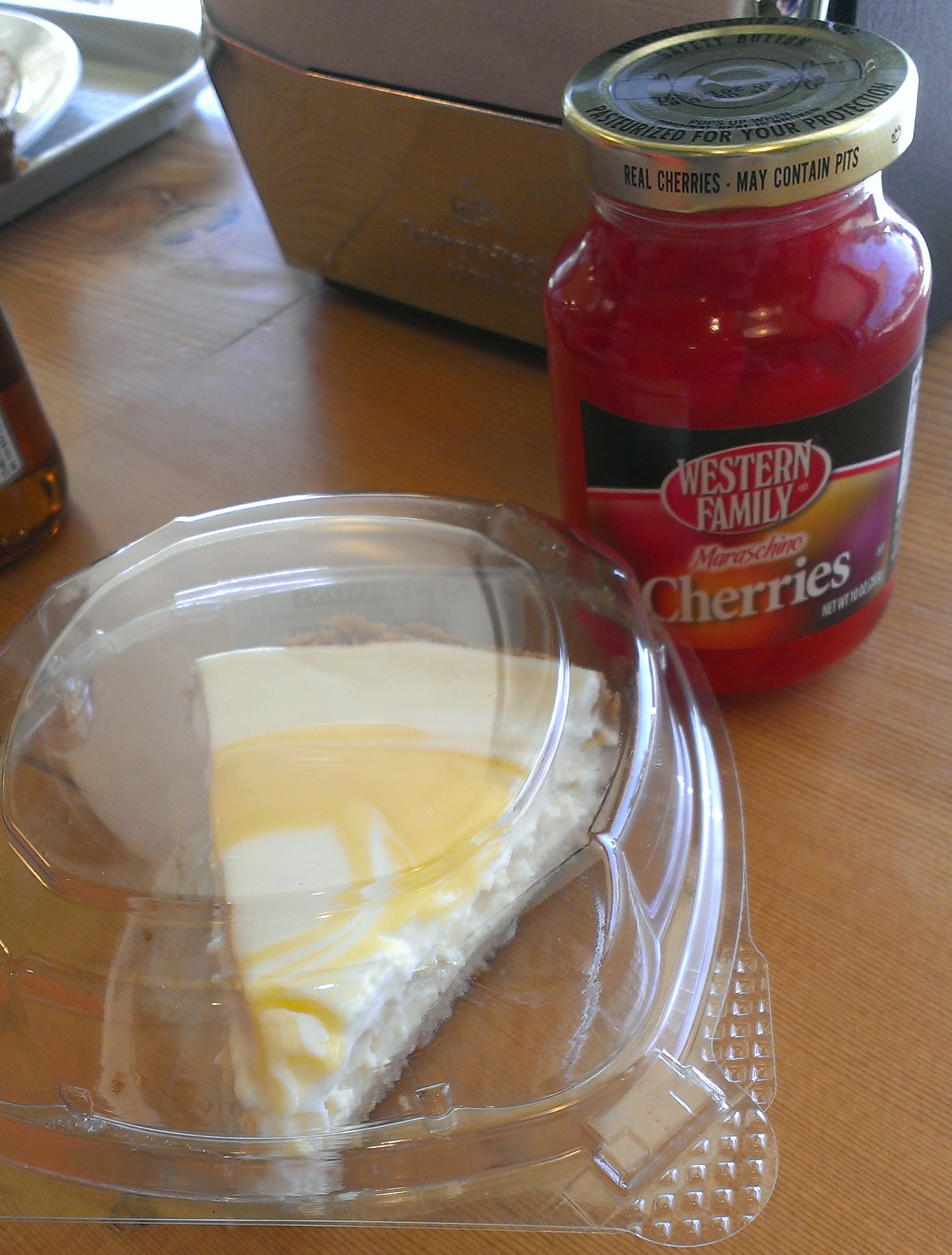
The essential ingredients in cherry cheesecake.

The essential ingredients in cherry cheesecake.

My family has an excellent recipe for cherry cheesecake that has been passed down through the generations. It’s creamy and delicious, and my mom usually makes it once a year – on Christmas day. Alas, we are more than eight months away from seeing the fat guy in the red suit trying to squeeze his ass down the chimney, so we had to go the easy route instead. I had seen individual slices of cheesecake for sale in New Season’s Market, so Tara and I stopped by there for lunch today. Sadly, they didn’t have cherry cheesecake. But they did have lemon cheesecake, and they’re a grocery store, so they also sold jars of maraschino cherries. Thus, we were able to cobble together a pretty decent cherry cheesecake which we shared bites of. It was a lot easier than making a cheesecake from scratch or having to buy a whole one, and was – as cheesecakes usually are – delicious!

Cherry Cheesecake

Categories: Desserts | Tags: , , , , | 8 Comments

103/365: National Peach Cobbler Day

April 13 is a lucky day for you if you enjoy peaches and sweet desserts. It’s National Peach Cobbler Day!

Cobblers have existed for as long as there have been shoes in need of repair. But alas, today’s holiday celebrates a dessert, not a shoemaker. Sorry, hardworking Nike and Adidas folk. We still appreciate you, though. Dessert cobblers originated in colonial America when early English settlers were unable to find the ingredients to make a proper steamed suet pudding. Instead, they took a stewed filling (usually fruit) and topped it with uncooked biscuits or dumplings. After baking, the surface resembled a cobbled street. There are many variations on the cobbler, going by names like the Betty, the Buckle, the Sonker, the Pandowdy, the Grump, the Slump, the Dump, Bashful, Doc, Dopey, Happy, Sleepy, and Sneezy. Just kidding about those last six – don’t get your knickers in a bunch, Walt. Cobblers are often topped with a dollop of whipped cream or ice cream and served warm.

We found an upscale peach cobbler in the frozen section of New Season’s Market. By “upscale” I mean it cost nine bucks. Nobody said this food challenge would be cheap! Which is why we’re doing it this year, as opposed to last year, when both Tara and I were looking for jobs. We baked it in the oven at 350F for a little over an hour. Sadly, we didn’t have any whipped cream or ice cream, and that made me a real grump. Ha-ha. But the cobbler was excellent!

Peach Cobbler

Categories: Desserts | Tags: , , , , | 1 Comment

99/365: National Chinese Almond Cookie Day

May fortune smile down upon you today, as we celebrate a Chinese cookie. No, not the one with the tiny slip of paper inside. The other one. April 9 is National Chinese Almond Cookie Day!

Chinese almond cookies have long played second fiddle to the beloved fortune cookie. They’re like the Jan to the fortune cookie’s Marcia, for those of you who grew up in the 70s. And like the fortune cookie, they aren’t an authentic Chinese dish, either. Cookbook author Yuan-Shan Chi famously declared these cookies “as Chinese as blueberry pie” in 1960. Coincidentally, National Blueberry Pie Day is right around the corner (April 28). There is no record of Chinese almond cookies prior to the 1900s; they are believed to be an American invention based on the traditional Chinese walnut cookie, a plain cookie with a walnut in the center that was thought to bring good luck. In the Chinese culture, almonds are believed to be anti-inflammatory and anti-spasmodic, so if you’re in pain or having muscle spasms, reach for the cookie jar. While the Chinese almond cookie may not have originated in China, it’s popular there nowadays, particular in the south and southeastern parts of the country, and in Hong Kong. They are called almond cakes in China and are traditionally served to celebrate Chinese New Year, where their coin-like shape symbolizes prosperity.

Yesterday, when I was out scouting for empanadas, I picked up some Chinese almond cookies from an Asian market in town. We enjoyed those after dinner tonight. Or rather, enjoyed them. Tara caught a cold and her taste buds were so out of whack, she couldn’t taste a thing. She did take a couple of bites though, which is all our rules dictate.

Chinese Almond Cookie

Categories: Desserts | Tags: , , , , , | 2 Comments

93/365: National Chocolate Mousse Day

You’ll be foaming at the mouth in anticipation of today’s food holiday. April 3 is National Chocolate Mousse Day!

A moose is the largest member of the deer family, and found primarily in Alaska, Canada, and Russia. Males have distinctive leaf-shaped antlers. Dipped in chocolate, they are a decadent treat.

Wait. I’ve just been informed that this is chocolate mousse day. My bad.

mousse (hey, anybody could make that mistake!) is a light, airy dessert made with whipped egg whites. Its history is unclear; all we know is that Conquistadors brought chocolate to Spain in 1529, and when Spanish princess Anne of Austria married French king Louis XIII in 1615, she packed lots of chocolate in her carry-on bag. French chefs began experimenting with the sweet treat, and by the 19th century had combined mousse (which literally means foam) with chocolate to form mousse au chocolat. Chocolate mousse first appeared in the U.S. during a food exposition in Madison Square Garden in 1892. Five years later, a recipe appeared in a housekeeper’s column in the Boston Daily Globe. These versions were more pudding-like in consistency, however. It wasn’t until the invention of the electric mixer in the 1930s that the fluffy, airy mousses (meese?) we know and love today came about. The secret is in whipping those egg whites to a frothy perfection, something difficult to achieve by hand.

Tara stepped up to the plate and offered to make a chocolate mousse from scratch. I was excited because I wanted to hang the antlers on the wall (see above faux pas), but I was pretty happy for the other kind of mousse, too.


Chocolate Mousse


Since Julia Childs’ Coq au Vin recipe was such a success, it was easy to choose her Chocolate Mousse recipe from the dozens that came up when I searched online.  Also like her Coq au Vin, there were several steps (and lots of dirty bowls) that included using a double boiler to melt the chocolate and whip the sugar and egg yolks, cooling said sugar and yolks in a bowl of ice, and whipping egg whites with first a pinch of salt, then some sugar, and finally a splash of vanilla.  I’m not the type of baker to lay out all my ingredients before hand so there was a lot of back and forth to various cupboards for bowls, measuring spoons, and ingredients.  Normally this isn’t a big deal in a kitchen our size, but when Mark is sharing counter space while making meatballs for his Italian Wedding Soup…well, let’s just say I had to politely shove him out of my way a few times.  Move, babe!  The egg whites are going to break!  I have to stir the chocolate!

Frantic shoving aside, the mousse turned out great.  Rum and coffee helped keep the chocolate rich and not too sweet.  Magnifique!

Categories: Desserts | Tags: , , , , , | 3 Comments

88/365: National Lemon Chiffon Cake Day

Paula Deen must hate today’s food holiday. Not because we celebrate a cake…but because that cake is made without butter. Gasp! What a travesty! Happy National Lemon Chiffon Cake Day.

A chiffon cake is very light and airy and is made with eggs, sugar, flour, baking powder, and – instead of butter – vegetable oil. This is considered a “foam ” cake, similar to angel food, and gets it’s fluffy texture from beating egg whites until they’re stiff. Traditionally you’ll want to use a baseball bat, but if one isn’t available, a mixer will suffice. Since no butter means no flavor less flavor less rich flavor, chiffon cakes are typically served with flavorful sauces, such as chocolate or fruit filling. Hence, lemons.

California insurance agent-turned-caterer Harry Baker invented the chiffon cake in 1927. You might say he traded in policies for pastriesDeductibles for delectables. Commissions for…well, you get the picture. The point is, Baker became a baker. A smart one, too: he took regular ol’ sponge cake and added cooking oil to turn it into chiffon. And because he was running a successful catering company, he kept his recipe secret for twenty years, until finally selling it to General Mills. In 1948, a pamphlet was released by Betty Crocker, containing 14 different chiffon cake recipes. It became popular seemingly overnight, and soon became synonymous with weddings. Which means, many chiffon cakes over the years have ended up smeared across the faces of brides and grooms. Oh, the inhumanity.

We tried to take the easy way out today, searching high and low for a lemon chiffon cake in a couple of different grocery stores, but had no luck. We could have bought a cake from the local bakery, but $18 was a bit steep, so Tara decided to make one herself. It turned out fantastic! Tall and fluffy and lemony.

Lemon Chiffon Cake

Categories: Desserts, Pastry | Tags: , , , , , | 4 Comments

Create a free website or blog at WordPress.com.