233/365: National Spumoni Day

If you like your ice cream to contain multiple flavors, as well as candied fruits and nuts, you’re in for a real treat today. August 21 is National Spumoni Day!

Some calendars list National Spumoni Day on August 22, which is when I originally had it planned. But there was enough doubt that I turned to both Wikipedia and our East Coast consultant, John, for confirmation. They both agreed it was August 21. Thanks for the help, John and inanimate website!

Spumoni is an Italian ice cream made with layers of colors and flavors – usually cherry, pistachio, and chocolate, but sometimes containing vanilla in place of one of the other flavors. There’s also a layer of candied fruits and nuts separating each flavor. Bits of cherry are common. I was hoping…nay, expecting…an interesting background story on the invention of spumoni, how the colors represent a famous Italian battle or something else of historical significance, but was disappointed to learn nobody really knows who or how spumoni came to be. Apparently it just appeared out of thin air one day. It is rumored to have originated in Naples, and is thought to be the precursor to Neapolitan (chocolate, vanilla, and strawberry). It is no longer very popular in Italy, but can be found more readily here in the U.S. of A.

I’ve never been a fan of spumoni, to be honest. I’m very familiar with it though, as it’s a signature dessert of The Old Spaghetti Factory, a restaurant my family dined at often over the years. To be fair, the spumoni they used to serve contained large chunks of candied fruit that turned my stomach; nowadays, they’ve scaled way back on that stuff and simply give you three flavors of ice cream: chocolate, pistachio, and cherry (the most popular combination).

Obviously, we went to The Spaghetti Factory for lunch. If not for them, I have no idea where we would have gotten spumoni ice cream. And honestly, it was better than I expected.
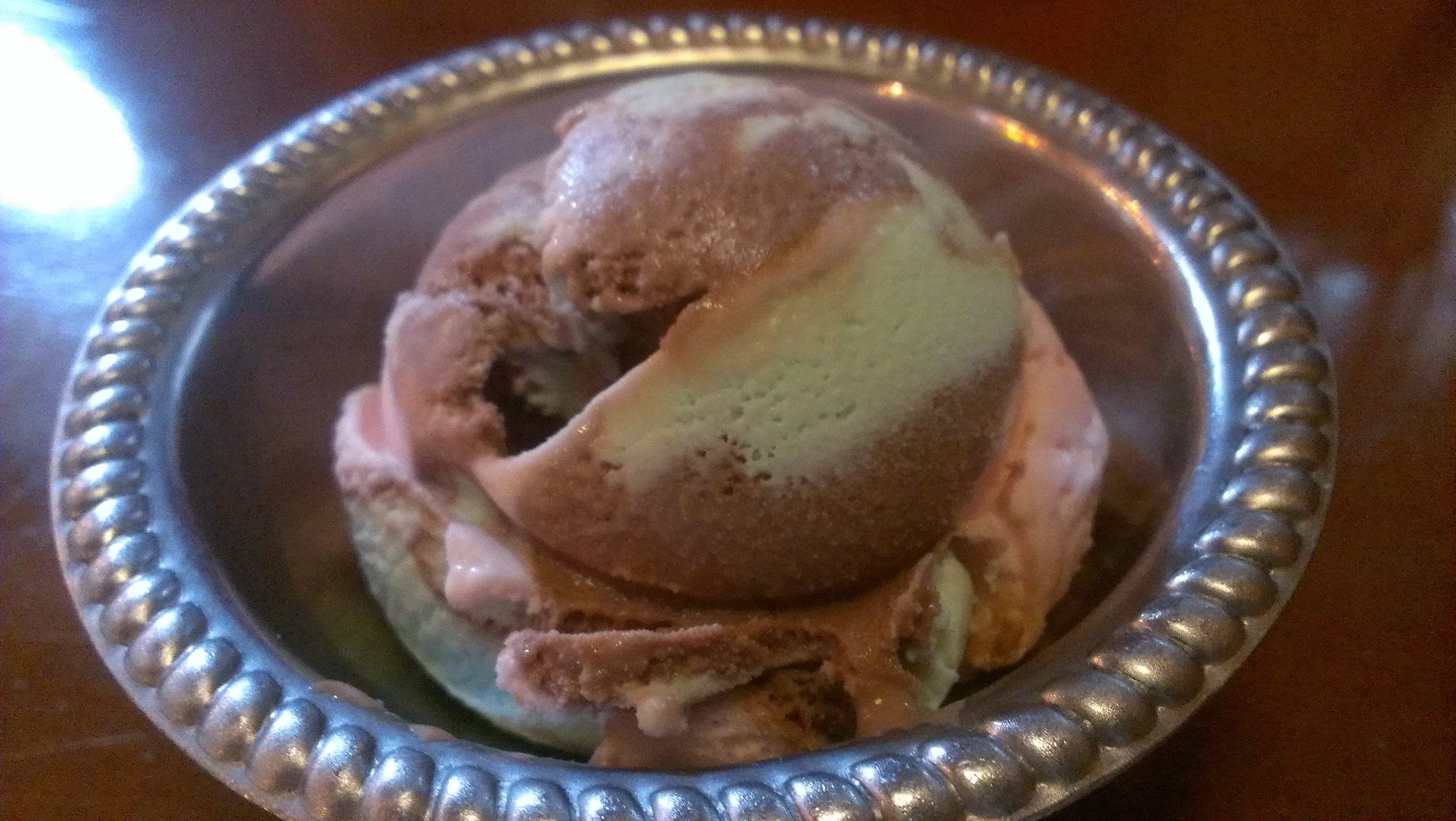
National Spumoni Day

Categories: Dairy, Desserts | Tags: , , , , , | 3 Comments

232/365: National Lemonade Day*

Pucker up, sweetie: August 20 is National Lemonade Day!

It’s also National Chocolate Pecan Pie Day, but boy, are we all pied out. And there are still more to come. (Incidentally, if that seems like an unusual pie flavor to you, we thought so, too. A little over a week ago we were at the Bite of Oregon festival in Portland, and stumbled upon a chocolate pecan pie that we ended up trying, without even being aware that this holiday was coming up. It was very good).

I’ve always had a soft spot for lemonade. I think this is because I’m not a big fan of soda, rarely drinking it (and when I do, it often contains alcohol). Lemonade is a tasty, refreshing alternative, especially on warm summer afternoons.

Lemonade is a sweetened beverage made with lemons, sugar, and water. It dates back to at least the 10th century, when Egyptians were making quite a profit selling the juice from lemons, which flourished in the region. Locals enjoyed the beverage mixed with lots of sugar. We know this thanks to Nasir-i-Khusraw, a Persian poet and traveler who wrote an extensive treatise on life in Egypt during this time. A typical excerpt read, “Woke up. Worshipped a cat. Drank lots of lemonade. Dinner with daddy and mummy. Bed time.” When told that too much of the sweetened concoction could cause tooth decay, Egyptians said, “no – you’re wrong.” Those folks were in de-Nile.

(Longest set-up to a punch line ever).

Actually, drinking lemonade can be healthy. Studies show that consuming 4 oz. of lemon juice mixed with two liters of water every day can help prevent kidney stones. On the downside, this may put you in a sour mood.

I’m here all week, folks.

There are numerous flavor combinations of lemonade, found throughout the world. Pink lemonade, made with the addition of grenadine syrup, is particularly popular. Almost any fresh, seasonal fruit can be mixed with lemons to form a tasty variation on the classic; popular additions include strawberries, blackberries, and raspberries. In the U.K., lemonade is typically carbonated, and similar to lemon-lime sodas such as Sprite or 7-Up. In Ireland, lemonade is available in three varieties: red, brown, and white. And in France, American-style lemonade is called “citronade.”

To celebrate, we made a pitcher of lemonade from a basic recipe:

  • 6 medium lemons (about 1 cup of juice)
  • 3 1/2 cups water
  • 3/4 cup sugar (adjust to taste)

Juice the lemons with a juicer or by hand. Rolling them on the counter with moderate pressure prior to juicing will result in more juice from each lemon. Try to keep out the seeds. If you prefer lemonade with no pulp, strain the juice to remove it. Dissolve the sugar in the water (heat may be helpful). Combine the juice with the sugar water in a pitcher and stir well. Chill or serve over ice cubes.

I’m happy to report, this seems to be the perfect ratio; Tara and I met up at home for lunch, and enjoyed some fresh lemonade. It was about a thousand times better than concentrate, too!

National Lemonade Day

Categories: Beverages | Tags: , , , , | 5 Comments

231/365: National Potato Day/National Hot & Spicy Food Day*

Today presents us with a real dilemma. We have two food holidays to choose from: National Potato Day, or National Hot & Spicy Food Day. No problem for me, but somebody in the house doesn’t like potatoes OR hot and spicy foods.

Hint: it’s not the cat.

Before I continue, I want to update you on a recent challenge. A couple of days ago was National Vanilla Custard Day. My parents had given us some rennet tablets to assist in the preparation. I had never used them before – had never even heard of them, as a matter of fact – and the instructions for preparation were very precise. My first batch was ruined because the milk was too hot, so I cooked up a second helping, and this time the temperature was just right. We put it in the refrigerator overnight to set, and the next morning – before hitting the road – tried the custard. It wasn’t bad at all. But, after fourteen hours in a cooler filled with ice, the consistency had changed to something akin to a watery, lumpy cottage cheese. Neither of us was keen on trying it, but we knew we must adhere to the rules of the challenge, so we actually waited until the stroke of midnight, when it was officially Saturday, and had a spoonful each. Honestly, the flavor wasn’t bad, but the texture was revolting. So, our vanilla custard was a major disappointment – but given the obstacles we faced this weekend, we won’t beat ourselves up too badly.

Moving right along…

Spices were first used to flavor foods around 7000 B.C. when our forefathers discovered mastodon tasted so much better with a dash of red pepper flakes. Some cultures began to build their entire cuisines around spicy foods (Indian, Thai, Japanese, Mexican, and others), which isn’t really a bad thing: hot spices rev up the immune system, ignite the libido, and stimulate the brain. Which means, eating them will keep you healthy, horny, and smart as a whip. Plenty of reason there to pass the jalapenos!

I figured it would be easy to celebrate both food holidays today by combining the two. How to do that? With a bag of jalapeno flavored potato chips, of course! They were good. Tara wasn’t as crazy about them, but was a trooper about it (like always) and had a couple despite her distaste for them.

National Hot & Spicy Food Day, National Potato Day

Categories: Too Weird to Categorize, Vegetables | Tags: , , , , | 7 Comments

230/365: National Soft Ice Cream Day

Today’s food holiday might just make you melt. August 18 is National Soft Ice Cream Day!

Like many of the food holidays we’ve celebrated, soft serve ice cream was an accidental invention. During Memorial Day weekend in 1934, ice cream truck driver Tom Carvel suffered a flat tire in Hartsdale, New York. In an effort to avoid wasting his precious cargo, he pulled into the parking lot of a pottery store and sold his melting ice cream to passersby. Business was brisk, and within two days he had sold his entire supply. Carvel reasoned that selling soft ice cream from a permanent location could be a lucrative business, and two years later opened his first store – in the same spot where his truck broke down.

Enjoyed this on the road!

Enjoyed this on the road!

Soft serve ice cream contains less milk fat than regular ice cream, and is stored at a slightly warmer temperature (duh). Air is introduced at the time of freezing, and can comprise up to 60% of the finished product’s volume. The higher the air content the creamier, lighter, and smoother the ice cream. Ideally, it should range between 33%-45% of the finished product. Frozen custard is similar, but contains eggs in addition to cream and sugar, and has less air.

Since we were on the road returning from our impromptu trip to Ely, we stopped at a McDonald’s in Hood River and shared a vanilla soft serve ice cream cone. It hit the spot after 12 hours in the car!

Categories: Desserts | Tags: , , , | 4 Comments

229/365: National Vanilla Custard Day

I’d be pudding you on if I said we hadn’t celebrated today’s food holiday, in one form or another, a bunch of times already this year (and also used the word “pudding” in place of “putting” in at least one previous post). August 17 is National Custard Day!

Custard, a cooked mixture of milk and egg yolks, has been around since the Middle Ages. The name derives from the French word croustade, meaning “crust of a tart.” Early custards could be either sweet or savory, though nowadays sweet, pudding-like custards are the norm. And why do I insist we’ve celebrated custard many times already? Because it forms the base for a wide variety of dishes, including tartscrème brûlée, and quiche. And we can’t forget chocolate custard. Been there, done that. And that, and that, and that. But we haven’t actually had just plain ol’ custard yet, so in that regard, this holiday is a new one.

We are in Ely, Nevada today for a family gathering. A close friend of Tara’s family passed away suddenly and unexpectedly, and we wanted to be here to honor his memory. Now, we always figured we’d celebrate a few of this year’s food holidays in Ely, because we are planning a trip here for New Year’s, which means we’ll actually complete the challenge here. But obviously that is months away yet, and this visit was never in the cards. Ely is hardly the hotbed of civilization; I doubt there’s anywhere in town that even sells vanilla custard. And with everybody pretty busy today, making vanilla custard is hardly a top priority. So again, we had to plan ahead, and made a batch before we left, which we packed carefully in a cooler filled with ice and hauled 840 miles across three states. We are now enjoying it from the comfort of a Motel 6 in downtown Ely. Definitely one of the trickier holidays to celebrate, but where there’s a will, there’s a way.

The photo below is NOT our custard. As I am writing this entry the evening before we leave, the custard is still setting up, and that will take hours. This is what I’m HOPING our custard eventually looks like. As a completist, I’ll probably come back here and add a photo of ours, when we’re back home. I’m bringing my laptop along, but probably won’t have much of a chance to use it.

National Vanilla Custard Day

Categories: Desserts | Tags: , , , , , | 7 Comments

228/365: National Bratwurst Day*

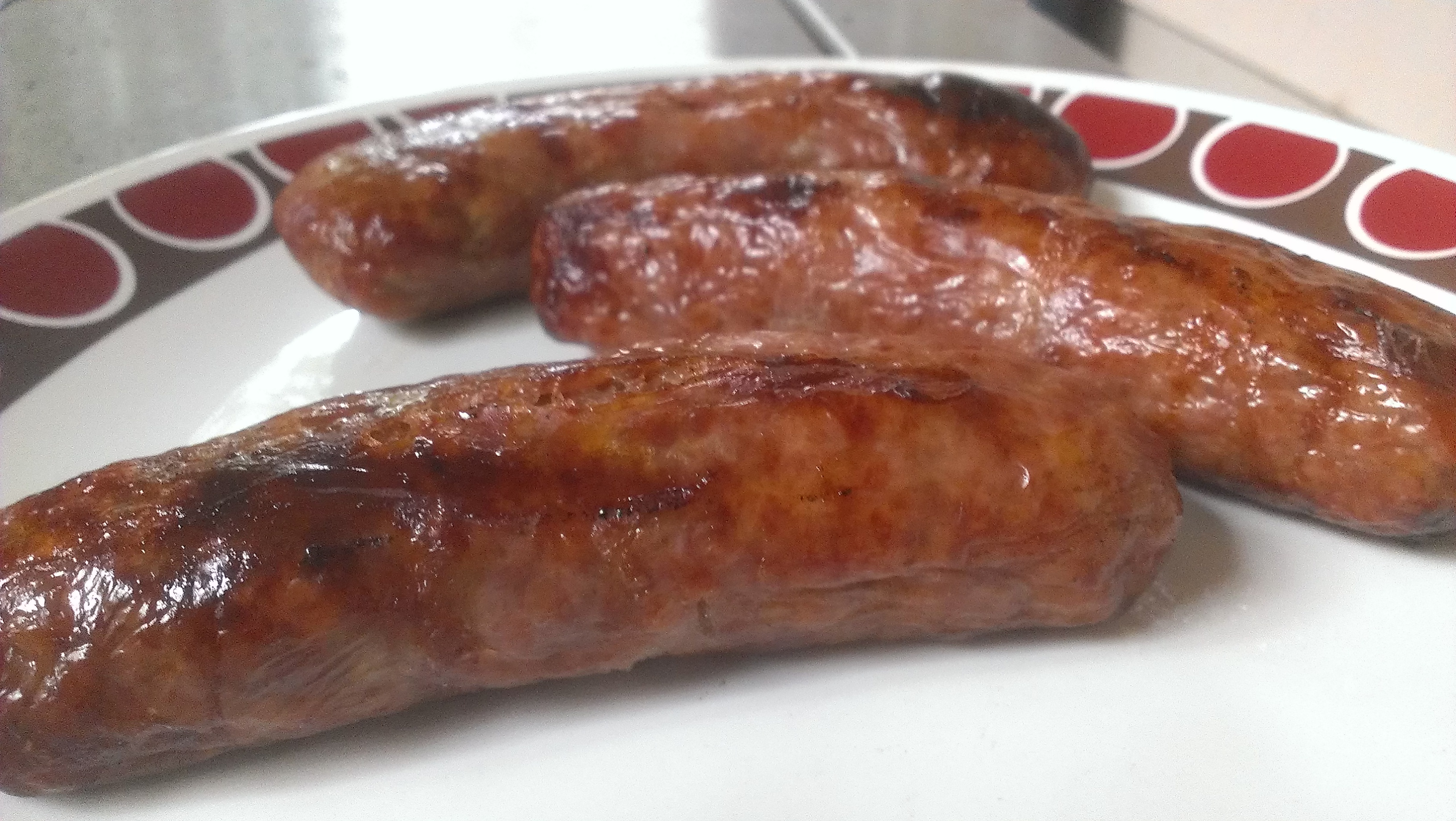
Today’s food challenge is one of the wurst yet. And I mean that in a good way. August 16 is National Bratwurst Day! But yo-ho-ho, that’s not all: it’s also National Rum Day. Unfortunately, we’re making an impromptu trip to Ely, Nevada due to a death in Tara’s family. It’s about a 12-hour drive, and obviously alcohol would be a bad idea. Eating bratwursts before hitting the road at 4 AM is tricky enough!

Bratwurst is one of the oldest sausages, dating back to the early 14th century. It is, not at all surprisingly, a German invention (they do love their sausages, don’t they?), derived from the words braten (to “fry”) and wurst (opposite of “best”) (or, in this case, “sausage”). Bratwurst is made of ground pork, beef, or veal, and a distinctive blend of seasons that includes nutmeg, garlic, salt, and pepper. The earliest evidence of this wiener on steroids dates to 1313 and the German town of Nuremberg, still a major sausage manufacturing region to this day. It is typically grilled or pan fried, and often served with sauerkraut or potato salad. German immigrants introduced it to the U.S., and it’s particularly popular in the state of Wisconsin, where (stereotype alert!) locals wearing giant foam cheese heads and speaking in funny accents often cook it in beer. Brats, as they are commonly referred (hey – just like kids!), are so popular in Wisconsin that Miller Park in Milwaukee is the only baseball stadium in the country that sells more bratwursts than hot dogs, and the city of Madison’s three-day Brat Fest over Memorial Day weekend is billed as the largest in the world. Take that, Germany!

We said at the beginning of this project that regardless of circumstances, we would stick with our food challenge, no matter how difficult. Certainly today is one of those days to test our limits, but with a little bit of preparation, we made do. This meant cooking bratwursts the night before and eating them early in the morning, long before the sun was up, with scrambled eggs…and relying on technology to make sure this post appears while we are somewhere in the middle of nowhere (a/k/a Idaho). Is that dedication, or what?

National Bratwurst Day

Categories: Meat | Tags: , , , , , | 4 Comments

227/365: National Lemon Meringue Pie Day

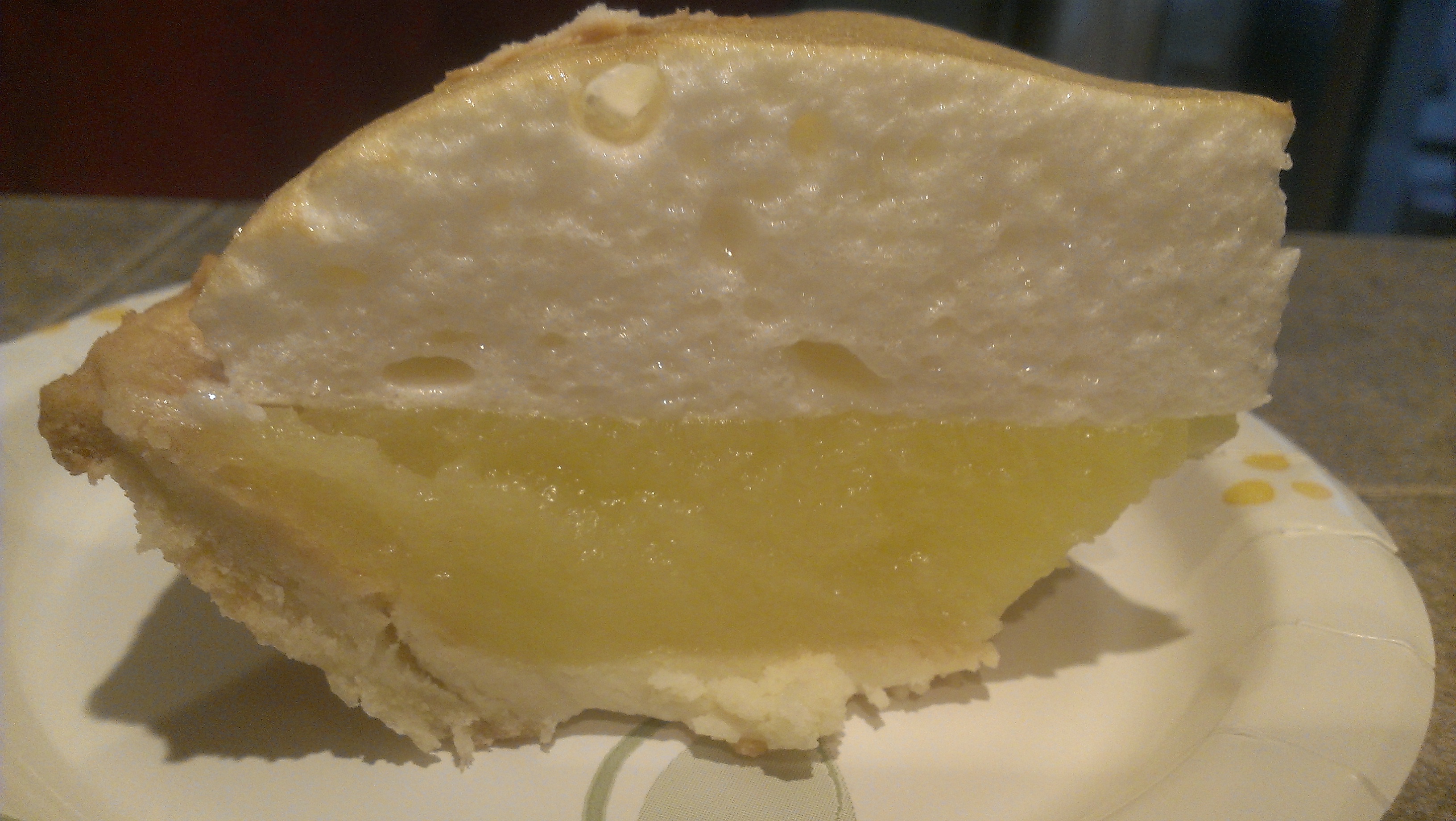
Some of these food holidays are full of fluff, and today is no exception. August 15 is National Lemon Meringue Pie Day!

It is also Julia Childs’ birthday. She passed away in 2004, but would have been 101 today if she were still living. What an inspiration Julia was to many – both professional chefs and home cooks. Her passion for cooking was contagious. Even as a child, I enjoyed watching her build terrific-looking meals from scratch on TV. Julia was the inspiration for Julie & Julia, the blog and movie, which in turn were an inspiration for Eat My Words. It’s only fitting to mention her today as we honor her legacy in our own humble fashion. julia-child-300

Lemon meringue pie is recognizable as one of the tallest pies out there. It achieves its height thanks to that meringue topping consisting of whipped egg whites and sugar. If lemon meringue pie were a person it could never live in Beverly Hills, because it’s got no upper crust.

Get it? Upper crust? Yeaaah…moving right along…

Lemon-filled pies and pastries date back to Medieval times, but it’s unsure where meringue originated. Some claim it was invented in the Swiss village of Meiringen and perfected by an Italian chef named Gasparini, but this claim cannot be substantiated. The word first appeared in a cookbook written by François Massialot’s in 1692. Elizabeth Coane Goodfellow, a pastry chef and teacher from Philadelphia, is credited with introducing the dessert to America in the 19th century, where it became a staple of her cooking classes. Recipes began appearing in cookbooks during the latter half of the century, including the 1882 edition of Marion Harland’s Common Sense in the Household: A Manual of Practical Housewifery. Gotta love the name. It’s not at all sexist!

The chemistry behind meringue is pretty interesting: when egg whites are beaten, their hydrogen bonds break, causing their proteins to unfold and stiffen. Cream of tartar (WARNING: THIS IS NOT THE SAME AS TARTAR SAUCE, YOU FISH STICK LOVERS!) helps the whites to form stiff peaks. Sugar is a necessary part of the process, so put away the Splenda – it won’t turn out at all splendid.

We didn’t feel like whipping it ourselves, nor did we want a whole pie – especially when we are hitting the road tomorrow for a last-minute trip to Nevada – so we got a slice of lemon meringue pie to go from Shari’s. We’ve stopped there several times for other pie challenges. It’s pretty having a pie place/casual dining restaurant so close by!

National Lemon Meringue Pie Day

Categories: Desserts | Tags: , , , , , | 8 Comments

226/365: National Creamsicle Day

Orange you glad you popped on over here to find out which food we’re celebrating today? August 14 is National Creamsicle Day! IMAG1263

Creamsicles are another brand name of Popsicles characterized by vanilla ice cream that has been covered with a layer of ice. As such, credit goes to Frank Epperson in a roundabout way; click on the link for the interesting story behind the invention of this tasty treat, which was yet another “happy accident” as so many of the foods we are honoring for this challenge are.

Creamsicles are available in a variety of flavors, but the most common (and best) is orange. Other flavors have included, at various times, raspberry, lime, grape, cherry, and blueberry. They are available in three varieties: 100-calorie bars, low-fat bars, and sugar-free bars. Creamsicles are occasionally referred to as “50-50 bars.”

Honoring today’s food was as easy as picking up a box from the grocery store and licking. Both of which we accomplished in short order.

Related articles

Categories: Uncategorized | 3 Comments

225/365: National Filet Mignon Day

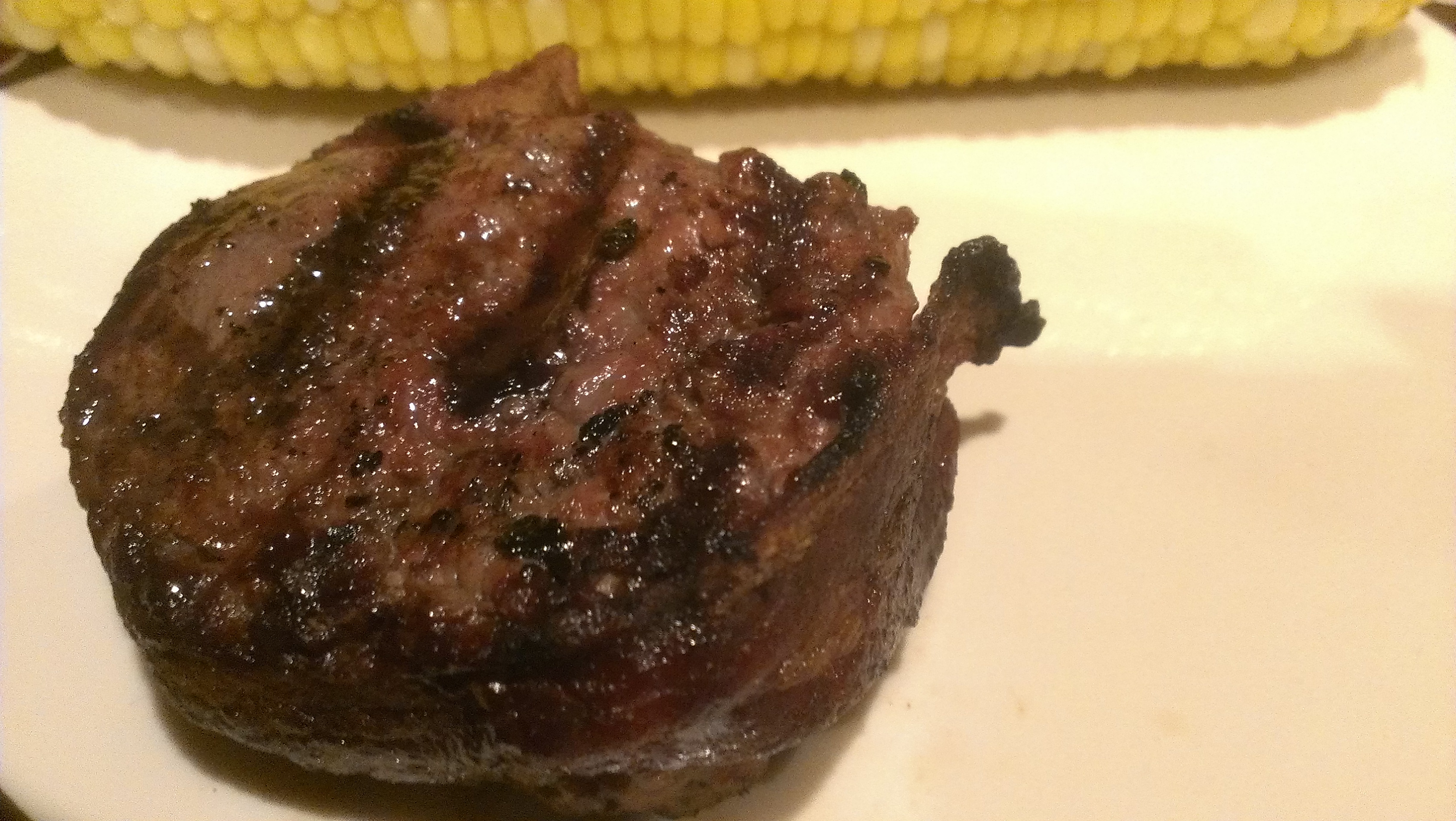
Carnivores will have no beef with today’s food holiday. August 13 is National Filet Mignon Day!

Filet mignon is French for “cute” or “dainty” filet, and refers to the small portion size of a typical steak. O. Henry first coined the term in his novel The Four Million, published in 1906. It is derived from the tenderloin of the cow, which runs along both sides of the spine; the small end is typically sliced into 1-2″ thick filets that are nearly round in appearance. Despite its small size, the tenderloin is the most tender cut of beef, and therefore the most expensive. This explains why that cute, dainty little 6 oz. circle of beef on your plate cost the same as your dining companion’s more manly 14 oz. ribeye. Interestingly, a T-bone or porterhouse steak has the tenderloin down one side and a New York strip down the other, so it is essentially two steaks in one. As tender as the filet mignon is, it doesn’t contain much fat, so it is often wrapped in a strip of bacon before cooking for added flavor.

As with most steak, the simplest preparation is usually the best. Sear your filet mignon over high heat after seasoning with salt and pepper, cook to a perfect medium-rare, and let rest before cutting into it. If you work up a sweat trying to saw through the meat with a knife, you’ve overcooked it. If it “moos” when you slice into it, you haven’t cooked it quite long enough.

To celebrate, we grilled up some filet mignons we bought from the store. These were pre-made and already wrapped in bacon. They turned out pretty good!

National Filet Mignon Day

Categories: Meat | Tags: , , , , , | 3 Comments

224/365: National Julienne Fries Day*

No matter how you slice it – though it had better be in long, thin strips – today’s food holiday is a tasty one. August 12 is National Julienne Fries Day!

Not to be confused with National French Fries Day, of course. We could have gone wild that day and eaten jumbo-sized steak fries or wedge fries! (Alas, we did not. Ours were julienned, which is the most popular method of preparing french fries, at least in the fast food world). Julienning is a culinary knife technique in which a food is cut into long, thin strips similar to matchsticks. Carrots and celery are frequently julienned. When potatoes are julienned, they are often referred to as “shoestring” fries. The origin of the term is unclear, though it is French and may refer to a person named Philippe. Just kidding, named Julien.  The technique was first described in François Massialot’s Le Cuisinier Royal et Bourgeois, published in 1722.

According to Wikipedia, instructions for proper julienning are as follows:

With a sharp knife the raw vegetable is sliced to length and trimmed on four sides to create a thick rectangular stick 6 to 7 cm (2.4 to 2.8 in), then cut lengthwise into thin 1 to 2 mm (0.039 to 0.079 in) slices. Stacking these slices and again cutting lengthwise into thin (1 to 2 mm (0.039 to 0.079 in), equal to the thickness) strips creates thin uniform square sticks. Julienne usually applies to vegetables prepared in this way but it can also be applied to the preparation of meat or fish, especially in stir fry techniques.

Work that knife, baby! And don’t forget your ruler, apparently. Sheesh. Technical much?

We weren’t in the mood for precision cutting this evening, so we opened a bag of OreIda french fries instead. And baked them. Oh, the ignominy! But we used a real good quality ketchup. And fry sauce from Arctic Circle.

National Julienne Fries Day

Categories: Vegetables | Tags: , , , , | 7 Comments

Create a free website or blog at WordPress.com.