Alcohol

178/365: National Orange Blossom Day*

Orange you glad we get to celebrate a warm summer day with a fresh and tasty cocktail? June 27 is National Orange Blossom Day!

It’s also National Indian Pudding Day. Considering that we also celebrate chocolate pudding and tapioca pudding this week, I was not happy about what I perceived to be pudding overkill. “Somebody’s pudding me on,” I said. “Whose big idea was it pudding all these similar food holidays together in the same week?” Once my pudding puns were exhausted, I got down to the business of researching Indian pudding, and learned that no box of Jell-O mix would suffice for this rather complicated dessert. Indian pudding is a porridge-like mixture of cornmeal, milk, and molasses that requires hours of cooking. Yikes! I didn’t think orange blossoms would be any easier to cook with (or find), but then I learned that the Orange Blossom is actually a cocktail. Not just any cocktail, but one that contains gin and vermouth (two ingredients we’ve got on hand thanks to our recent Dry Martini day), plus orange juice. Score!

The exact history of the Orange Blossom is unknown, but it rose to prominence in the 1920s during Prohibition, when orange juice was used to cut the rancid flavor of illegal bathtub gin. A.S. Crockett’s Old Waldorf-Astoria Bar Book, published in 1935, contains two Orange Blossom recipes. Orange Blossom No. 1 is served neat and contains equal parts gin, vermouth, and OJ. It was allegedly invented by “some young bridegroom who wanted something novel to use at his final stag party.” Orange Blossom No. 2 is served in an old-fashioned glass with ice and omits the vermouth, calling for a 1:1 ratio of gin and orange juice. Since vermouth is sort of the Rodney Dangerfield of the alcohol world – it truly gets no respect – I’m not surprised that this second recipe doesn’t even bother with it.

We figured, since we’ve got vermouth on hand, we might as well go ahead and use it, so we made a couple of Orange Blossom No. 1s. The result? Maybe not quite as bad as the dry martini…but it’s not something I would drink again. I’ve come to the conclusion that I’m not a fan of vermouth.

National Orange Blossom Day

Categories: Alcohol | Tags: , , , , , , | 8 Comments

170/365: National Dry Martini Day

Regardless of whether you like it shaken or stirred, today will appeal to anybody who loves the classic combination of gin and vermouth. June 19 is National Dry Martini Day!

A martini can be either sweet or dry, depending on the vermouth. The original recipe calls for half gin, half vermouth (an Italian wine), and either a green olive or a twist of lemon. Over the years the ratio of gin to vermouth has steadily increased; in the 1930s it was 3:1 or 4:1, and nowadays, it’s more like 6:1 or 8:1, if that. English playwright Noël Coward once declared the perfect martini was made by “filling a glass with gin then waving it in the general direction of Italy,” while Winston Churchill was said to merely whisper the word “vermouth” to a freshly poured glass of gin. Further complicating matters is the fact that vodka began replacing gin as the base spirit in the martini in the 1980s, though purists scoff at this notion.

Like many well-known alcoholic beverages, the origin of the martini is unclear, with several people laying claim to its invention. An Italian company began manufacturing vermouth in 1863 under the name Martini, which later evolved to Martini & Rossi. Around the same time, a popular drink in San Francisco called the Martinez is said to be the inspiration for the martini; it consisted of 1 oz. gin, 2 oz. sweet vermouth, 1 dash oranges bitters, 2 dashes maraschino liqueur, served in a cocktail glass with a slice of lemon. Residents of the nearby town of Martinez would flock to the Occidental Hotel for the drink before taking a ferry back home. Many believe the drink was either named for the town, or the town for the drink. Residents of Manhattan can relate. Regardless of its true origin, the martini became the cocktail of choice in America by the mid-20th century, thanks in large part to Prohibition, when it was fairly easy to whip up a batch of illegal gin. By the 1970s the drink was viewed as old-fashioned and fell out of favor, but it has experienced a resurgence in recent years, even if it does often contain vodka now.

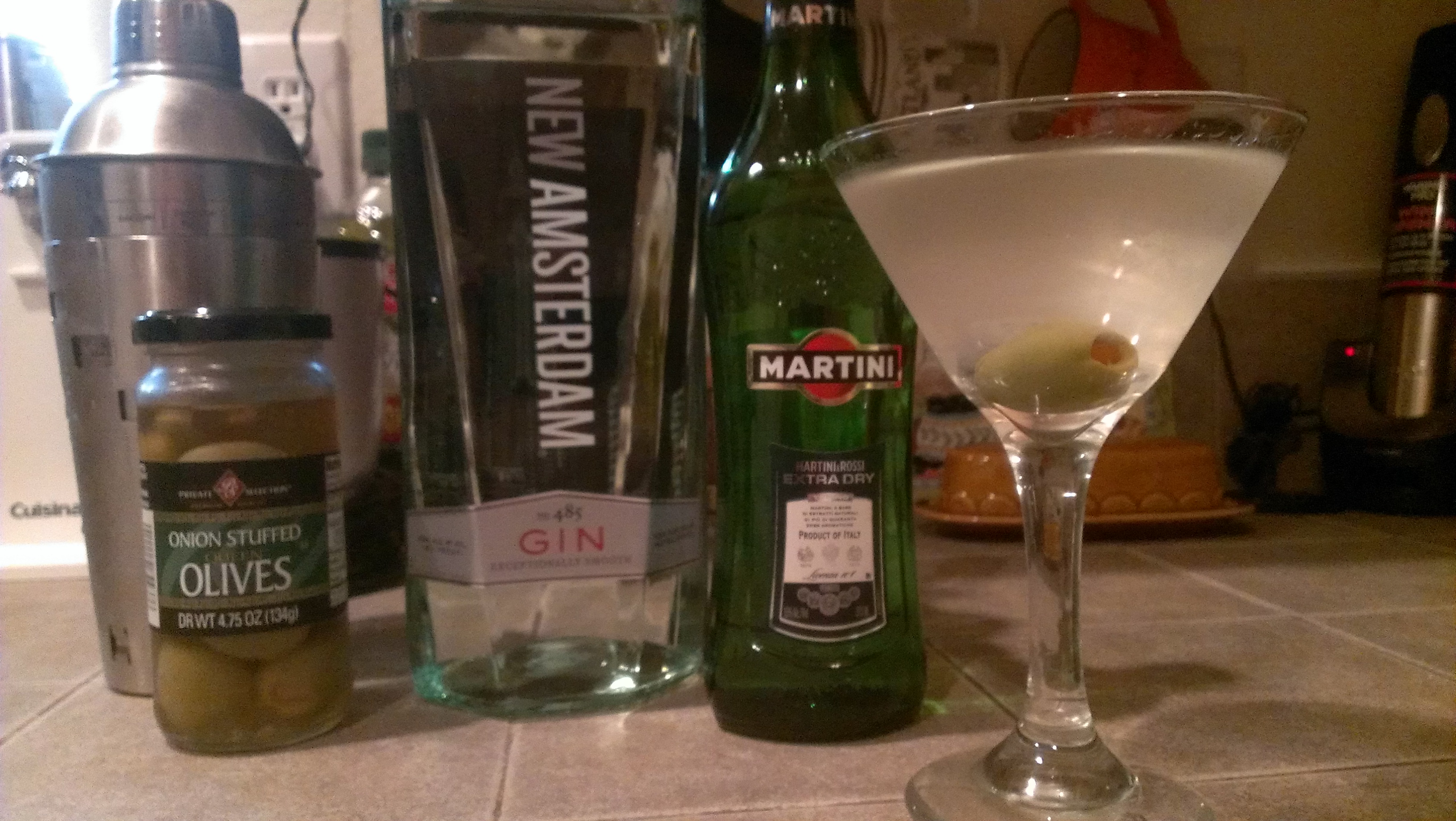
I love gin, so there was no way I was going to become a sellout and go the vodka route. I’d never actually had a martini before, but after picking up a bottle of dry vermouth, was all set to make my own. I went all James Bond and served it shaken, not stirred. Took one sip, and………….

………….nearly spit it out.

Holy cow, was that disgusting! I love my gin and tonics, but it turns out gin straight up with a splash of vermouth is not so appealing. Oh, well. Live and learn. Fortunately our rules state that we only need a single sip or bite of the celebrated food/drink. I did take another good-sized sip ten minutes later to see if it wasn’t nearly as bad as I’d thought the first time.

It still was.

Oh, well. Live and learn. But the olive was tasty.

National Dry Martini Day

Categories: Alcohol | Tags: , , , , , , | 10 Comments

150/365: National Mint Julep Day

You’ll want to gallop on over to the liquor cabinet for today’s food holiday. May 30 is National Mint Julep Day!

The exact origin of the Mint Julep is muddled, much like the drink itself. It is believed to have been popularized in the Southern United States sometime in the 1700s. The first reference to it appeared in print in 1803; it was described as a “dram of spirituous liquor that has mint in it, taken by Virginians in the morning.” Sure enough, the mint julep was originally a morning drink that would give farmers in the east and southeast who had to arise at dawn a more persuasive pick-me-up than coffee. It is believed that the mint julep was an Americanized version of an Arabic drink called the julab, which consisted of water and rose petals. As the beverage spread through the Mediterranean, the rose petals were replaced with mint leaves indigenous to the region. Americans made it their own with the addition of bourbon whiskey; the standard ingredients now include bourbon, sugar, water, and mint leaves.

The mint julep became synonymous with the Kentucky Derby in 1938, when Churchill Downs started serving it in souvenir glasses for 75 cents. Today more than 120,000 mint juleps are sold at the “running of the roses” each year, no doubt many of them purchased by folks who want to drown their sorrows after picking the wrong damn horse yet again.

My dad is a big fan of the Kentucky Derby, and has been there in person to collect souvenir glasses on several occasions. He also enjoys bourbon, and always has some on hand. This confluence of events convinced us that we should celebrate National Mint Julep Day with my parents. So we did. And, like many of our alcohol-related challenges, we weren’t real impressed with this drink. I found it too sweet and Tara thought it was too strong. Actually, it was both. But we took a few sips from our derby-themed glasses and can, at least, add another challenge to the books.

Mint Julep

Categories: Alcohol | Tags: , , , , | 5 Comments

145/365: National Wine Day*

Today is a grape excuse to imbibe in a glass of vino. Or two. Or a bottle. Hey, I won’t judge! May 25 is National Wine Day!

Not to be confused with National Drink Wine Day (February 18). Since I already discussed the history of wine in that post, I’ll discuss a few interesting wine facts instead.

It’s also National Brown Bag It Day. But brown bags, while high in fiber, lack flavor. So, wine it was!

Italy is the world’s top wine producer, followed by France and Spain. The United States comes in at #4, and Argentina caps the list in the fifth spot.

The top 5 wine producing states in the U.S. are – in order – California, Washington, New York, Oregon, and Pennsylvania.

Not all wines improve with age. In fact, 90% are best enjoyed within the first year of being bottled.  White wines darken with age, while red wines turn lighter.

Put a cork in it? Not necessarily. Screw caps are gradually replacing corks, even on more expensive bottles of wine. 93% of New Zealand wines and 75% of Australian wines contain screw caps.

A 5-ounce glass of wine contains 100 calories and no fat or cholesterol.

A typical glass of wine requires 1/2 pound of grapes to make.

There are approximately 10,000 varieties of wine grapes worldwide.

Wine grapes are the #1 fruit crop in the world.

Richard Nixon loved Chateau Margaux from France. During state dinners, he instructed his wait staff to serve him the good stuff but pour cheaper wines for the guests, hiding the label with a napkin.

“Wine is bottled poetry” – Robert Louis Stevenson.

“One should always be drunk. That’s all that matters…But with what? With wine, with poetry, or with virtue, as you chose. But get drunk” – Charles Baudelaire

“Quickly, bring me a beaker of wine, so that I may wet my mind and say something clever” – Aristophanes

“Wine makes a man more pleased with himself, I do not say it makes him more pleasing to others” – Samuel Johnson

“Wine makes daily living easier, less hurried, with fewer tensions and more tolerance” – Benjamin Franklin

“I cook with wine; sometimes I even add it to the food” – W.C. Fields

“Wine is one of the most civilized things in the world and one of the most natural things of the world that has been brought to the greatest perfection, and it offers a greater range for enjoyment and appreciation than, possibly, any other purely sensory thing” – Ernest Hemingway

“The wine-cup is the little silver well, Where truth, if truth there be, doth dwell” – William Shakespeare

“Sometimes when I reflect back on all the wine I drink, I feel shame! Then I look into the glass and think about the workers in the vineyards and all of their hopes and dreams. If I didn’t drink this wine, they might be out of work, and their dreams would be shattered. Then I say to myself, ‘It is better that I drink this wine and let their dreams come true than be selfish and worry about my liver?'” – Jack Handey

“Red red wine you make me feel so fine, you keep me rocking all of the time; red red wine you make me feel so grand, I feel a million dollars when you’re just in my hand” – UB40

National WIne Day

Categories: Alcohol | Tags: , , , , | 4 Comments

109/365: National Amaretto Day*

I go a little nuts whenever I’m served a drink featuring today’s honored ingredient. April 19 is National Amaretto Day!

It’s also National Garlic Day. Though we didn’t specifically celebrate garlic, the Mexican food we had for dinner contained the strongly-scented herb, so mission accomplished there! For us, it’s a rare dinner that doesn’t feature garlic in one form or another, anyway. Vampires do not like us.

I was happy to celebrate an alcoholic beverage again, truth be told. It’s been awhile since we’ve been able to officially imbibe. (Unofficially it’s only been 24 hours, but whatever). Amaretto is an almond-flavored liqueur made from apricot pits or almonds, sometimes both. We can thank a young, widowed, horny innkeeper for this particular invention. In 1545, artist Bernardino Luini, a pupil of Leonardo da Vinci’s, was commissioned to paint the sanctuary of a church in Saronno, Italy. He needed a model to portray the church’s patron saint, the Madonna, who was like a virgin. Literally. She’s the Virgin Mary, and her face was in vogue back in those days. He found his muse in a young, widowed innkeeper, who is rumored to have become his lover. Virgin, my ass! Wanting to thank Luini for giving her the opportunity – and allegedly, for giving her a whole lot more than just that – she decided to give him a gift, but money was tight. She took a handful of apricot kernels, steeped them in brandy, and presented them to the painter as a token of her gratitude and affection. And thus, amaretto was born.

A few years ago I was reading Tara’s blog, and she mentioned going out with her friends and drinking chocolate cake shots. I had never heard of such a concoction, and thought they sounded like a terrible idea. Until we started dating and she made me one. Wow! They’re delicious. They really do taste like chocolate cake in a glass, if you can believe that. Tara can talk about how they’re made.

I have two of my best friends to thank for getting me hooked on chocolate cake shots.  Robin, Betsy, and I have spent many a night bar hopping in Ely and turning other people onto these tasty treats.  I’ve lost track of how many times I’ve heard “This really does taste like chocolate cake!”

A chocolate cake shot is made with equal parts Frangelico and vanilla vodka and finished with a splash of amaretto.  It’s served with a lemon wedge dipped in sugar (or the shot glass has a sugared rim).  Like a tequila shot you’re supposed to lick the sugar, take the shot, and then suck the lemon.  Variations include a birthday cake shot (splash of Grand Marnier) and german chocolate cake shot (splash of Malibu rum).  Yum!

Nowadays, anytime we’re in the mood for a little celebration, we’ll order a round of chocolate cake shots. Like the night we were engaged. Coincidentally enough, this evening we are headed back to the same place for some live music. We plan to order the same thing when we get there. However, because some versions of chocolate cake shots omit the amaretto, we’re bringing our own in a flask to add to our shots. Better safe than sorry. I suppose we could request it from the bartender, but where’s the fun in that? Shh!

This is one of the few challenges that we’re posting before we’ve actually completed it. If anything changes tonight, we’ll come back and update the post. Otherwise, knock on wood, let’s just assume everything will go as planned.

Shh. We're sneaking it in!

Shh. We’re sneaking it in!

Oh, and I wanted to mention, if you’re unaware we have a Facebook page and would love more followers. Feel free to look us up here!

Categories: Alcohol | Tags: , , , , , | 3 Comments

58/365: National Kahlua Day*

Q: What do a Black Russian and a Dirty Girl Scout have in common?
A: The ingredient in today’s food holiday! And you thought it was the start of a naughty joke…

February 27 is both National Strawberry Day and National Kahlua Day. Since strawberries aren’t in season until June – the really good ones, anyway (nothing beats Oregon and Washington strawberries!) – we decided to celebrate Kahlua. This coffee flavored liqueur is always in season!

In the 1930s, the Alvarez brothers were harvesting premium arabica coffee beans from their field in Veracruz. They enlisted the aid of a local entrepreneur and budding chemist, Senor Blanco, to use their beans in a new liqueur he was developing. Nice to know he wasn’t wasting his time on something silly like a cure for cancer. Another chemist, Montalvo Lara, refined the recipe in the early 1960s. (Apparently, Veracruz – one of Mexico’s states – is known for delicious coffee, fine art, and chemists who dabble in alcoholic concoctions). Lara’s unique flavor combination – coffee and vanilla – caught the attention of Jules Berman, an American art collector, who began importing the drink (named after the Arabic slang word for coffee, “kahwa”). He sold the recipe to Hiram Walker and Sons in 1964, then sat back and got filthy stinkin’ rich as Kahlua became the #1-selling coffee liqueur in the world.

Because of its premium ingredients and rich, distinctive flavor, Kahlua can be enjoyed on the rocks, or as the basis for a number of cocktails. In addition to the two mentioned above, it is used in the B52, White Russian and Mudslide, among others. It is also delicious served with milk or cream; Tara made this concoction for me once when I was visiting her in Nevada, and I immediately fell under its spell. So tonight, after dinner, we enjoyed a Kahlua and cream.

Kahlua & Cream

Categories: Alcohol | Tags: , , , , , , , , | 2 Comments

53/365: National Margarita Day

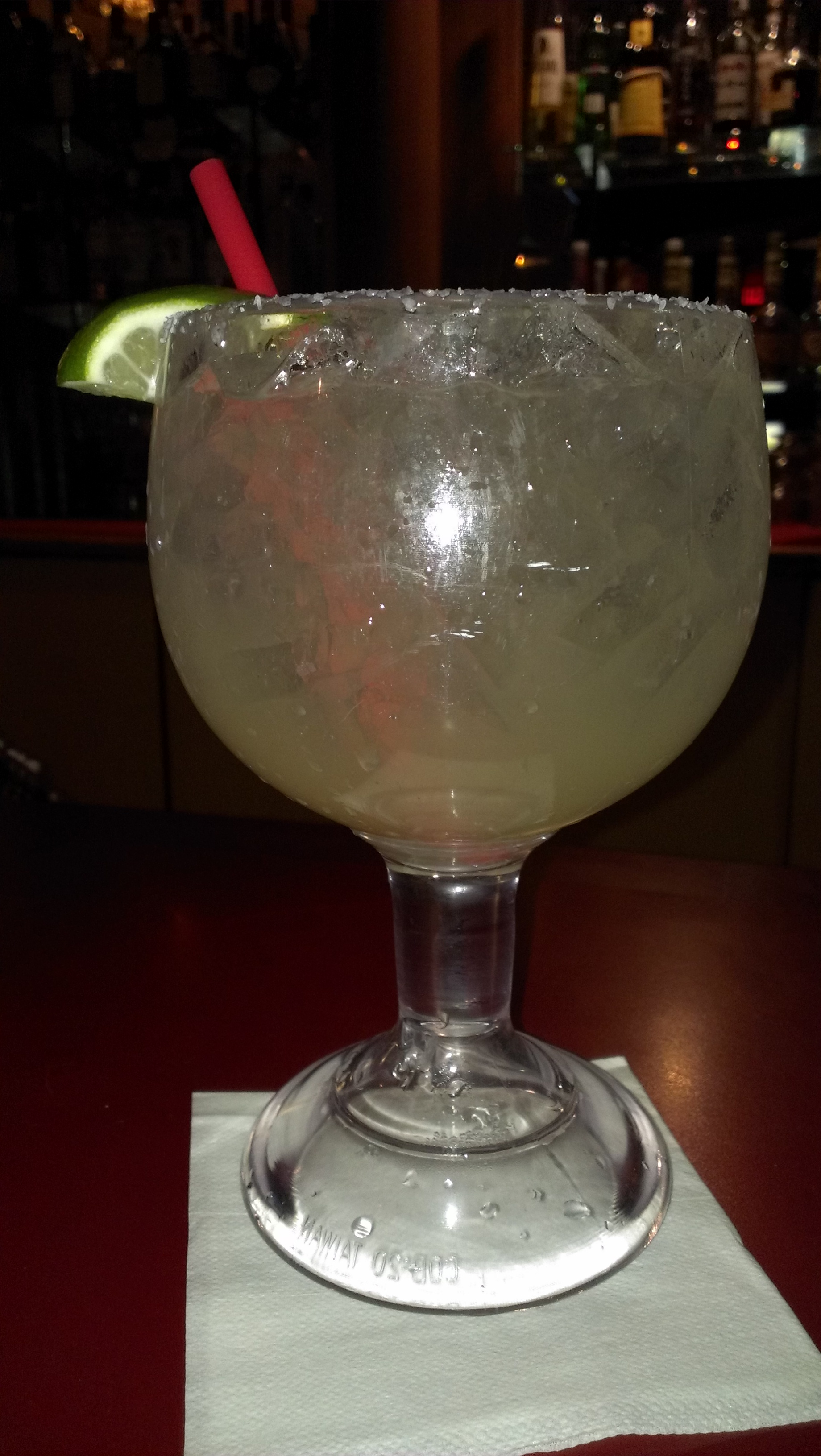
Ole! Today’s food holiday is one we were eager to wrap our lips around. It’s National Margarita Day! Both Tara and I love a good margarita. A few caveats, though: it’s got to be served on the rocks – never blended. And under no circumstances should you use a bottled mix from a grocery shelf, even if it’s got the word Cuervo on it. The best margaritas are made fresh, with tequila, lime juice, triple sec, and a salted rim.

We are very picky about our margaritas.

Almost as many people claim to have invented the margarita as insist they were at Woodstock, so while its true origin is up for debate, we do know that the drink was first served in the 1940s. Many believe a bartender in Ensenada, Mexico named Don Carlos Orozco invented the drink in 1941. One day Margarita Henkel, the daughter of a German ambassador, stopped by for a drink. Orozco had been experimenting with some new creations and offered her the first taste of a cocktail he’d made with equal parts tequila, Damiana liqueur, and lime. Other stories give credit to Carlos Herrera, a Mexican restauranteur, who allegedly created the cocktail for dancer Marjorie King, who was allergic to all hard alcohol except tequila; to Santos Cruz, a bartender in Galveston, Texas who named the drink for singer Peggy (Margaret) Lee (“Rockin’ Around The Christmas Tree”); and to Dallas socialite Margarita Sames, who made the drink for a house full of guests that included Tommy Hilton (hotel chain baron and unfortunate relative of Paris), who was so impressed he added the drink to the hotel’s bar menu.

MargaritaOthers insist the margarita is simply another version of a popular American drink at that time named the Daisy, and tequila was substituted for brandy because Prohibition drove people across the Mexican border for their alcohol (and pinata) fix. Indeed, “margarita” is the Spanish word for “daisy” (aha!) so this story is probably the most likely.

Really, who cares who came up with it first? The important thing is, somebody did. And that’s good enough for me. Margaritas were the first mixed drink I really got into, and are still the best part of any Mexican dining experience. I always judge a Mexican restaurant based on the attention they give to their margarita; invariably, the places with the best food always serve the best margaritas, too. I’ve had a lot of really good margaritas over the years; oddly enough, one of the best is available at Chili’s, and made with Presidente brandy in addition to the other usual ingredients. I was able to recreate this recipe at home, and now churn out a really good margarita whenever the occasion calls for it.

This being Friday, however, Tara and I weren’t sitting around the house, so we met up at a Mexican restaurant called Catedral Tapatia for margaritas. And dinner, of course! They were big…and tasted great, the perfect celebration to mark the end of another work week!

Categories: Alcohol | Tags: , , , , , , , , | 6 Comments

49/365: National Drink Wine Day*

I don’t mean to whine over today’s food holiday. Well, actually, I do. Today is National Drink Wine Day! It’s also National Crab Stuffed Flounder Day, but holy crap, that sounds like a lot of work. We were much more eager to just sit back and sip some vino, so that’s precisely what we did!

Wine is an alcoholic beverage made from fermented grapes, and has been a popular drink throughout the ages, dating back as far as 6000 B.C. A few years ago, archaeologists found wine residue inside 8,000 year old ceramic storage jars in Georgia (the country, not the state), making Russians the world’s first winos! It was very popular in ancient Greece and Rome; both countries honored gods of wine (Dionysus for the Greeks, Bacchus for the Romans). Catholics associate it with religion, as well; according to the Bible, Jesus famously turned water into wine, which you’ve gotta admit is a pretty nifty parlor trick, ranking right up there with the parting of the Red Sea. Take that, Moses! Ancient bottles from Christ’s private cellar are listed at upwards of $1000 on eBay. Eventually wine made its way to Asia and spread throughout Europe. Thomas Jefferson became a big wine aficionado after serving as ambassador to France, and attempted to plant vineyards in his home state of Virginia. The French grapes were just as snobby as their home country, and refused to grow in the Virginian soil. Jimmy Carter was more successful; to this day his family produces and bottles their own wine in Georgia (the state, not the country), perhaps in an effort to distance themselves from the whole Billy Beer fiasco.

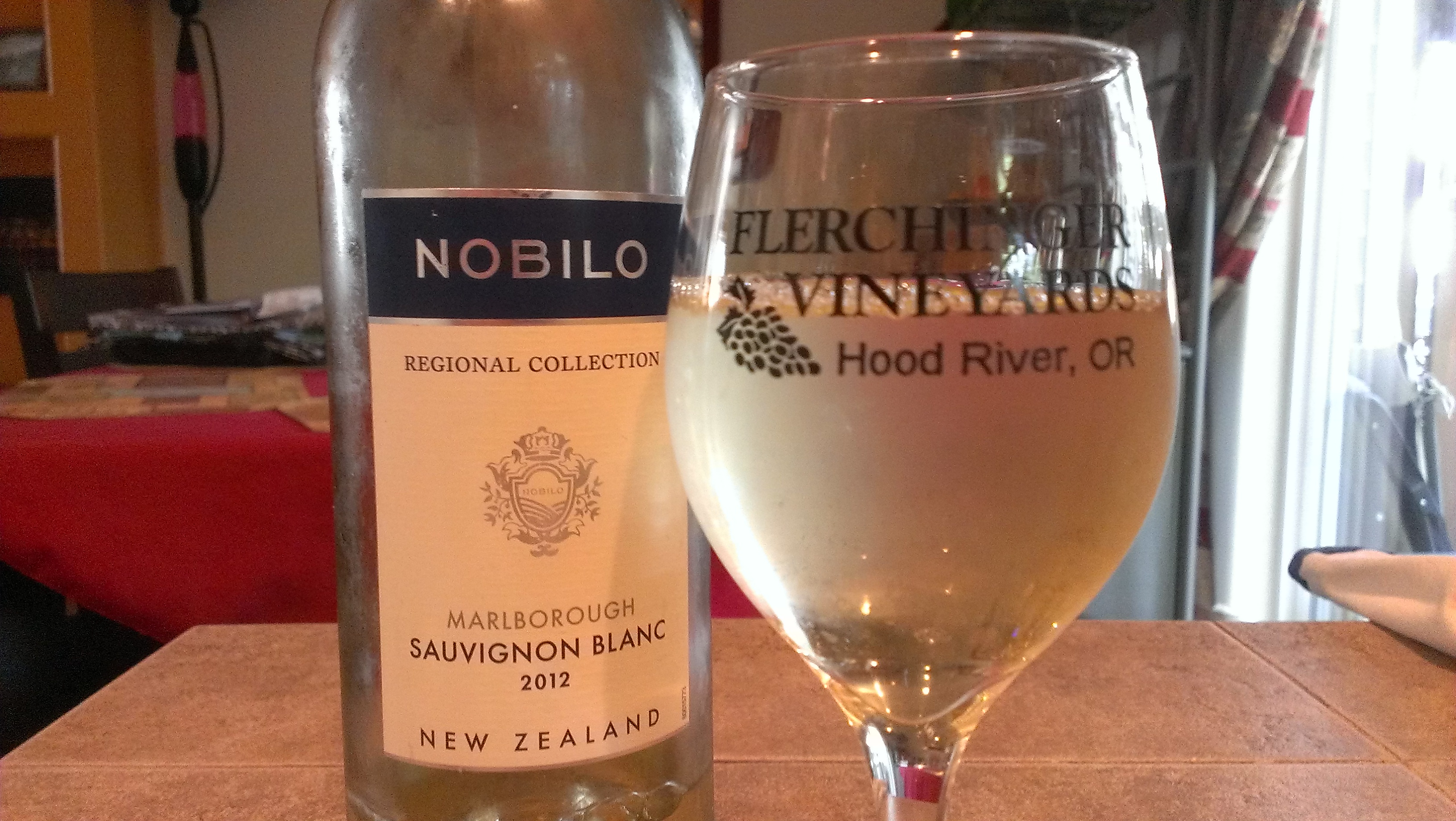
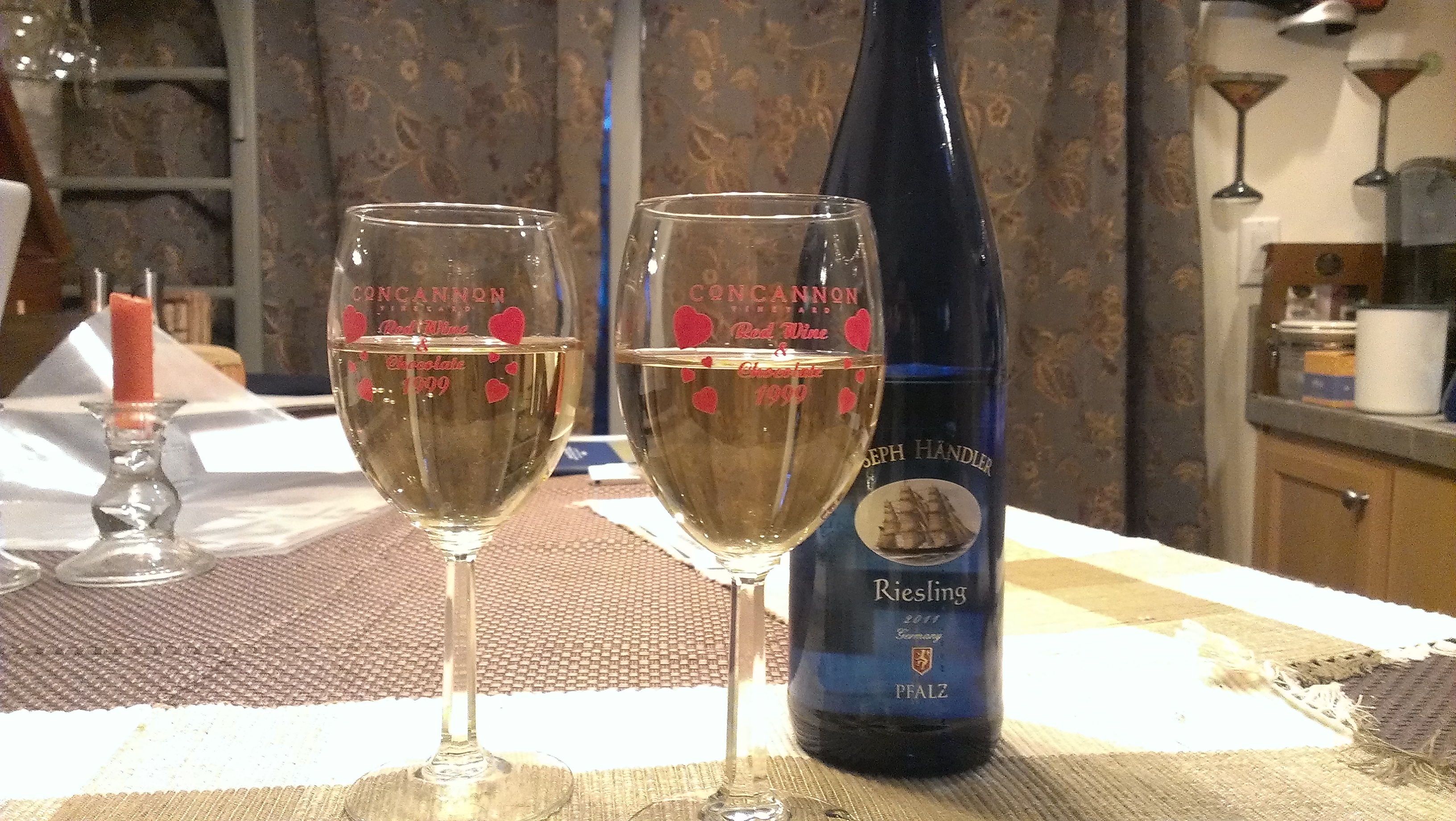
My parents have loved wine since the 1970s, but it took me a lot longer to develop an appreciation for it. It’s really only happened within the past seven years or so. Nowadays, I enjoy it on occasion. I’m partial to white wines, especially sauvignon blancs from the Marlboro region of New Zealand, though sometimes red, red wine makes me feel so fine and keeps me rocking all of the time, too. This evening Tara and I enjoyed a German Riesling from Trader Joe’s.

Here’s a little music to get you in the mood.

Cheers!

Drink Wine Day

Categories: Alcohol | Tags: , , , , , , | 3 Comments

31/365: National Brandy Alexander Day

All we are saying is give today’s food holiday a chance: we celebrate the Brandy Alexander, which happened to be John Lennon’s favorite drink! (He referred to it as his “milkshake”).

Also, today marks the successful conclusion of our first month of food challenges! We still have a long way to go, and while the task seems daunting, taking it one day at a time is the key to success. While also planning ahead, of course. For January, our favorites were curried chicken and New England clam chowder. The ones we liked least? The hot toddy and the Irish coffee. I think we’ll do a brief recap like this every month.

The Brandy Alexander was supposedly created in honor of Princess Mary’s wedding to Viscount Lascelles in London in 1922, but there is some dispute over this because Lascelles’ name is Henry, not Alexander. SOME dispute? How exactly do you get Alexander from Henry?? (And for that matter, how do you get Dick from Richard? I’ve always wondered). Others say it was named after Russian czar Alexander II. Regardless of who it was really named after (I vote for Alexander Graham Bell, even though he’s not in the running), it replaced another cocktail called the Alexander, which was made with gin. It became quite popular after numerous pop culture references, and is featured prominently movies (Days of Wine and Roses, Too Much Too Soon), television shows (Cheers, Mad Men, The Rockford Files, The Big Bang Theory), books (Brideshead Revisited, Invisible Monsters), and music (Feist released a song called “Brandy Alexander”). As ubiquitous as this drink is, I’m surprised I’d never had one before!

It’s really quite simple to make.

1.5 oz. brandy
1 oz. creme de cacao
1 oz. half-and-half (or cream)
Dash of nutmeg

Combine the first three ingredients in a shaker half filled with ice, strain into a glass, and sprinkle with nutmeg. It’s a very dessert-like drink – and really good!

I don’t know that I’d call it “really good”, but definitely better than the hot toddy, buttered rum, and Irish coffee.  Funny that we started this challenge with a cocktail and ended our first month with one as well.  Too bad all the cocktail holidays can’t be as good as my beloved Bloody Mary!

Tara’s exact words were “still quite stout.” Which sums up the Brandy Alexander well!

Now, on to February…

Brandy Alexander

Categories: Alcohol, Beverages | Tags: , , , | 2 Comments

25/365: National Irish Coffee Day

January 25th is National Irish Coffee Day. I was initially thinking we could knock this one out early – coffee is a breakfast drink, after all – but the whiskey (a key ingredient in Irish coffee) made this more of an after-work splurge. Which was fine, as we were going out anyway. On Friday evenings, we like to be in close proximity to a bar. Some bar. Any bar. Getting an Irish coffee would not be a problem.

Irish coffee was invented in 1942 by Joe Sheridan, a bartender at Foynes Air Base in Ireland. A Pan Am flight landed there one miserably cold winter evening, after a long eighteen-hour journey across the Atlantic Ocean. The passengers disembarked and headed for the bar. In an effort to warm them up, Sheridan brewed hot coffee, added a splash of whiskey, and topped it with a dollop of  cream. One of the passengers asked, “Is this Brazilian coffee?” Sheridan laughed and replied, “No, it’s Irish coffee.” A decade later Stanton Delaplane, a travel writer for the San Francisco Chronicle, brought Irish coffee to the U.S. after tasting it at the same airport during a trip abroad. Sadly, customs agents confiscated the pair of leprechauns he tried to sneak through. Delaplane nearly drank himself into a coma trying to figure out how to get the cream to float on top of the coffee over the next few months; finally a dairy farmer came to the rescue by suggesting the cream would be more likely to float if it were aged 48 hours first. Voila! Delaplane then introduced the drink to the Buena Vista Cafe in San Francisco, and popularized it in the U.S. by mentioning it frequently in his column.

I can see how this drink warmed up an airplane full of people in 1942!

I can see how this drink warmed up an airplane full of people in 1942!

When asked for the original recipe, Sheridan replied, “Cream as rich as an Irish brogue; coffee as strong as a friendly hand; sugar sweet as the tongue of a rogue; and whiskey smooth as the wit of the land.”

Oh, those wacky Irish. Faith and begorrah, you’ve gotta love ’em. Clearly, Sheridan missed his calling as a poet.

Tara and I met up at Cactus Ya Ya in Vancouver after work for cocktails and dinner. Interesting fusion of Mexican and Asian food here. They’ve been around for at least 15 years, so it must be working for ’em! The important thing was, they had Irish coffee. Remember those hot toddies we weren’t so fond of a couple of weeks ago? Let’s just say the Irish coffee was STRONG. And hot. We could only manage a few sips each. But hey…mission accomplished!

Categories: Alcohol, Beverages | Tags: , , , , | 4 Comments

Create a free website or blog at WordPress.com.