Monthly Archives: April 2013

120/365: National Raisin Day

You might just shrivel up and die if you don’t get to experience the sweet succulence of today’s food holiday. April 30 is National Raisin Day!

I talked about the history of raisins back when we were eating them dipped in chocolate, so I won’t rehash all of that. It does explain why some of these posts are shrinking in size, however (hey, just like dried grapes!): we’re starting to get into variations of the same things we’ve already eaten. This is where it’s time to get creative. So, here goes:

Man, I got nothin’.

OK, I kid. I did learn that National Raisin Day is one of the older American food holidays that we celebrate. It dates back to 1909, when Fresno resident James Horseburgh Jr., in an effort to save the fledgling San Joaquin Valley raisin industry and raise awareness of the dried fruit, held a giant festival celebrating all things raisin. Local hotels and the railroad industry pitched in, and residents were served raisins with every meal. The festival was a success, and the industry took off in central California. To this day, the San Joaquin Valley is the world’s largest raisin producer.

There are so many different ways to enjoy raisins, we weren’t sure what to do to celebrate today. But one thing was certain: we are getting sick of desserts. (This does not bode well for June, where at least 10 of the first 15 food holidays are dessert-centric). So Tara took some in to work to snack on, and I added a generous handful to a bowl of oatmeal this morning.
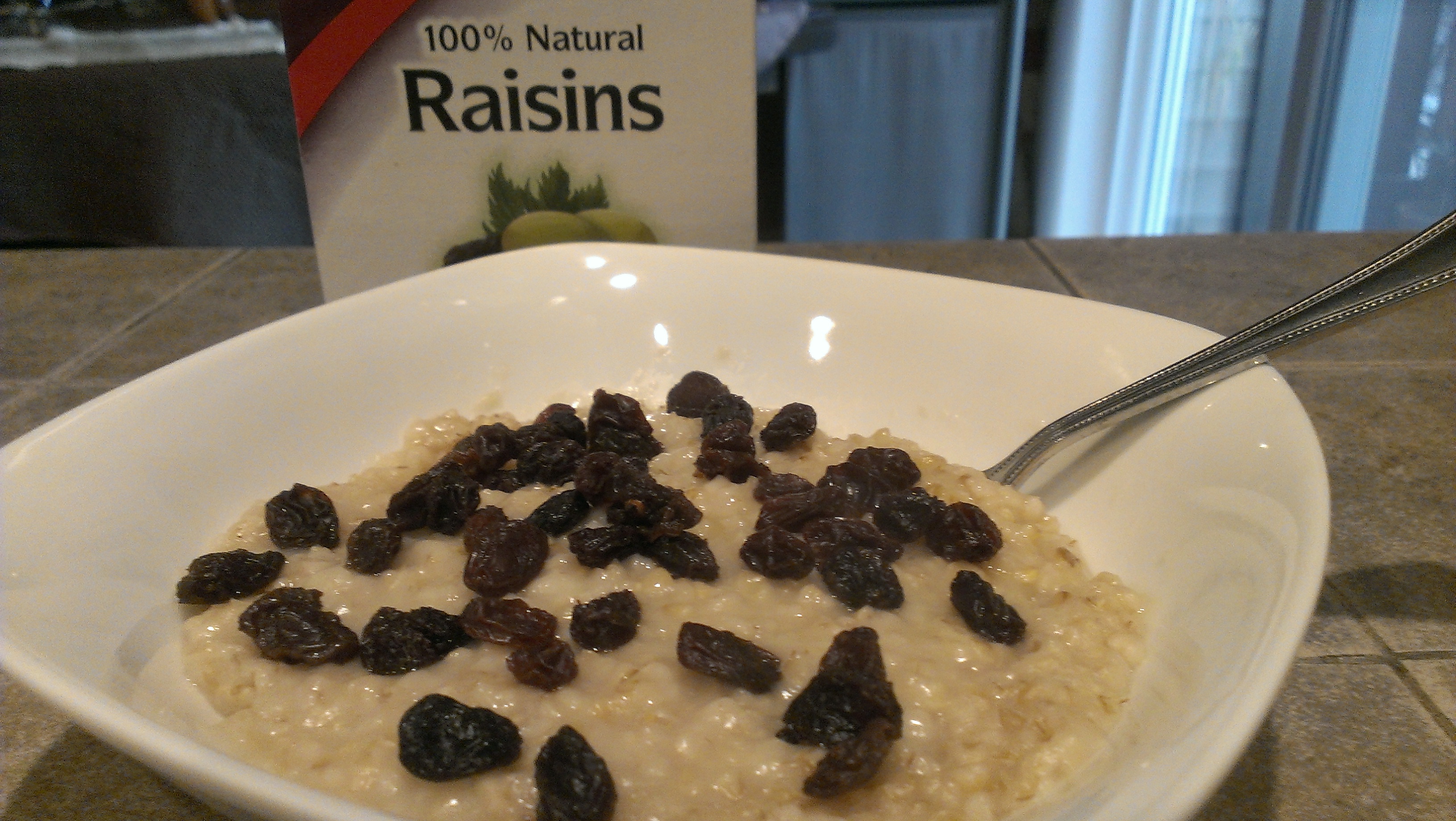
Raisins

Categories: Uncategorized | Tags: , , , , , | 4 Comments

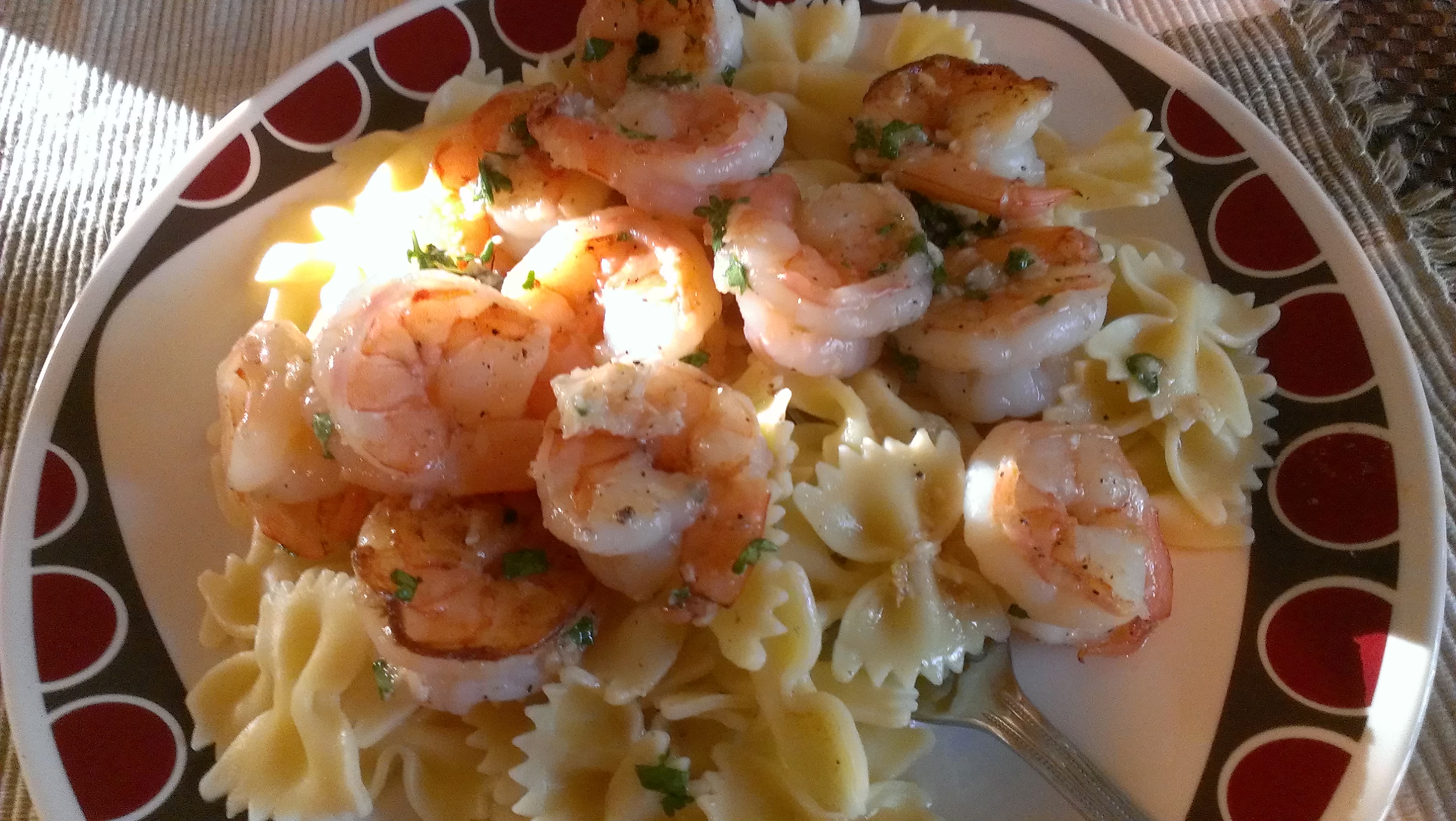
119/365: National Shrimp Scampi Day

There’s nothing tiny about the flavor in today’s celebrated dish. April 29 is National Shrimp Scampi Day!

“Scampi” is the Italian word for shrimp, and refers to both a type of shellfish and a preparation. Technically speaking, shrimp scampi translates to “shrimp shrimp” which is pretty redundant, unless you’re Little Caesar’s (“pizza pizza!”). It is essentially shrimp cooked in garlic, butter, lemon juice, and white wine, and typically served over pasta. Shrimp scampi was basically unheard of prior to World War II; during the 1950s and ’60s, many Italian dishes caught on and went mainstream – including scampi, cacciatore, and Sophia Loren.

Shrimp scampi is pretty easy to make, and delicious! I used the below recipe, which I found online and modified slightly.

Ingredients
1 1/2 pound jumbo shrimp, shelled and deveined
Kosher salt and freshly ground black pepper
2 tablespoons unsalted butter
2 teaspoons minced garlic
1/4 cup dry white wine
1 tablespoon freshly squeezed lemon juice
2 teaspoons finely chopped parsley

Directions
Put the shrimp on a large pie pan or plate and pat them completely dry with a paper towel. Arrange the shrimp so they lay flat and are evenly spaced.

Heat a large skillet over medium heat. Season the shrimp with salt and pepper. Add the butter to the skillet. When the foaming subsides, raise the heat to high, and invert the plate of shrimp over the pan so the shrimp fall into the pan all at once. Cook the shrimp, without moving them, for 1 minute. Add the garlic and cook for 1 minute. Turn the shrimp over and cook for 2 minutes more. Transfer the shrimp to a bowl.

Return the skillet to the heat and pour in the wine and lemon juice. Boil the liquid until slightly thickened, about 30 seconds. Scrape up any browned bits from the bottom of the pan with a wooden spoon. Stir the  parsley into the sauce. Pour the sauce over the shrimp, season with salt and pepper to taste and toss to combine.

Serve over the pasta of your choice.

Shrimp Scampi

Categories: Seafood | Tags: , , , | 2 Comments

118/365: National Blueberry Pie Day

Few things are as American as blueberry pie. Which makes April 28th a pretty patriotic day: it’s National Blueberry Pie Day!

Blueberries are native to North America, and weren’t even introduced to Europe until the 1930s. They grow like crazy in New England, and appealed to early settlers, who found many uses for the fruit – but strangely, eating them plain was rare. Until the 19th century, consuming fresh fruit was thought to be unhealthy, so the blueberries were typically baked into pies. I’m guessing the colonists’ food pyramid looked a lot different than ours! New England housewives almost always had a supply of both sweet and savory pies on hand, ready to serve to family and guests. Pies were proof that the family farm was thriving.

Most of the time, celebrating these food holidays is fun. But not so much when you’ve got a delicious leftover birthday cake, and the next day you’ve got to eat blueberry pie. We wanted to buy a slice to share and call it good, but blueberry pie is hard to find. Maybe if this were Maine we’d have better luck, since blueberry pie is that state’s official dessert. But blueberries would have to be in season for us to have any shot of finding one locally, and we’re still a couple of months away from that happening. We came up with a pretty good solution, though: bake a mini pie instead! I found some small aluminum pie tins in the grocery store, and used this recipe. The result? Pretty amazing, actually! The blueberries were fresh, at least (but flown in from California). I was left wondering why you don’t see blueberry pie on more menus around these parts. I probably could have gobbled the whole thing up in two minutes, but we did have that chocolate cake waiting. @#$! timing.

Blueberry Pie

Categories: Desserts | Tags: , , , , , | 4 Comments

117/365: National Prime Rib Day

Steak lovers will have no beef with today’s food holiday: April 27 is National Prime Rib Day!

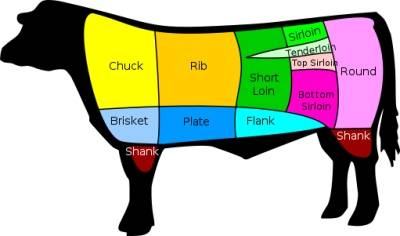
Beef. It's what's for dinner.

Beef. It’s what’s for dinner.

Prime rib, originally known as a standing rib roast, is a cut of beef from the primal rib, one of the eight primal cuts of beef. It is called a “standing” roast because it is usually roasted in a standing position, with the ribs stacked vertically. Removing the bones from this cut and slicing it into steaks yields rib eyes. It’s unclear exactly when and where prime rib originated, but most historians believe roasts became popular during the Industrial Revolution, when hungry men desired a hearty meal after assembling widgets and other doo-dads all day long. Some cuts of meat are more popular than others, and prime rib has always been particularly sought after by beef connoisseurs. A nice slice of prime rib will contain the “eye” of the rib and the outer, fat-marbled muscle. It is typically rubbed with salt and other seasonings and slow roasted over dry heat for several hours. Prime rib is a popular “Sunday roast” in the U.K., where it is traditionally served with Yorkshire pudding. Here in the good ol’ U.S. of A., mashed or baked potatoes are popular accompaniments.

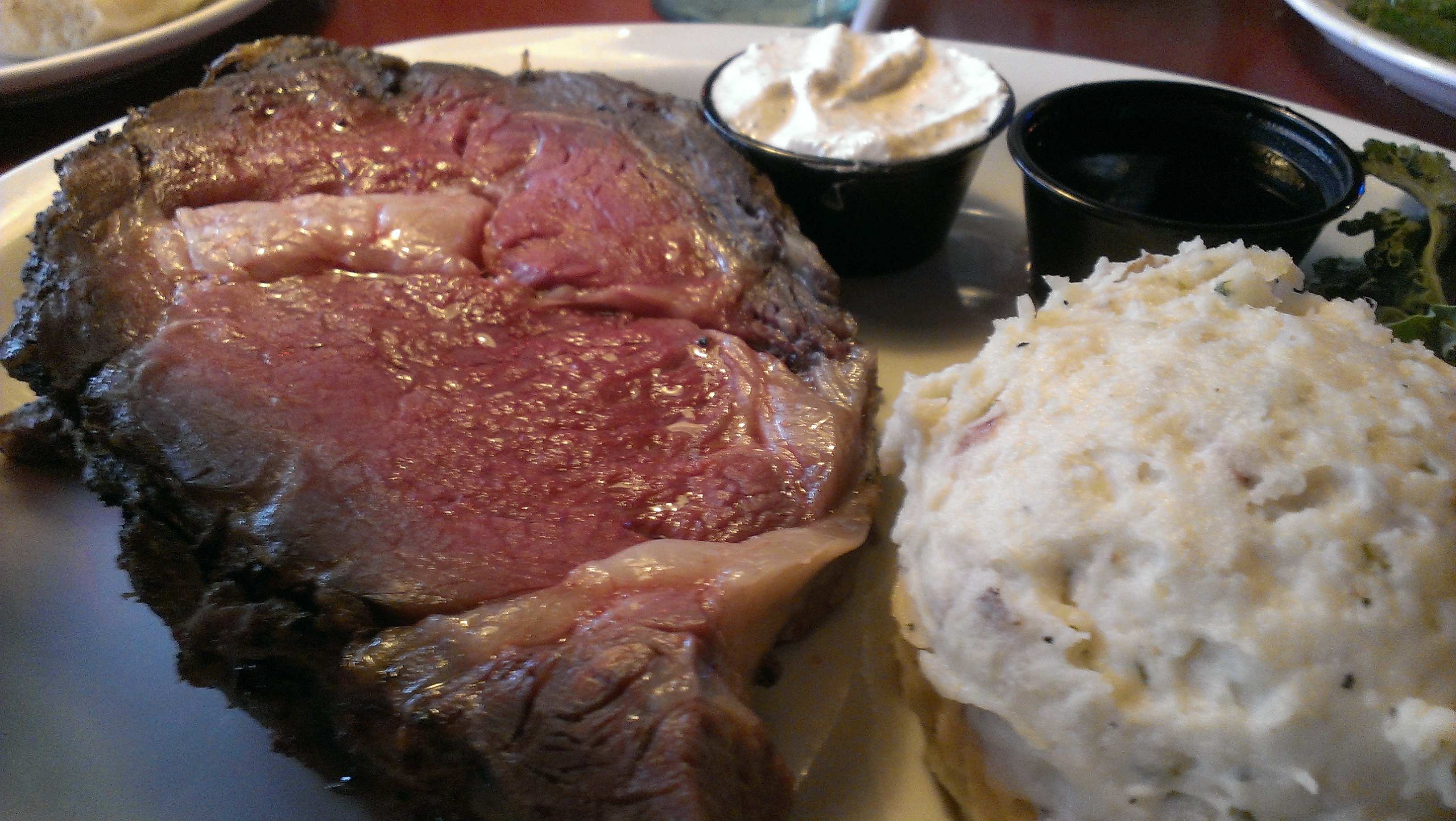
April 27 also happens to be my birthday. The fact that it’s National Prime Rib Day is a happy coincidence, as prime rib is my favorite cut of steak, and I have a tradition of going to the Original Roadhouse Grill for prime rib on my birthday anyway. Or I used to, at least. It had been a few years, but today marked the perfect opportunity to reinstate that tradition. And, let me just say: the prime rib was amazing. Cooked a perfect medium rare, with an herb/salt crust, horseradish sauce, and au jus. It was to die for – the perfect birthday meal.

Prime Rib

Categories: Beef | Tags: , , , , , , , | 5 Comments

116/365: National Pretzel Day

You’ll be in the mood to twist and shout today if you’re a pretzel lover. April 26 is National Pretzel Day!

It is believed that the pretzel was created by a bored monk (is there any other kind?) in the year 610, at a monastery somewhere in southern France or northern Italy. Scraps of dough were formed into strips and folded, to represent a child’s arms in prayer, with the three holes representing the Holy Trinity. The warm dough was offered as a bribe to children who memorized Bible verses and prayers. They called the doughy creation pretiola, Latin for “little reward.” As it spread through Italy the name was changed to brachiola, meaning “little arms.” Germany, probably more closely associated with pretzels than any other country, offers up an alternate version of their backstory, claiming they were invented by desperate bakers being held hostage by local Dignatories. Whatever their true source, pretzels (called bretzels there) have been an integral part of German culture for centuries. German immigrants known as Pennsylvania Dutch introduced the pretzel to America in the 19th century, and soon handmade pretzel bakeries flourished throughout the Pennsylvania countryside and beyond. In 1850, the first hard pretzel bakery opened in Lilitz, Pennsylvania; hard pretzels became a popular snack food that appears in various shapes and sizes – sticks, rods, braids, and loops. In the 20th century, street vendors in cities such as Chicago, New York, and Philadelphia popularized soft pretzels. The pretzel remains an iconic image of Philadelphia today, with residents consuming 12 times the national average each year.

I love pretzels, particularly freshly baked soft pretzels warm from the oven, sprinkled with salt and dipped in yellow mustard. I will rarely emerge from a shopping mall without eating a pretzel. Sometimes, I go to the mall just for a pretzel. Today was one of those days. Auntie Anne’s never disappoints.

Pretzel

Categories: Snacks | Tags: , , , , , | 2 Comments

115/365: National Zucchini Bread Day

Squash any thoughts you might have about giving away a garden’s worth of zucchini today. Turn it into a sweet, savory dessert instead: April 25 is National Zucchini Bread Day!

Similar to banana bread, zucchini bread is considered a “quick bread.” These bread types don’t use yeast as a leavening agent and require no fermentation, so the dough can be baked immediately. Quick breads originated in the United States in the 18th century with the discovery of pearlash, a leavening agent that produces carbon dioxide gas in dough. They became a favorite during the Civil War when food was scarce and a loaf of bread could be whipped up quickly to feed the soldiers, hence the name. Zucchini itself is the result of a squash plant, native to America, that was brought back to Italy and mutated. Which is not to say it grew teeth and started eating people ala Audrey from Little Shop of Horrors, though that would make for a rather interesting history. Zucchini grow rapidly and can become quite large, exceeding 3′ in length. They are usually picked when they’re smaller, as the flavor is better and gardeners won’t break their backs hauling them into the kitchen that way. Because they are so easy to grow, they have a reputation for overabundance. Stories persist of people waking up to bags full of zucchini on their front porches, left there in the dead of night by gardeners seeking to rid themselves of excess squash. That’s never happened to me, though I did find a steaming bag of something else on the front porch once. Zucchini bread is the result of home cooks trying to come up with something, anything, to do with all that damn zucchini. The first time I heard of it I though, eww, even though I love zucchini. It didn’t sound very appealing in a bread – but it’s actually very good that way.

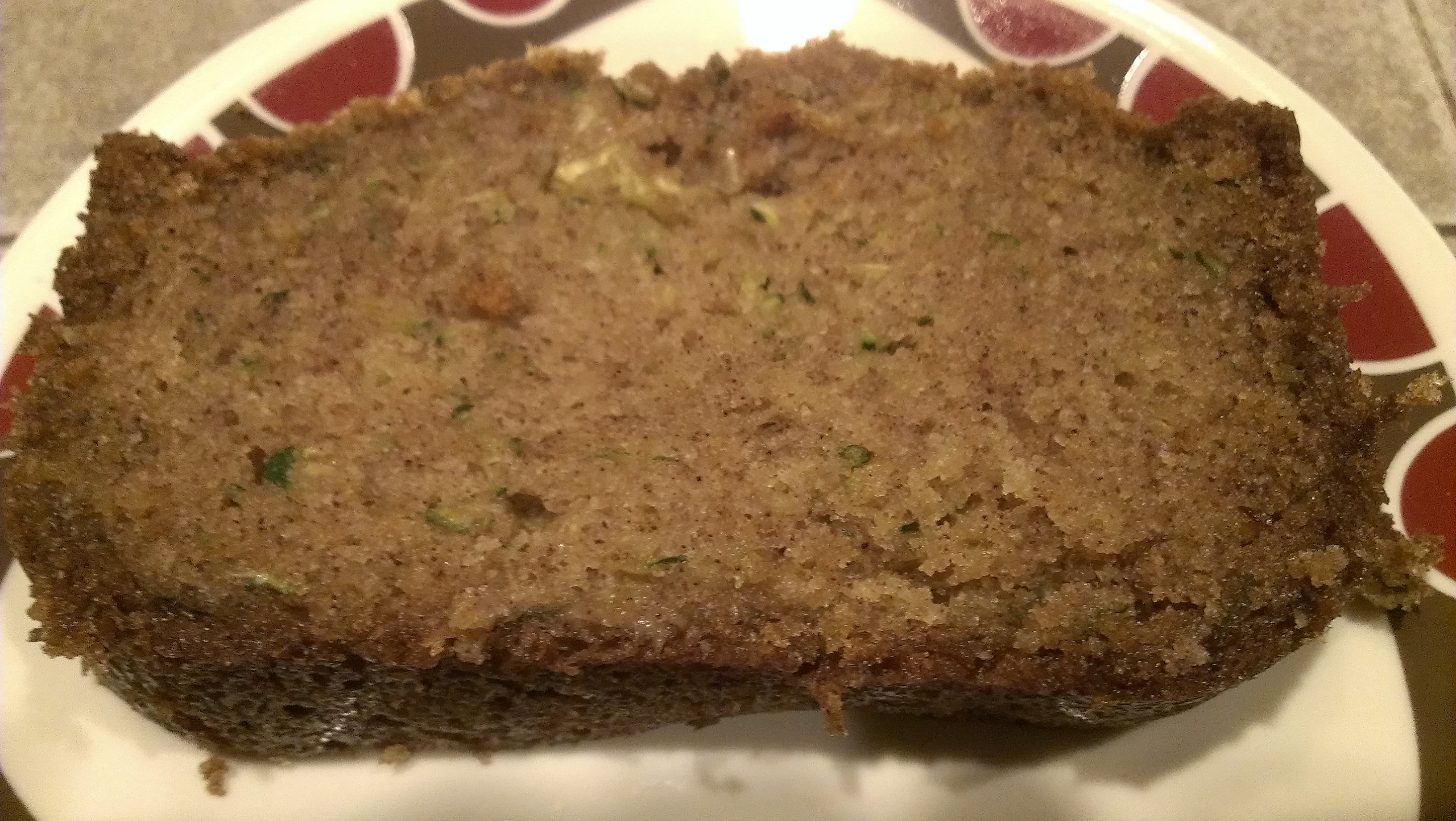
For today’s challenge, Tara baked up a loaf of zucchini bread ourselves. It turned out delicious!

Zucchini Bread

Categories: Vegetables | Tags: , , , , | 3 Comments

114/365: National Pigs In A Blanket Day

Grab your napkins and sPORKS and go hog wild over today’s food holiday. April 24 is National Pigs In A Blanket Day!

Even though the first recipe for pigs in a blanket as we know it was published in Betty Crocker’s Cooking For Kids in 1957, different versions of this meal existed long before then. As far back as the 1600s, field laborers in England were putting meat inside of dough for a quick, nourishing, and portable meal. Pigs in a blanket is basically pork wrapped inside something else, though the type of pork (and the blanket itself) has varied greatly over the years. A popular version in the 1800s consisted of oysters that were rolled in a slice of bacon, pinned together with a toothpick, grilled, broiled or fried, and served hot on toast. But in this case, the pig is the blanket, he’s not IN the blanket. That’s just not right! Nowadays, the dish most often refers to hot dogs, Vienna sausages, or breakfast sausages wrapped in crescent dough or a pancake and baked, unless you’re in Europe, where cabbage rolls are often called pigs in a blanket. Technically speaking, that makes perfect sense. They became a popular party food in the 1960s, and for a while in the 70s Pillsbury sold a canned version that was ready to bake. Apparently, they thought the American consumer was wasting too much time and effort actually rolling a hot dog inside dough. It IS an awfully labor-intensive task – amazing that the canned version never really caught on. /sarcasm.

Pigs in a blanket are also called devils on horseback, kilted sausages, and wiener winks.

Yes, really.

We decided to stick with the tried-and-true and make pigs in a blanket with crescent dough and hot dogs. We even added a slice of American cheese to some of them. For such a simple and lowbrow meal, I have to say, they were pretty damn tasty!

Pigs In A Blanket

Categories: Pastry, Pork | Tags: , , , , , | 2 Comments

113/365: National Cherry Cheesecake Day*

Today we celebrate a dessert that has been around, in one form or another, for thousands of years. I’d call that a pretty gouda run! April 23 is National Cherry Cheesecake Day.

It’s also National Picnic Day, and while the weather is ideal for such an outing, the fact that it’s a workday made the idea of trying to plan a picnic lunch in the city tricky at best. Besides, a picnic doesn’t honor any particular food, so we chose to celebrate the cheesecake instead.

Cheesecake originated in ancient Greece, and – because it was considered a good source of energy – was served to athletes in the very first Olympic games, in 776 B.C. It won rave reviews there (but the East German judges gave it a 4.6). Early recipes were pretty crude: pound some cheese, mix it in a pan with honey and spring wheat flour, heat, cool, and dig in. When Rome conquered Greece they brought the recipe back home and modified it by adding crushed cheese and eggs, and cooking it under a hot brick. As the Roman empire expanded, cheesecake recipes spread throughout Europe, with regional variations popping up in each country. Centuries later, European immigrants introduced cheesecake to America. Our unique spin on the popular dessert was the addition of cream cheese, discovered by accident when a New York dairy farmer was attempting to recreate Neufchatel, a soft French cheese. Meanwhile, Italians make theirs with ricotta, Greeks use mizithra or feta, Germans use cottage cheese, and the Japanese incorporate egg whites and cornstarch into theirs, and sell it in vending machines with a whole bunch of other odd things. In America, it can be served plain (i.e. decadent New York-style cheesecake, made with heavy cream) or with toppings such as fruit, nuts, or chocolate.

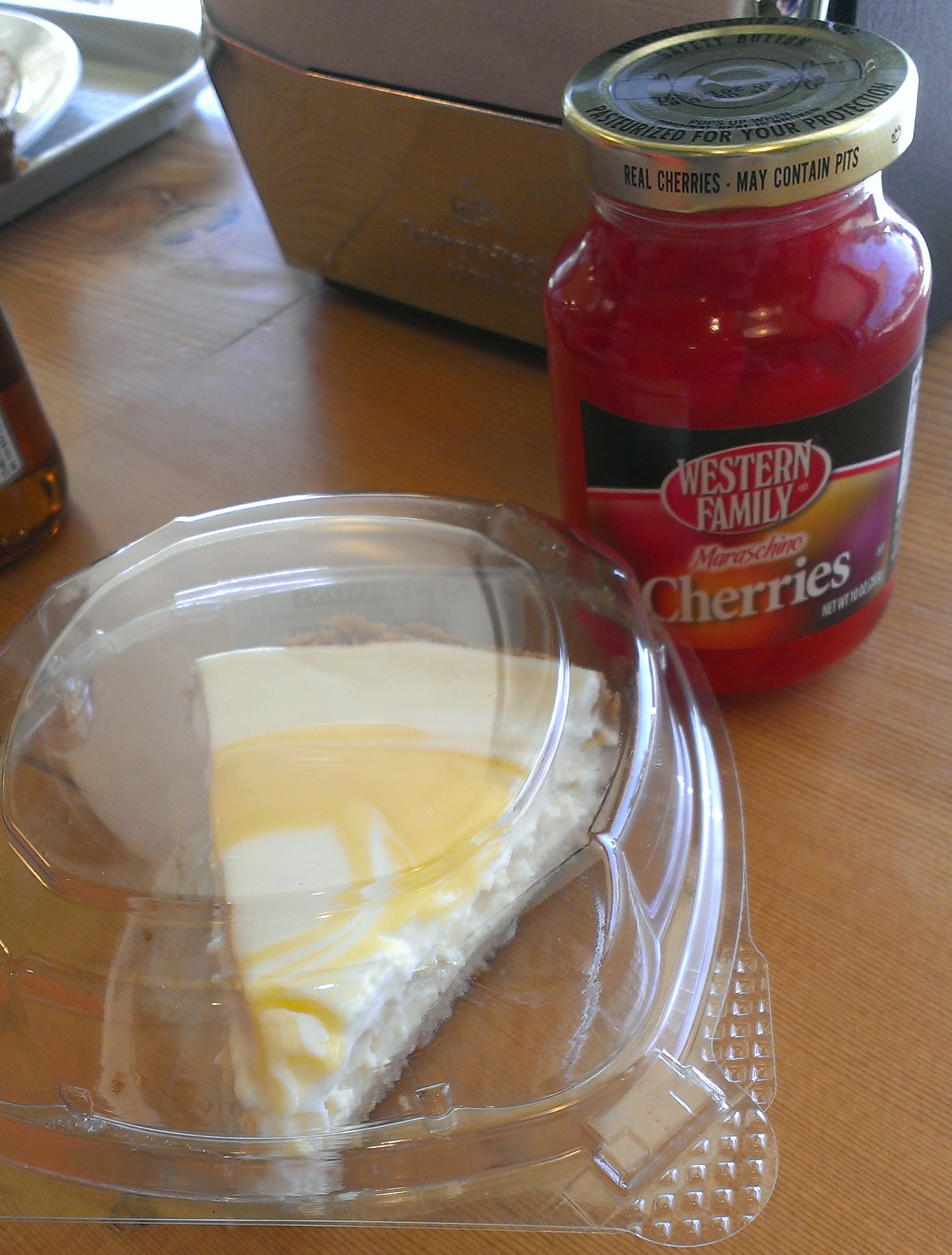
The essential ingredients in cherry cheesecake.

The essential ingredients in cherry cheesecake.

My family has an excellent recipe for cherry cheesecake that has been passed down through the generations. It’s creamy and delicious, and my mom usually makes it once a year – on Christmas day. Alas, we are more than eight months away from seeing the fat guy in the red suit trying to squeeze his ass down the chimney, so we had to go the easy route instead. I had seen individual slices of cheesecake for sale in New Season’s Market, so Tara and I stopped by there for lunch today. Sadly, they didn’t have cherry cheesecake. But they did have lemon cheesecake, and they’re a grocery store, so they also sold jars of maraschino cherries. Thus, we were able to cobble together a pretty decent cherry cheesecake which we shared bites of. It was a lot easier than making a cheesecake from scratch or having to buy a whole one, and was – as cheesecakes usually are – delicious!

Cherry Cheesecake

Categories: Desserts | Tags: , , , , | 8 Comments

112/365: National Jelly Bean Day

April 22nd won’t amount to a hill of beans unless you’ve got a sweet tooth and are ready to celebrate today’s food holiday. We honor a tasty treat that comes in dozens of creative flavors and was adored by a former President. It’s National Jelly Bean Day!

Jelly beans were inspired by a Middle Eastern treat called the Turkish Delight, consisting of soft jelly covered in confectioner’s sugar. Exactly how and when they were reinvented is a mystery, but in America they can be traced back to 1861, when a Boston candy maker by the name of William Schrafft urged his customers to send jelly beans to soldiers during the Civil War. Nice idea, but bullets work better. In 1905 an ad in a Chicago newspaper advertised jelly beans on sale for 9 cents a pound.By the 1910s the slang term “Jelly Bean” was used to describe a young man who would dress stylishly in order to attract women, but had no additional redeeming qualities other than his clothes. Men like this were also called “dandies” or “fops” and were, essentially, famous for being famous. Like Paris Hilton. In the 1930s jelly beans became synonymous with Easter because they were shaped like rabbit turds eggs.

In 1960 Herman Goelitz Rowland, a fourth-generation candy maker in Oakland, was looking to carry on the family business but times were tight; the candy corn they were known for just wasn’t keeping them afloat. Probably because candy corn pretty much only sells during Halloween. He decided to take a chance and expand the product line to include Gummi Bears and jelly beans. Not just any jelly beans, though – gourmet jelly beans using the most expensive, finest ingredients, and flavors cooked into the center (previously only the shells were flavored). These jelly beans caught the attention of California governor Ronald Reagan, who became a big fan and was known for always keeping a jar of jelly beans in the White House. Reagan famously wrote, “we can hardly start a meeting or make a decision without passing around the jar of jelly beans.”

In 1976, David Klein had an idea for jelly beans made with natural flavorings. He contacted Rowland, whose company was now called Jelly Belly, and the two collaborated on a new type of intensely flavored jelly bean made with natural ingredients. They were a hit right from the start, beginning with 8 flavors (Very Cherry, Lemon, Cream Soda, Tangerine, Green Apple, Root Beer, Grape and Licorice) and eventually expanding to more than 50. Some of the more exotic flavors include Chili Mango, Cantaloupe, Cappuccino, Margarita, and my favorite, Buttered Popcorn. Today, Jelly Belly is the #1 seller of gourmet jelly beans.

For this challenge, I was more than happy to pick up some Jelly Belly Buttered Popcorn jelly beans. I love them! Tara is not quite as fond of jelly beans as I am, but she tried a variety of Jelly Belly flavors herself – watermelon, coconut, and ice cream – and declared them “okay” and said they “tasted fine.” Hardly a rousing endorsement, but at least she didn’t spit them out.

Jelly Belly's Buttered Popcorn flavor.

Jelly Belly’s Buttered Popcorn flavor.

Categories: Candy | Tags: , , , , , | 7 Comments

111/365: National Chocolate Covered Cashew Truffle Day*

April 21 is one of those oddly specific food holidays that give us a headache. Cashews? Cool. Chocolate truffles? Love ’em. But do you have any idea how difficult it is to find a chocolate covered cashew truffle? Has anybody in history ever actually made one?! They simply do not exist. Or if they do, they are impossible to find. But we weren’t going to let a little thing like that stop us from successfully completing this challenge!

Cashews are the seeds of a tropical evergreen plant native to Brazil. Related to the mango, pistachio, and poison ivy (yikes!), cashews are kidney-shaped seeds that grow on the outside of their fruit, the cashew apple. Cashew apples are sweet, flavorful, and a highly prized delicacy, but are not marketable because their flesh is extremely perishable, and they begin to ferment the moment they are picked, barely lasting 24 hours. In their immediate growing locale they are often found canned, and are used to make jams and liqueurs. Most of us will never get to try a cashew apple in our lifetimes. Sniff. Cashews, on the other hand, are readily available. They are never sold in the shell, however, because they contain a black substance called cardol, a toxic skin irritant that can only be properly destroyed through roasting. Even then, it must be done outdoors, as the fumes from the smoke can cause life-threatening complications. Again: yikes! Sure seems like a lot of trouble for a mere nut.

Chocolate truffles, on the other hand, won’t kill you. Unless you eat too many in one sitting, of course. They were created in the kitchen of our good friend, renowned French chef Auguste Escoffier (Peach Melba, Pears Helene, Melba toast) in the 1920s – by accident. An apprentice inadvertently poured hot cream into a bowl of chocolate chunks instead of the sugared egg his pastry cream recipe called for. As the mixture hardened, he found he was able to shape it into a ball. He then rolled it in cocoa powder and realized it resembled a truffle, the prized fungus found in France and Italy. Hence the name.

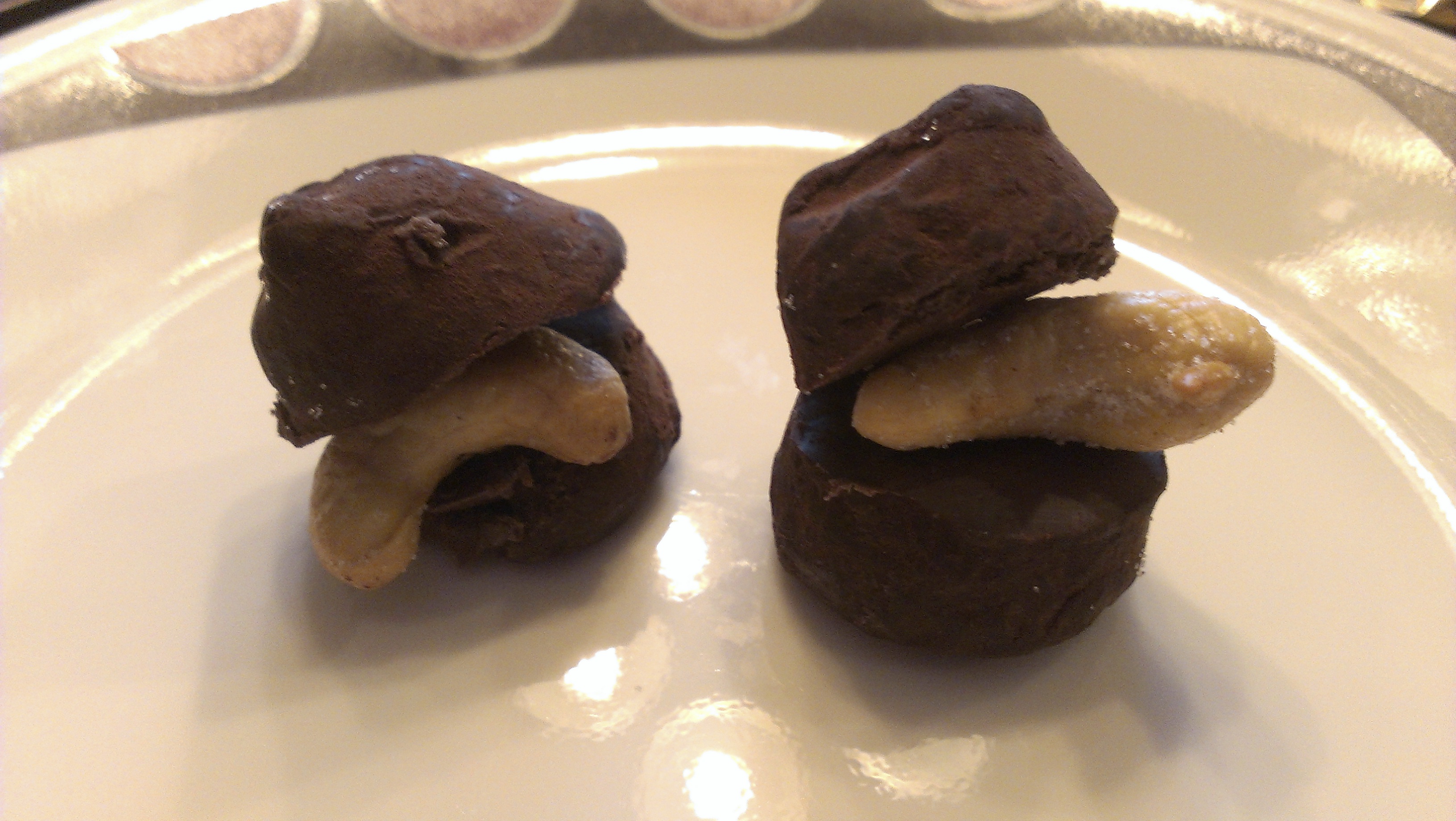
Because we couldn’t find chocolate covered cashew truffles, we had to get creative, much like when we celebrated Heavenly Hash. So we bought cashews, and had some chocolate truffles left over from Christmas. A little knife work, and voila! Instant chocolate covered cashew truffles.

"Homemade" chocolate covered cashew truffles.

“Homemade” chocolate covered cashew truffles.

Categories: Candy | Tags: , , , | 8 Comments

Blog at WordPress.com.